After Property Holding Tax, Is the 'Land Excess Profit Tax' Next? Tax Abolished After the IMF Crisis Resurfaces
- Input
- 2026-04-10 06:00:00
- Updated
- 2026-04-10 06:00:00
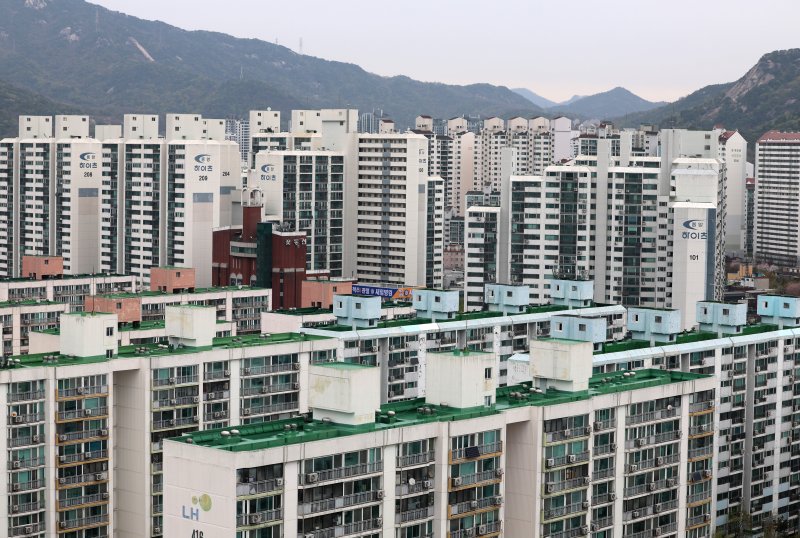
[Financial News] The Land Excess Profit Tax, which applies progressive tax rates to land price gains exceeding normal appreciation on idle land every three years, has resurfaced after four years. As a result, the public concept of land is also drawing attention, and there is growing interest in whether the tax will be reintroduced.
According to the National Assembly Legislative Information System on the 10th, Yoon Jong-o of the Progressive Party on the 8th led the introduction of a bill for the Excess Land Gains Tax Act reflecting these provisions. Lawmakers from the Democratic Party of Korea (DPK), the Rebuilding Korea Party, and the Social Democratic Party also joined as co-sponsors.
The core of the bill is to tax excess gains when the price of idle land rises more than the normal land price increase over a three-year tax period, measured between the start and end dates. The tax rate would be 30% on gains up to 30 million won and 50% on gains exceeding 30 million won. If capital gains tax is later imposed when the land is sold, the previously paid Land Excess Profit Tax would be credited against it.
Explaining the rationale for the proposal, Yoon said, "Land value increases are determined more by social factors such as public policies than by individual effort or investment, yet the resulting excess gains are monopolized by individual landowners," adding, "By taxing excess gains that exceed normal land price increases on idle land and promoting productive use of land, we aim to ease wealth inequality."
The Excess Land Gains Tax was first introduced in 1990 under the Roh Tae-woo administration after nationwide land price growth exceeded 30% in 1988–1989. However, in July 1994, the Constitutional Court of Korea ruled it incompatible with the Constitution, citing issues such as taxation of unrealized income, lack of provisions for land price declines, double taxation with capital gains tax, and the use of a single tax rate. The law was subsequently revised through supplementary legislation that same year and then reimplemented.
It was ultimately abolished in 1998, shortly after the IMF crisis in South Korea, as part of efforts to stimulate the economy. In 2021, following the Korea Land and Housing Corporation (LH) scandal, the tax was reintroduced in the National Assembly of the Republic of Korea for the first time in 23 years, but the bill was discarded at the end of the 21st National Assembly’s term.
If the Land Excess Profit Tax is revived, it is expected that the Seoul Capital Area will be the main target of taxation. According to the "2025 Annual Land Price Change Rate and Land Transaction Volume" survey released by the Ministry of Land, Infrastructure and Transport and the Korea Real Estate Board (KREB), nationwide land prices rose 2.25% last year, an increase of 1.43 percentage points from 0.82% in 2023. By region, land prices in the Seoul Capital Area climbed 3.08%, with Seoul itself rising 4.02%, showing a steep upward trend.
Kwon Dae-jung, a distinguished professor in the Department of Economics and Real Estate at Hansung University, noted, "Cases where land prices surge due to development projects, rather than general land price increases, are more likely to be subject to taxation." He added, "However, property tax and comprehensive real estate holding tax are already being levied on land, so the public concept of land should be introduced with caution."
Seo Jin-hyung, a professor in the Department of Real Estate Law at Kwangwoon University, warned, "If too much tax is collected on development gains, development itself may be delayed," and continued, "Real estate has the nature of a public good, so any system to recoup development gains must be introduced based on social consensus to balance public and private interests."
[email protected] Choi Ah-young Reporter