"All-out efforts to secure July supplies... Gasoline prices reaching 2,000 won per liter 'not yet'"
- Input
- 2026-04-09 16:00:00
- Updated
- 2026-04-09 16:00:00
[Financial News]
As the war in the Middle East drags on, the government is focusing all its efforts on stabilizing supply by securing crude oil and naphtha volumes for July. Gasoline prices have continued to rise since the second round of maximum price measures took effect, but the previously feared jump to the 2,000 won-per-liter range has not yet materialized.
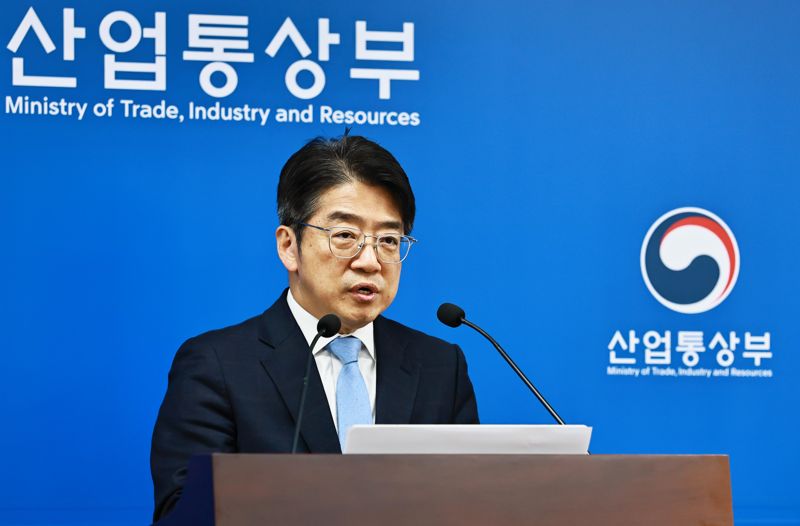
On the 9th, Yang Ki-uk, Director-General for Industrial and Resource Security at the Ministry of Trade, Industry and Resources, said at a daily briefing of the Middle East Situation Response Headquarters, "We have already secured 50 million barrels of crude oil for April and 60 million barrels for May, and we are currently securing additional volumes for July." He added, "At the current pace, the volume for July is increasing rapidly," and noted, "Once the situation stabilizes to some extent, we will disclose the specific figures."
The Korea National Oil Corporation (KNOC) is also in the process of securing an additional 2 million barrels through the introduction of overseas production.
Oil prices plunged more than 10% the previous day on expectations of a ceasefire agreement between the United States of America (U.S.) and Iran. However, they rebounded slightly as uncertainty over the resumption of passage through the Strait of Hormuz came to the fore.
Domestic petroleum product prices have risen by 8.8% for gasoline and 6% for diesel since the second round of maximum price measures was implemented. Yang explained, "At the time of the second implementation, we expected prices to slightly exceed 2,000 won per liter, but the increase has been occurring very slowly."
A total of seven oil tankers are currently stuck in the Strait of Hormuz, and four of them have been confirmed to be operated by Korean shipping companies. Regarding reports that Iran is demanding transit fees in cryptocurrency or Chinese yuan, Yang said, "We have not yet received any official request for transit fees," but he analyzed that, based on a simple calculation, if a fee of 1 dollar per barrel were imposed, it could lead to an increase of roughly 0.5% to less than 1% in domestic gasoline prices.
The volume of naphtha stranded in the Strait of Hormuz is still being assessed. Unlike crude oil, a large portion of naphtha is traded through intermediary trading firms, making it difficult to determine the exact amount, according to the government. Negotiations on resuming passage through the Strait of Hormuz are being conducted by the Ministry of Foreign Affairs of the Republic of Korea with Iran and the U.S., while the Ministry of Oceans and Fisheries (MOF) is in charge of follow-up discussions with shipping companies. However, there has been no meaningful progress so far.
[email protected] Park Ji-young Reporter