China’s Retaliation Against Panama Backfires in Latin America, May Push Region Closer to Taiwan
- Input
- 2026-04-09 14:25:04
- Updated
- 2026-04-09 14:25:04
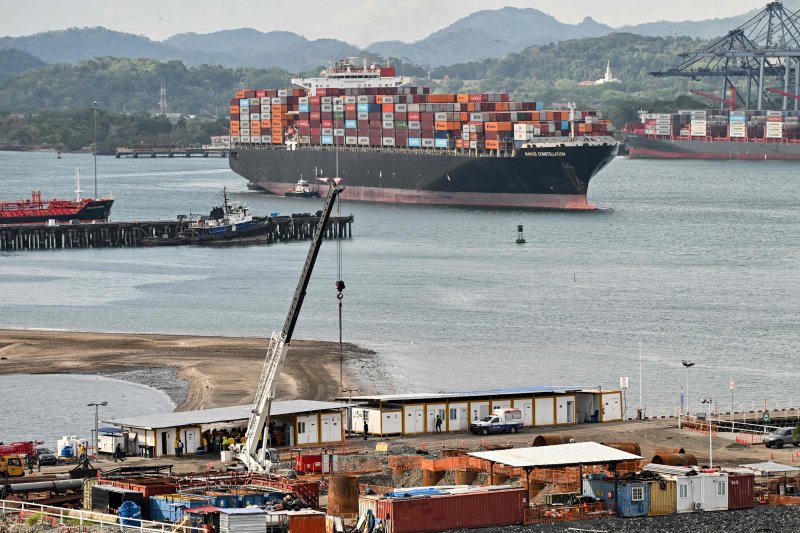
Financial News reported on the 8th (local time), citing U.S. political outlet The Hill, that China’s relentless commercial harassment of the Republic of Panama is provoking a wave of anger across Latin America.
Some observers say this kind of coercive behavior by China could backfire, encouraging Latin American countries to restore or deepen ties with Taiwan.
According to The Hill, after a Panamanian court revoked Hong Kong–based CK Hutchison Holdings’ operating rights to the Port of Cristobal and the Port of Balboa at either end of the Panama Canal and returned them to the Panamanian government, Chinese authorities recently began intensifying arbitrary detentions and inspections of Panamanian-flagged vessels under the pretext of routine checks.
The international community is condemning this as a retaliatory move against a sovereign state’s legitimate judicial decision. U.S. Senator Marco Rubio declared, "China’s retaliation destabilizes global supply chains, drives up costs, and undermines trust in the trading system," adding, "The United States will stand with Panama against any coercive actions that infringe on Panama’s sovereignty."
The Hill noted that this is not the first time China has tried to intimidate countries that act against its interests. When Mexico imposed tariffs on 1,400 items, including Chinese goods, last year to protect domestic industry and preserve 325,000 jobs, Beijing issued an unrestrained warning, saying Mexico should "reconsider before adjusting tariffs."
In the Republic of Ecuador, the Coca Codo Sinclair Hydroelectric Power Plant project—often cited as a textbook example of China’s "debt-trap" model—has been criticized as a classic case of poor oversight and resource exploitation.
In Peru, concerns are mounting that China is demanding exclusive rights over key infrastructure and mining projects, such as the Chinese-funded Chancay Port, effectively undermining Peru’s regulatory authority.
Against the Republic of Guatemala, which maintains diplomatic relations with Taiwan, China is weaponizing trade blockades and barriers.
The U.S. State Department’s Bureau of Western Hemisphere Affairs (WHA) warned on social media that "China’s cheap financing ultimately exacts a price in sovereignty," criticizing Beijing’s financial policies.
International organizations such as End Slavery Now are highlighting modern-day slavery and human rights abuses occurring at Chinese-run worksites. Recently, labor conditions at automobile plants in Brazil and China have come under intense international scrutiny as they move to the center of these human rights controversies.
At a summit of the Community of Latin American and Caribbean States (CELAC), China pledged that it would "always be a good friend to Latin America." However, observers say that for Panama and neighboring countries, the reality feels less like "friendship" and more like "threats and coercion."
According to The Hill, Latin American countries are beginning to push back. The Plurinational State of Bolivia has started to assert control over China’s zinc mining operations, while Chile has halted a submarine cable project that was to connect to Hong Kong.
Honduras is considering reestablishing diplomatic relations with Taiwan, and Argentina and Peru have opted to purchase U.S.-made F-16 Fighting Falcon jets instead of China’s CAC/PAC JF-17 Thunder fighters.
The Hill concluded that it remains to be seen how China’s foreign policy—marked by disregard for sovereignty and the use of blackmail—will reshape the diplomatic landscape in Latin America in the years ahead.
[email protected] Yoon Jae-jun Reporter