March Government Bond Yields Rose, but Expectations for April WGBI Inclusion Grew
- Input
- 2026-04-09 12:34:36
- Updated
- 2026-04-09 12:34:36
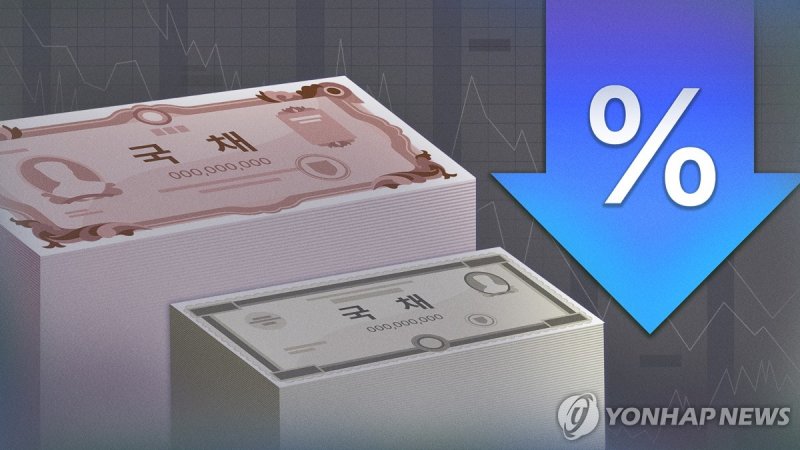
In March this year, government bond yields rose from the previous month due to geopolitical risks in the Middle East. Foreign holdings of Korean government bonds also declined compared with February. However, the government expects that inclusion in the World Government Bond Index (WGBI) from April will draw in foreign capital, creating downward pressure on government bond yields going forward. Since the WGBI inclusion, foreigners have recorded net purchases of 6.8 trillion won in Korean Treasury bonds.
According to the April issue of the Monthly Fiscal Trends report released by the Ministry of Planning and Budget on the 9th, 21.2 trillion won in Treasury bonds were issued in March. Yields on Treasury bonds climbed from the previous month, driven by a surge in global oil prices stemming from geopolitical risks in the Middle East and renewed inflation concerns. The three-year and 10-year benchmark yields stood at 3.552% and 3.879%, respectively, up from 2.582% and 2.951% in September 2025. Treasury bond issuance for January to March totaled 61.5 trillion won, equivalent to 27.2% of this year’s main budget issuance ceiling of 225.7 trillion won. The March funding rate was 3.50%, up from 3.40% in February.
As of March, foreign investors held 303.9 trillion won in Korean Treasury bonds, down 7 trillion won from the previous month. Foreign holdings had increased by 5.8 trillion won in January and 7.8 trillion won in February, but then declined in March amid the conflict in the Middle East. Even so, the government expects that as investment linked to the WGBI increases, government bond yields will fall while bond prices rise. Lower Treasury yields also tend to reduce corporate bond yields, which are priced as Treasury yields plus a credit spread, thereby easing funding costs for companies. For the government, with national debt in the hundreds of trillions of won, even a slight drop in interest rates can save several hundred billion won a year in interest payments on government bonds.
On the 8th, news of a dramatic cease-fire agreement between the United States and Iran sent Treasury bond yields sharply lower across the curve. In the Seoul bond market, the three-year Treasury yield closed at 3.315% per annum, down 13.6 basis points (1bp = 0.01 percentage point) from the previous trading day. The 10-year yield fell 12.6 basis points to 3.628%.
On the same day, the Ministry of Finance and Economy held the second meeting of the WGBI Standing Review and Investment Attraction Task Force. From March 30 to April 8, foreigners recorded net purchases of 6.8 trillion won in Korean Treasury bonds. Authorities assessed that not only new investors such as Japan-based institutions but also existing investors, including major central banks and international organizations, continued to invest actively. On the 10th, the Director General for Treasury plans to host a meeting with foreign banks to review the status of WGBI-related capital inflows with market experts. Hwang Soon-kwan, Director General for Treasury at the Ministry of Finance and Economy, said, "Following the successful start of our WGBI inclusion in April, foreign investors’ interest in our government bond market and the inflow of their funds are gaining real momentum."
Meanwhile, cumulative total revenue for the first two months of this year came to 121.6 trillion won, up 18.6 trillion won from the same period a year earlier. National tax revenue reached 71 trillion won, an increase of 10 trillion won year-on-year. Income tax receipts rose by 2.4 trillion won, driven by higher labor income tax and increased capital gains tax due to a pickup in real estate transactions. Value-added tax revenue climbed 4.1 trillion won, helped by lower refunds and higher import values. Securities transaction tax revenue increased by 1.2 trillion won as the tax rate was raised and trading volume in the stock market surged. In fact, the value of listed stock transactions between December last year and January this year totaled 2,001 trillion won, up 1,397.4 trillion won, or 231.5%, from 603.6 trillion won a year earlier. Last year, the securities transaction tax rates on the KOSPI Composite Index (KOSPI) and Korea Securities Dealers Automated Quotations (KOSDAQ) were 0% and 0.1%, respectively, but from this year they have been raised to 0.05% and 0.2%.
Cumulative total expenditure through February was 128.7 trillion won, up 12 trillion won from a year earlier. The consolidated fiscal balance, which is total revenue minus total expenditure, recorded a deficit of 7.1 trillion won. After subtracting the four major social security funds—the National Pension Service (NPS), Teachers' Pension, Workers' Compensation Insurance, and the Employment Insurance Fund—to show the government’s underlying fiscal position, the managed fiscal balance posted a deficit of 14 trillion won. Because revenue grew much faster than spending, the deficit narrowed by 3.9 trillion won from the previous year. The supplementary budget has not yet been reflected. Once approved by the National Assembly, it will be incorporated starting with the April fiscal balance figures to be released in June.
[email protected] Choi Yong-jun Reporter