"Only Because It Is You"... Poet Na Tae-joo's Words of Comfort and Support for People in Their Forties [Interview]
- Input
- 2026-04-09 14:30:52
- Updated
- 2026-04-09 14:30:52
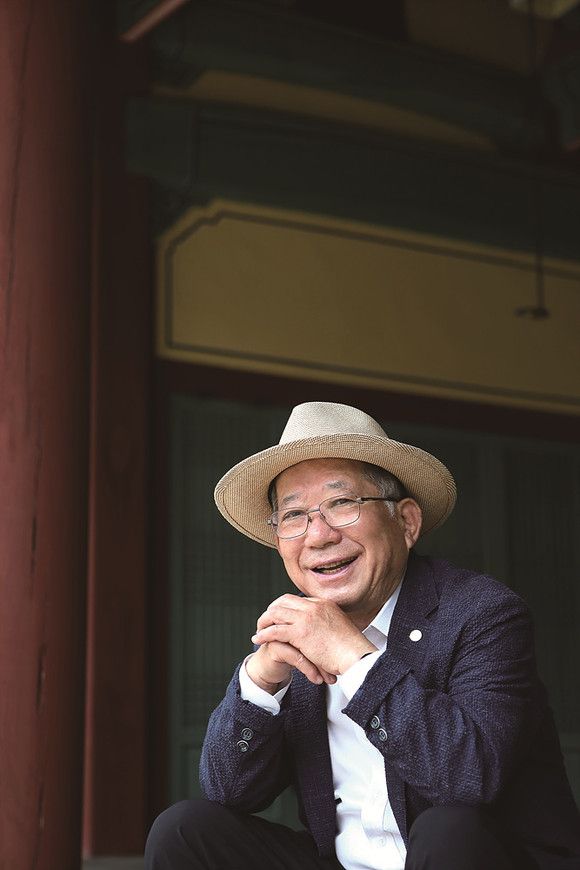
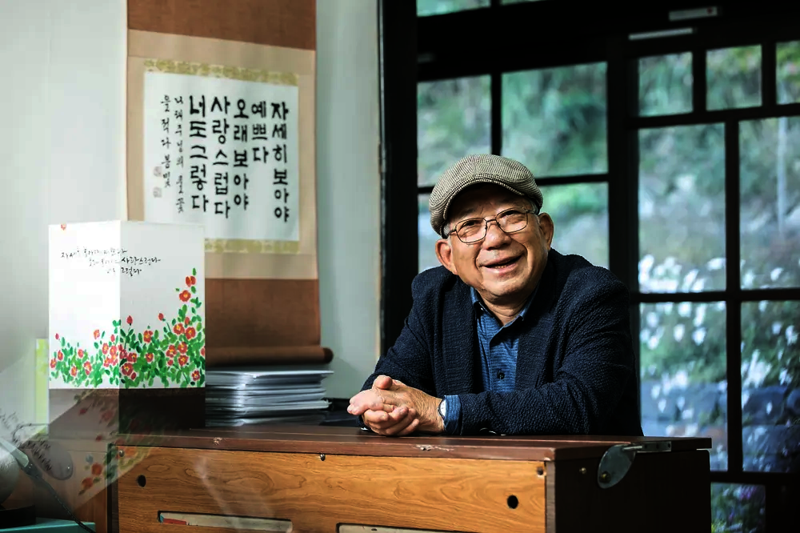
[Financial News]"Even the hardest seasons of life will eventually get better if you keep taking one step forward."Na Tae-joo (81), widely known for his much-loved poem "Pulkkot," spoke with this newspaper on the 9th about the background to his new poetry collection, "Only Because It Is You." In the interview, he offered readers a quiet yet steady form of consolation.
Only Because It Is You is the final volume in his life-poetry project. After the first book, which focused on "loving myself," and the second, which dealt with "the journey of finding myself," this third volume closes the series with the message, "Shine in the way that is most truly you."
Na, who has long comforted readers with language that is both simple and profound, stresses in this collection that we must look straight at our forties, a time when many people stand at a crossroads in life.
He said, "This collection is the last in a trilogy of selected poems by Na Tae-joo, and it is a book for people in their forties. I created it with the desire to walk alongside them, to comfort and bless them," adding, "Your forties are a time when many things are difficult in all sorts of ways."
As Na himself notes, the intention behind this collection is clear. It is aimed at those who have moved past youth and now shoulder a certain weight of responsibility, yet still waver, grow weary, and doubt themselves. To them, he wants to offer something more than a simple "It’s okay."
Perhaps that is why the title Only Because It Is You so neatly captures the heart of the book. You are not precious because you are better than others, or prettier, or because you have achieved something spectacular. You are precious simply "because you are you." In an age where competition and comparison have become everyday habits, this sense of worth goes beyond easy comfort and lingers as a line that stays with the reader.
Na said, "In this collection I mainly wanted to convey the message that you yourself are precious. The most precious person in the world is also yourself, and if you do not love yourself, no one else will truly love you either."
His words do not stop at being a slogan to boost self-esteem. He unpacks the meaning of "a life true to oneself" in more realistic language. Each person has a unique life and trajectory, he believes, and what matters is discovering that path as early as possible and then living it.
He states firmly, "You must never live by simply following others." Speaking especially of one’s forties, he emphasized that this is "definitely the age when you should be trying to do that." Rather than measuring success and failure by someone else’s standards, he is urging people to look back on the pace and direction of their own lives. At this point, Only Because It Is You reads as more than just a collection of poems; it becomes a book that suddenly makes you ask, "Am I really living properly right now?" This is also why the collection pays such close attention to people in their forties.
Na said, "Seen over the whole of life, your forties are the hardest period, so I want to tell people to endure it well and keep going. Even when it is truly exhausting, if you keep taking one step after another, there will surely come a day when things get better. I hope people will believe that," he added in a tone of comfort.
He also spoke frankly about his own experience. "For me as well, my forties were so hard that there were times when I wanted to give up on life," he recalled. "But looking back, the days when the things I wanted finally came to pass often arrived after that." Because of this, his plea not to give up, no matter how hard things feel now, carries more weight than an empty piece of advice.
In fact, Only Because It Is You is less a book that offers the "right answers" to life than one that quietly teaches how to endure and how not to let go of yourself. Na’s words—"A little more, just a little more, you have to keep moving forward step by step even in the midst of hardship"—assume that everyone will at some point walk through stretches of life that feel like sand or desert.
What makes this collection special is that, instead of promising some grand reward at the end of that road, it reminds us how precious it is simply to keep walking without losing ourselves. For today’s readers, what is needed may not be the ability to go faster, but the heart to keep living, unbroken, in one’s own place. Through many poems and lines, this book gently brings that truth back to mind.
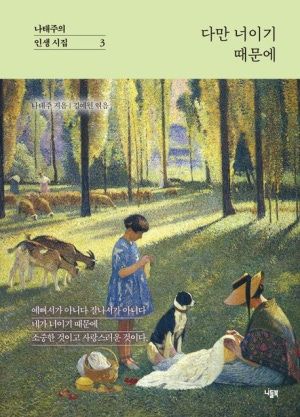
Another feature of this collection is that it is paired with paintings by the French artist Henri Martin. Na readily admits that this structure reflects the publisher’s planning, yet he also confesses that, in the end, the paintings fit the tone of the book very well.
According to the publisher, Henri Martin was something of a "late-blooming painter," and his work was chosen to give courage to readers, in keeping with the idea of a poetry collection for people in their forties. Na explained, "Because this is a collection for people in their forties, we chose this painter’s work to say, ‘Have courage.’" In other words, within this book, Martin’s paintings are not mere decoration. They become another quiet language outside the poems themselves, supporting the message that it is all right to bloom late.
Among the paintings, the one that stayed with Na the longest is the work used on the cover. "The scene of two people, who look like a mother and daughter, knitting together in the forest felt very peaceful and classical, and that is why I liked it," he said. This brief remark encapsulates the mood of the collection. The calm, affectionate, unhurried scene mirrors the atmosphere of comfort the book is aiming for. Readers who open the book will feel this slow, gentle comfort not only through the poems but also through the paintings.
In the end, like his previous collections, this book does not overlook the small, intimate scenes of everyday life. "We modern people possess too much and want too much," Na observed. "I hope people will gradually reduce what they own and learn to be content with what they have. A person who knows how to be satisfied and how to stop is a wise person," he added. He went on, "A poetry collection is a book that helps clear the mind. I truly hope that by reading this one, people will come away with even a slightly clearer heart."
As he says, Only Because It Is You is less a book that will instantly transform someone’s life than one that briefly rinses a tired heart clean. To those worn out by constant comparison with others, to those who feel shaken as if they have lost their way, Na once again speaks quietly: "Only because it is you, you are already more than precious enough."
Na was born in 1945 in Seocheon County, South Chungcheong Province, and after graduating from Gongju National University of Education, he spent 43 years teaching in elementary schools while writing poetry. He made his literary debut in 1971 through the Seoul Shinmun New Writer’s Contest, and with works such as his representative poem "Pulkkot," he has long been loved by Korean readers for his language that is both easy to read and deeply resonant.
Drawing on his years in the classroom and the warmth of everyday life, Na has built a poetic world uniquely his own. Even after retirement, he has continued to write, lecture, and engage in literary activities, and today he is regarded as one of the leading poets in contemporary Korean poetry.
rsunjun@fnnews.com Yoo Sun-joon Reporter