Trump Proposes Joint Collection of Hormuz Tolls, Envisions Joint Venture
- Input
- 2026-04-09 07:00:27
- Updated
- 2026-04-09 07:00:27
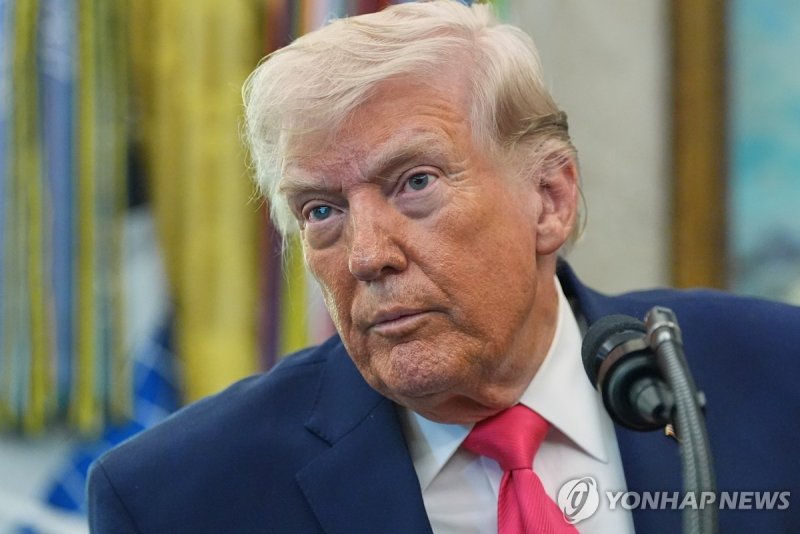
[Financial News] President Donald Trump said on the 8th (local time) that the United States of America (U.S.) and the Islamic Republic of Iran are considering a plan to jointly collect passage tolls in the Strait of Hormuz. He added, "We are thinking about it in the form of a joint venture," and noted, "It could be a way to protect the strait and shield it from various forces."
His remarks came during a phone call with American Broadcasting Company (ABC) reporter Jonathan Karl, and the details were later shared on the reporter’s social networking service (SNS) account. When asked about Iran’s proposal to impose tolls on ships passing through the strait, President Trump responded, "The U.S. and Iran could collect them together."
The U.S. and the Islamic Republic of Iran agreed the previous day to a two-week cease-fire and are now negotiating key issues, including passage through the Strait of Hormuz. Iran’s proposed end-of-war plan is reported to include charging tolls on vessels transiting the strait and using the revenue to fund reconstruction.
President Trump had already written on his own SNS that "the U.S. will help ease congestion in the Strait of Hormuz" and that "many positive steps and significant profits will be generated." He also said, "Iran can begin the reconstruction process," hinting that he could agree to using toll revenues as financial resources for rebuilding.
This joint venture concept is being interpreted as going beyond merely allowing tolls and moving toward direct U.S. involvement in the collection process. Although no specific revenue-sharing structure has been presented, one scenario under discussion is that the U.S. would secure a certain stake and receive income in the form of management fees.
Such a move would amount to an attempt to change the order surrounding the strait itself. Even the idea of a particular state collecting tolls in a strait that is effectively close to international waters is highly contentious, and if the U.S. joins in, it could lead to a system of shared control over maritime traffic.
Observers note that this idea also aligns with the recent pattern of the U.S. becoming involved in controlling oil export processes following the change of government in the Bolivarian Republic of Venezuela. It is being interpreted as a strategy to control energy supply chains not only through military means but also through economic levers.
If the tolls are implemented, a new cost structure would emerge in the global shipping and energy markets, which could have long-term effects on international oil prices and logistics systems.
[email protected] Reporter Kim Kyung-min Reporter