"Why Are They Bombing During a Ceasefire?" Lebanon Front Shakes U.S.–Iran Deal
- Input
- 2026-04-09 06:43:01
- Updated
- 2026-04-09 06:43:01
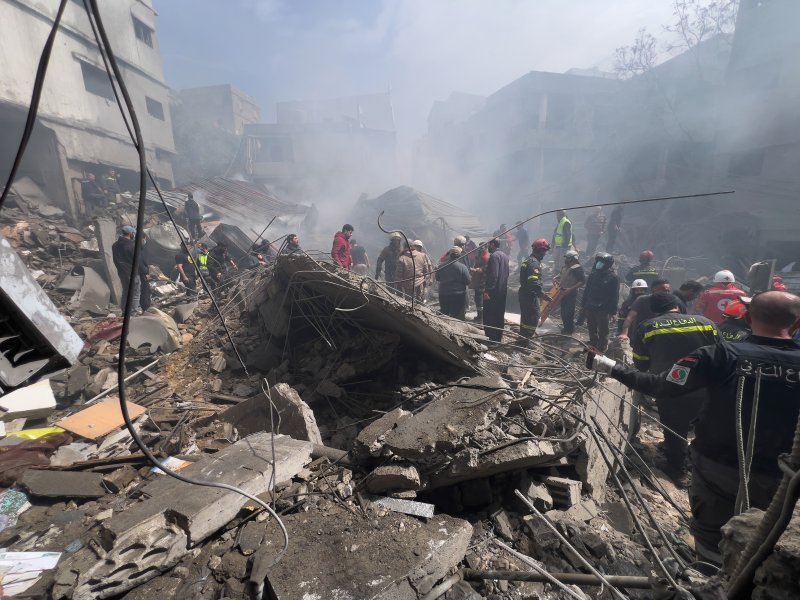
[Financial News] Less than a full day after the ceasefire between the United States of America (U.S.) and the Islamic Republic of Iran took effect, clashes along the Lebanon front have intensified, shaking the truce. The Islamic Republic of Iran is claiming the ceasefire has been violated and warning of possible retaliation, while the U.S. insists that "it is not part of the agreement," highlighting a widening rift.
On the 8th (local time), the Islamic Revolutionary Guard Corps (IRGC) issued a statement fiercely condemning the State of Israel’s airstrikes in Lebanon, declaring, "If these acts of aggression do not stop, we will inflict devastating retaliation." The IRGC denounced the State of Israel as a "regime that kills civilians" and labeled the latest strikes a clear breach of the ceasefire and a humanitarian crime. It also raised the level of criticism against the United States of America (U.S.), arguing that Washington shares responsibility.
The State of Israel has halted direct attacks on the Islamic Republic of Iran’s territory under the ceasefire agreement with the United States of America (U.S.) and the Islamic Republic of Iran, but it has continued airstrikes on Hezbollah positions in Lebanon, maintaining that the group is not covered by the deal. According to the Ministry of Public Health of Lebanon, at least 112 people were killed and 837 injured in the strikes that day.
In an interview the same day, Donald John Trump said, "The attacks on Lebanon were not included in the ceasefire agreement," adding, "The Hezbollah issue will be dealt with separately." He went on to describe it as "a small skirmish that is part of the negotiations and that everyone is aware of." His remarks are being interpreted as effectively condoning the State of Israel’s military actions.
The Islamic Republic of Iran is pushing back strongly. According to local media reports, the Iranian government considers the airstrikes in Lebanon to be a violation of the ceasefire and has even hinted it could withdraw from the agreement, including the reopening of navigation through the Strait of Hormuz. Abbas Araghchi has also reportedly lodged a formal complaint with the Islamic Republic of Pakistan, which is acting as mediator.
The crisis is increasingly turning into a dispute over how far the ceasefire extends. The United States of America (U.S.) and the State of Israel argue that the truce applies only to the Islamic Republic of Iran’s mainland, while the Islamic Republic of Iran is demanding a comprehensive ceasefire that also covers the Lebanon front.
Compounding matters, Donald Trump has sharply criticized leaks surrounding the negotiations, saying that "fake agreements and letters are circulating" in relation to the ceasefire talks. His comments underscore how fragile the negotiation process remains.
[email protected] Kim Kyung-min Reporter