U.S. and Iran Agree to Two-Week Ceasefire, Strait of Hormuz to Reopen
- Input
- 2026-04-08 18:33:57
- Updated
- 2026-04-08 18:33:57
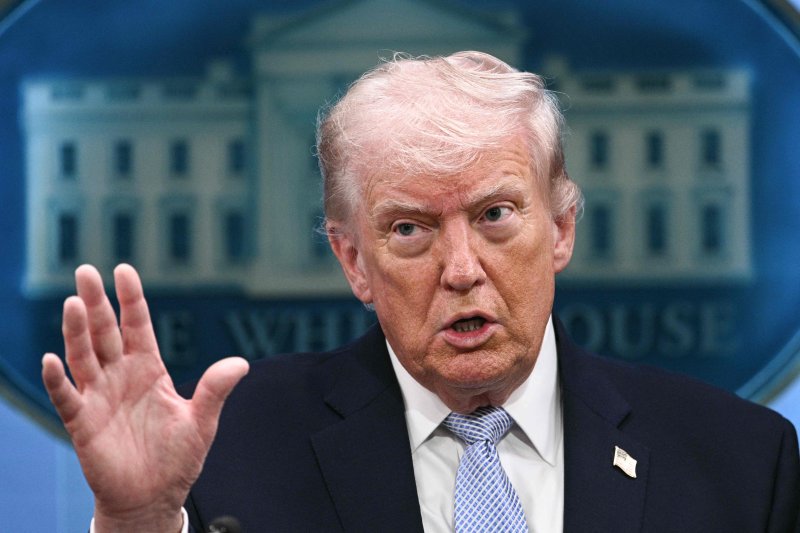
U.S. President Donald Trump announced his acceptance of the two-week ceasefire proposal 88 minutes before the deadline, which had been set for 8 p.m. Eastern Time (9 a.m. on the 8th in Korea). He made the announcement on the social media platform Truth Social. Trump stated, "We agree to suspend bombing and attacks against Iran for two weeks on the condition that Iran agrees to the full, immediate, and safe reopening of the Strait of Hormuz."
Trump, who had repeatedly threatened to strike Iran’s power plants, energy infrastructure, and bridges, signaled with this announcement that he would move into a full ceasefire. In a phone interview with Agence France-Presse (AFP) immediately after the ceasefire declaration, he said, "This is a total and complete victory. One hundred percent. There is no doubt," emphasizing that the agreement was a win for the United States. On Iran’s enriched uranium, he added, "It will be dealt with completely, and I would not have agreed otherwise."
The ceasefire decision took shape as the United States accepted a mediation request from Pakistan, which had urged Washington to hold off on the use of force during talks with Prime Minister Shehbaz Sharif. Trump explained that Washington agreed because "we have already exceeded all our military objectives and are close to an agreement on long-term peace." He added that a 10-point proposal submitted by Iran would serve as a workable basis for future negotiations.
The New York Times (NYT) reported that the Iranian side also accepted the ceasefire plan after it was approved by Supreme Leader Ayatollah Mojtaba Hosseini Khamenei. Iranian Foreign Minister Abbas Araghchi officially confirmed, "Our forces will halt defensive operations, and in coordination with the Iranian military, safe passage through the Strait of Hormuz will be possible for the next two weeks." As a result, global energy trade via tankers, which had been effectively shut down through the Strait of Hormuz, is expected to resume soon.
However, the two sides remain sharply divided over the detailed content of the 10-point plan that is expected to serve as the basis for a final peace agreement. The Supreme National Security Council of Iran claimed in a separate statement, "We have won the war against the United States and Israel, and the United States has accepted all ten points of Iran’s peace proposal." Iran’s 10-point list reportedly includes conditions that Washington would find difficult to accept in the near term, such as allowing uranium enrichment, maintaining Iranian control over the Strait of Hormuz, withdrawing U.S. combat troops from the region, easing sanctions on Iran, and compensating for war damage.
Despite these differences, many observers say intense last-minute diplomacy by concerned countries was crucial in securing the two-week ceasefire. Israel agreed to the truce, while Shehbaz Sharif put forward a mediation proposal five hours before the deadline. China, a key ally of Iran, also intervened directly at the last moment and urged de-escalation, which is seen as a decisive factor. Within Iran, fears of massive economic damage if core facilities were struck are also believed to have weighed heavily on decision-makers.
The two countries are scheduled to meet face-to-face on the 10th in Islamabad, Pakistan, to work out the details. Although this will be a direct meeting without a mediator at the table, deep disagreements remain over key issues such as the abandonment of uranium enrichment, and a final peace agreement is expected to face significant obstacles.
Major international media outlets described the temporary ceasefire as a fragile reprieve aimed at avoiding catastrophe. The New York Times (NYT) wrote that the deal "will reassure markets and ease Asia’s energy crisis," but pointed out that "Trump has not achieved his original goals of forcing Iran to give up its stockpile of nuclear fuel or to limit its missile range." The Wall Street Journal (WSJ) and British Broadcasting Corporation (BBC) also warned that "if the gap is not bridged within two weeks, armed conflict could resume at any time."
[email protected] Kim Kyung-min Reporter