[Editorial] 985 Subcontractor Unions Demand Bargaining, Confusion Just One Month After Yellow Envelope Law
- Input
- 2026-04-08 18:29:58
- Updated
- 2026-04-08 18:29:58
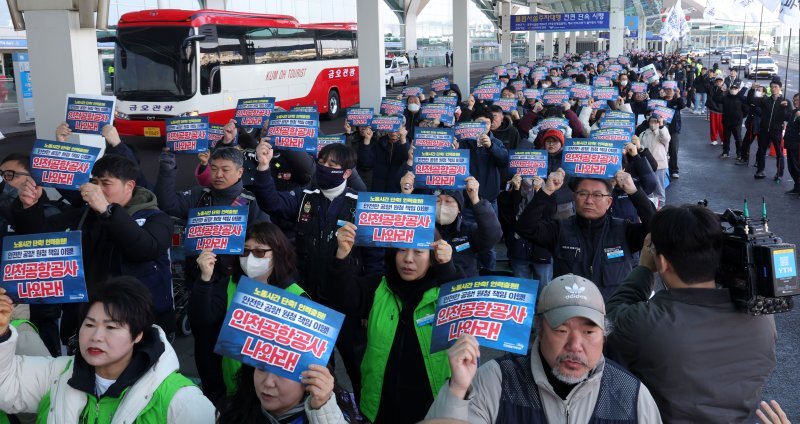
Since the law took effect, demands from subcontractor unions to bargain with principal contractors have poured in. On the very first day alone, more than 400 subcontractor unions applied to bargain with principal employers. As of the 6th, 985 subcontractor unions had demanded bargaining with 367 principal contractors, and 273 bargaining-related applications had been filed with the Labor Relations Commission. The issues for which subcontractor unions are trying to hold principal contractors responsible range widely, from safety management and staffing to wages and benefits. Over time, it is highly likely that issues across the entire management system will be put on the bargaining agenda.
The first case after the law’s implementation in which a principal contractor was found to have the status of employer has only fueled confusion on the ground. The Chungnam Regional Labor Relations Commission recognized employer status in all cases involving safety-management subcontracted workers at four public institutions, including the Korea Institute of Nuclear Safety Technology, and ruled that these principal contractors should accept the subcontractor unions’ bargaining demands. This runs directly counter to the Yellow Envelope Law interpretation guidelines issued earlier by the Ministry of Employment and Labor (MOEL), which stated that simple work instructions to service providers are not sufficient grounds to recognize employer status. Similar cases may well be decided differently in the future.
The ruling on the bargaining-separation request by subcontractor unions at POSCO is the first such case involving a private company, and its impact is bound to be significant. If the principle of a single bargaining channel collapses and more and more multiple unions are each recognized as separate bargaining parties, the bargaining structure will become increasingly complex. Conflicting demands among unions will make negotiations extremely difficult, and the cost and time required for bargaining could reach unmanageable levels. The side effects, including massive production disruptions and management missteps caused by delayed decision-making, will not be minor.
If demands from subcontractor unions for separate bargaining are rejected, it is unrealistic to expect the labor side to accept the outcome and back down. They are likely to immediately seek reconsideration from higher-level labor commissions, while on the ground ramping up strike threats that heighten tensions between labor and management. Even the suspension of a single process handled by subcontracted workers can halt an entire production line. Unions may also argue that refusals to allow separate bargaining violate the spirit of the Yellow Envelope Law and press even harder for the law to be enforced more aggressively. The confusion could become endless.
POSCO’s bold decision on the 7th to directly hire 7,000 subcontracted workers can be seen as an attempt to minimize this turmoil. The steel industry is already on the brink, battered by a flood of cheap products from China and a surge in global protectionism. Even so, POSCO has chosen large-scale direct employment, apparently because it sees labor–management coexistence as the only viable path forward. Government and industry must work together on the follow-up tasks needed to firmly establish direct employment. There are ways to avoid confrontation and catastrophe. The Yellow Envelope Law, which is driving case after case into litigation and repeated breakdowns, must be revised to reflect reality.