"High Oil Price Subsidy, But Can't Use It at Gas Stations"...Industry Demands Broader Usage
- Input
- 2026-04-08 15:23:18
- Updated
- 2026-04-08 15:23:18
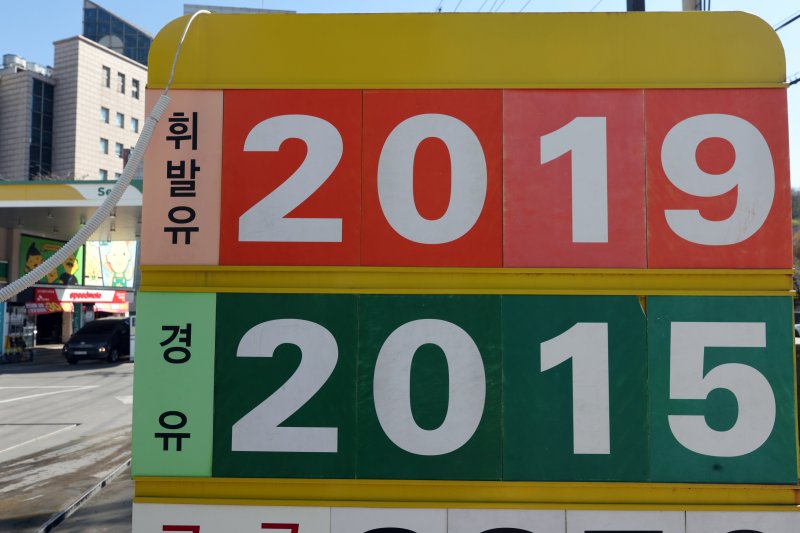
[Financial News] The Korea Oil Distribution Association has formally asked the government to allow high oil price relief subsidies to be used at gas stations. The association argued that, at a time when fuel costs are weighing heavily on consumers, a system that does not let them use the subsidy at gas stations undermines the effectiveness of the policy.
The Korea Oil Distribution Association said on the 8th that it had submitted a proposal containing these points to the government and relevant ministries. It stressed that, as rising international oil prices are increasing households’ fuel expenses and pushing up logistics and transportation costs, thereby burdening the real economy, the subsidy should be usable at gas stations where fuel is actually purchased.
The problem lies in the current rules. At present, the subsidy can only be used at businesses with annual sales of 3 billion won or less. Because gas stations, by their nature, show large sales volumes, many of them are excluded under this threshold. The association argued that this simple sales-based limit fails to reflect the characteristics of the sector, given that roughly half of the retail fuel price consists of taxes.
According to the association, gas stations with annual sales of 3 billion won or less that can accept the Local Love Gift Certificate account for less than 30% of all gas stations. As a result, the vast majority of gas stations are effectively unable to accept the high oil price relief subsidy.
The association also stressed that gas stations are one of the most immediate, everyday places where people directly feel the burden of high oil prices. If such businesses are effectively excluded from the support scheme, the policy’s perceived impact and real effectiveness will inevitably suffer. It added that independent gas stations, in particular, are facing worsening business conditions as rising labor costs, higher public utility charges, and increased taxes are compounded by higher card fees linked to high oil prices.
In response, the association asked the government to consider an exception that would allow gas stations to accept the subsidy regardless of their sales volume. "To uphold the policy’s goal of easing people’s fuel cost burden, the subsidy must be usable where actual consumption takes place," an association official said, adding, "The system needs to be revised to reflect the specific characteristics of the gas station industry."
[email protected] Reporter Koo Ja-yoon Reporter