A New Era of Global Trade Beyond the Strait of Hormuz Is Coming
- Input
- 2026-04-08 12:18:27
- Updated
- 2026-04-08 12:18:27
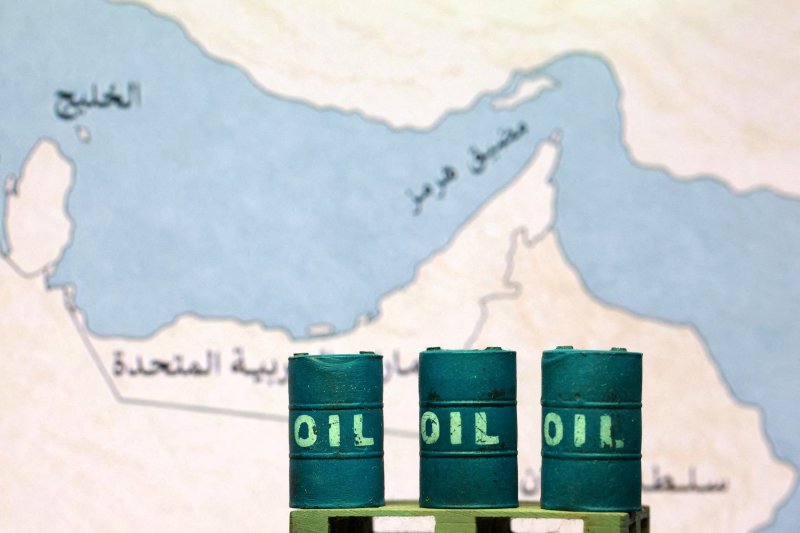
[Financial News] Observers predict that global trade will no longer rely on the Strait of Hormuz, whose vulnerability has been exposed by the war involving Iran.
On the 7th (local time), the Financial Times (FT) reported that efforts are underway to move away from the Strait of Hormuz regardless of how the current war and its aftermath unfold, and that Middle Eastern trade is undergoing a fundamental transformation.
The Strait of Hormuz, a strategic chokepoint only 21 nautical miles wide, handles 30% of global seaborne crude oil shipments and 20% of liquefied natural gas (LNG) volumes. The current conflict has disrupted shipping, driven up insurance premiums, and increased oil price volatility, flashing warning lights for the world economy.
However, as the trade and infrastructure model that has depended on this route for the past 50 years begins to shift, experts argue that "the world’s patience with the abnormal structure of 'single-route dependence,' which it has endured as if held hostage, has finally reached its limit," according to FT.
It is not only crude oil and LNG at stake. One-third of the world’s fertilizer shipments, as well as helium and aluminum that are essential to semiconductor and artificial intelligence (AI) supply chains, also pass through the Strait of Hormuz, underscoring that continued reliance on this corridor is no longer viable.
Amid the crisis, major Middle Eastern countries are pouring resources into securing new logistics routes that bypass the strait.
The Kingdom of Saudi Arabia is expanding ports along the Red Sea coast and increasing pipeline transport capacity. The United Arab Emirates (UAE) is working to expand deep-water ports on its eastern seaboard outside the Strait of Hormuz and to build pipelines that connect directly to the Indian Ocean.
Oman is intensively developing the ports of Duqm and Sohar Port, both located outside the strait’s sphere of influence, and is emerging as a new regional hub.
In addition, Middle Eastern countries are restarting idle oil pipelines that had been left unused for decades, while cross-border railways, power grids, and water systems are being rapidly interconnected.
FT assessed that the current war is driving a level of regional economic integration that years of summit diplomacy failed to achieve, and that neighboring states once locked in tension are now choosing economic cooperation for their mutual survival.
These changes are helping to stabilize supply chains for countries in Europe, Asia, and Africa. For global infrastructure developers and investors, they also represent a rare opportunity to participate in generational projects that will shape trade routes for the next 50 years.
Local business and government officials are increasingly convinced that, even after the current crisis subsides, the region will not return to its previous state of strategic dependence on the strait.
Citing the example of the UAE, whose territory came under attack, the paper noted that the conflict has laid bare the region’s vulnerability and geopolitical instability. It added that even after a ceasefire, countries are expected to continue expanding infrastructure to break away from strategic reliance on a narrow waterway controlled by an unpredictable Iran.
[email protected] Yoon Jae-joon Reporter