Pakistan proposes two-week truce to U.S., urges Iran to open Strait of Hormuz for two weeks
- Input
- 2026-04-08 05:04:23
- Updated
- 2026-04-08 05:04:23
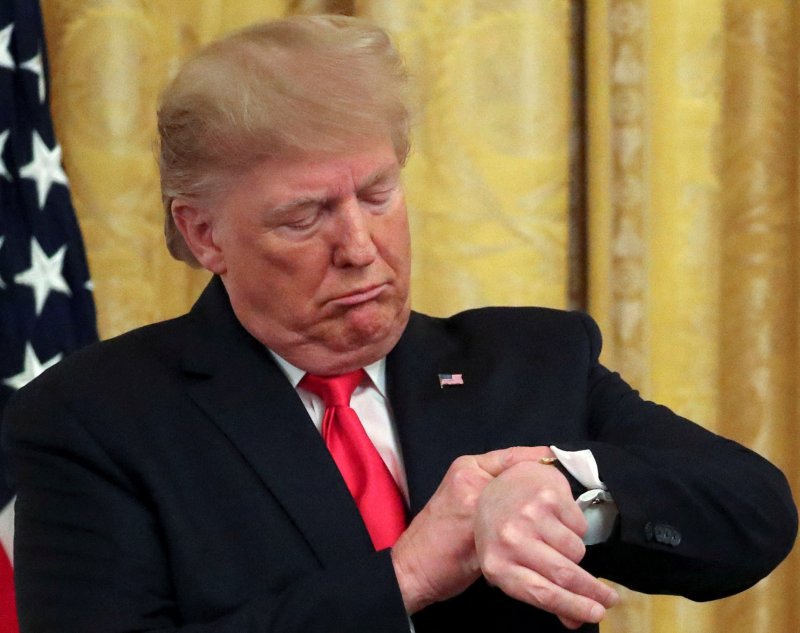
On the 7th (local time), Pakistan’s Prime Minister Shehbaz Sharif asked United States of America (U.S.) President Donald John Trump to postpone airstrikes on Iran for two weeks.
Trump had earlier warned that if Iran did not agree by 8 p.m. that day, he would "wipe out an entire civilization."
In a post on X (formerly Twitter) the same day, Sharif also urged Iran’s leadership to agree, "as a gesture of goodwill," to keep the Strait of Hormuz open for two weeks.
Sharif added, "We also call on all parties to the conflict to observe a ceasefire everywhere for two weeks so that, through diplomacy, they can end the war for the sake of long-term peace and stability in the region."
Trump, for his part, warned in a post on Truth Social that if there was no agreement, "an entire civilization will die tonight and will never come back again."
However, he added the caveat that "because there has been a complete and total regime change, something perhaps revolutionary and far better may happen."
Amid reports that Donald Trump also wants to avoid a full-scale war with Iran, Pakistan’s proposal could provide a justification for a ceasefire.
According to CNBC, when asked about Sharif’s proposal, White House spokesperson Karoline Leavitt stated, "The president is aware of the proposal, and a response will be issued."
Iran is reportedly taking a positive view of the ceasefire proposal.
Reuters, citing a senior Iranian official, reported that Iran is reviewing Pakistan’s proposal favorably.
On expectations that Pakistan’s initiative could return the Iran war to a ceasefire phase, the New York Stock Exchange (NYSE) saw both the Standard & Poor's 500 Index (S&P 500) and the NASDAQ Composite Index (NASDAQ) rebound late in the session, extending their winning streak to five consecutive trading days.
International oil prices also turned weaker.
Benchmark Brent Crude Oil for June delivery plunged by $4.25, or 3.87%, from the previous session to $105.52 per barrel.
West Texas Intermediate crude oil (WTI) for May delivery, the benchmark U.S. grade, slid $1.65, or 1.47%, to $110.76 per barrel.
Earlier, Brent had ended regular trading down 0.13% at $109.62, while WTI had closed up 0.48% at $112.95.
[email protected] Song Kyung-jae Reporter