"Royal Palaces and Tombs to Become K-Culture Spaces Shared with the World"
- Input
- 2026-04-07 14:28:07
- Updated
- 2026-04-07 14:28:07
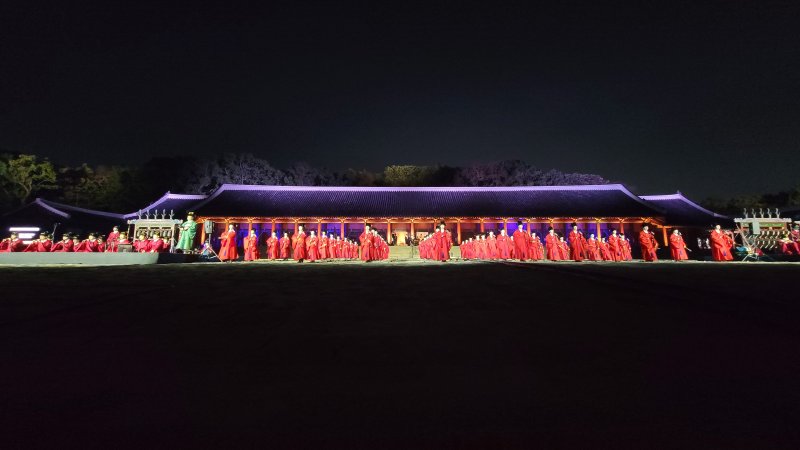
[Financial News] The royal palaces of the Joseon Dynasty in central Seoul and the Royal Tombs of the Joseon Dynasty will be transformed into K-culture spaces enjoyed together by both Korean citizens and visitors from around the world.
The Korea Heritage Service announced on the 7th that it will significantly expand everyday, community-focused programs. These include the K-Royal Culture Festival with strengthened programs for foreign visitors and enhanced multilingual services, the opening of forest trails at the royal tombs, and the provision of free traditional wedding venues.
Marking its 12th year, the flagship palace and royal tomb utilization program, the "K-Royal Culture Festival," will take place at Gyeongbokgung Palace, Changdeokgung Palace, Deoksugung Palace, Changgyeonggung Palace, Gyeonghuigung Palace, and Jongmyo Shrine. The spring festival will run from the 25th of this month to May 3, and the autumn edition will be held from October 7 to 11.
This year, the festival will feature more audience-participation programs, dedicated sessions for foreign visitors, and strengthened multilingual services.
A new program titled "An Outing to Gyeonghoeru Pavilion with Musicians of Jangakwon, the royal court institute of music and dance of the Joseon Dynasty" will be introduced for socially disadvantaged groups.
A wide range of other programs has also been prepared, including "Gyeongbokgung Time Travel: Royal Daily Life Reenactment," the nighttime experience "The Dance of Crown Prince Hyomyeong and the Moon" at Changdeokgung Palace, and "Emperor’s Table" designed for foreign visitors.
In addition, the "Danjong and Queen Jeongsun Memorial Rite," which highlights the stories of King Danjong and Queen Jeongsun, will be held on the 11th at Sareung Royal Tomb and Jangneung Royal Tomb. Their narrative will be unfolded through the medium of "flowers," symbolizing coexistence with local communities.
The Jongmyo Daeje (Royal Ancestral Ritual at Jongmyo Shrine), inscribed as UNESCO Intangible Cultural Heritage, will also be performed at Jongmyo Shrine on May 3.
This year, for those who find it difficult to visit in person, the ritual will be broadcast live on a large screen at Heungnyemun Square in Gyeongbokgung Palace and via the Korea Heritage Service YouTube channel. During "Jongmyo Week," which runs from the 25th of this month to May 3, advance programs such as the royal bridal procession reenactment and nighttime performances of Jongmyo Jeryeak will also be presented.
In particular, the nighttime performance of "Jongmyo Jeryeak" will take place from the 28th to the 30th, from 8 p.m. for one hour each evening. It will be held as an invitational event for the general public, descendants of independence patriots, and socially disadvantaged groups.
The Forest Trails of the Royal Tombs of the Joseon Dynasty, a popular spring destination, will be open from May 16 to June 30. Visitors will be able to experience both nature and history at nine royal tomb sites nationwide, including the East Nine Royal Tombs, Guri, Gwangneung Royal Tomb, Namyangju, Sareung Royal Tomb, and Jangneung Royal Tomb, Paju. This year, improvements to the stairways on steep sections of the forest trail at Jangneung Royal Tomb, Paju, have enhanced the viewing environment.
The National Palace Museum of Korea will open its outdoor ginkgo tree rest area in the fall as a free wedding venue for engaged couples. Starting on the 8th, advance applications will be accepted, and a total of 16 small-scale traditional weddings, each with around 100 guests, will be held on weekends throughout October.
Selected couples will receive free use of the wedding venue and indoor reception hall, along with support for equipment and furnishings.
rsunjun@fnnews.com Yoo Sun-joon Reporter