Japanese media say Trump’s remark that "Japan did not help us" reflects lingering dissatisfaction over lack of military cooperation
- Input
- 2026-04-07 12:03:46
- Updated
- 2026-04-07 12:03:46
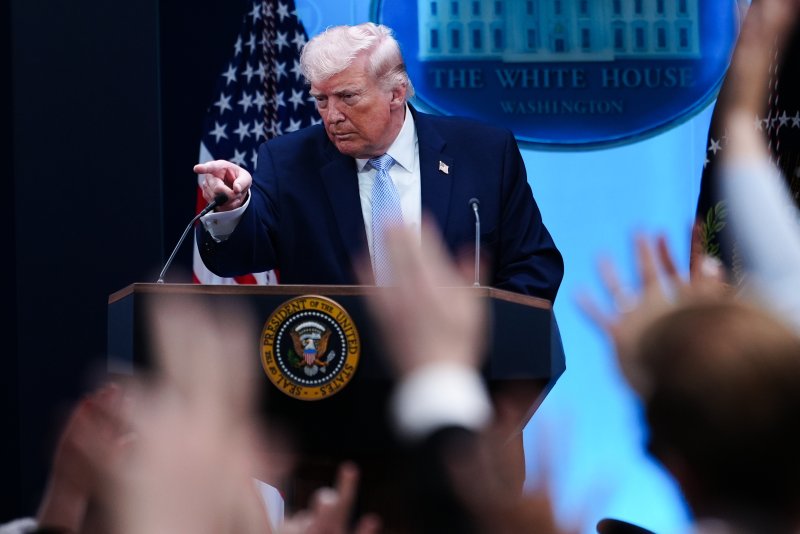
Tokyo correspondent Seo Hye-jin for The Financial News reported that President of the United States Donald Trump publicly complained on the 6th (local time) about the Islamic Republic of Iran situation, saying, "Japan did not help us," and Japanese media covered the remark extensively on the 7th. They noted that although Trump had said after the U.S.-Japan summit on the 19th of last month that he believed "Japan is making sufficient efforts" to ensure the safety of the Strait of Hormuz, his latest comment suggests lingering dissatisfaction that Japan has not joined military cooperation.
Major Japanese outlets including Yomiuri Shimbun, Nihon Keizai Shimbun (The Nikkei), and The Asahi Shimbun focused on the fact that Trump brought up Japan while answering a question about the North Atlantic Treaty Organization (NATO) and its reluctance to cooperate in an attack on the Islamic Republic of Iran during a White House press conference on the 6th.
On that day, Trump again sharply criticized NATO, saying it would not "let us use even a single runway" and calling it a "paper tiger."
His remarks appeared to be aimed at Italy, which refused landing rights to United States military aircraft heading to the Middle East. Spain has likewise banned United States military aircraft participating in strikes on the Islamic Republic of Iran from passing through its airspace.
Trump went on to say, "It is not just NATO. Who else did not help us?" and then listed Asian allies such as South Korea, Australia, and Japan. Regarding Japan and South Korea, he asserted that "we have deployed troops to protect them from the Democratic People's Republic of Korea (DPRK)."
By contrast, he praised Gulf states such as Saudi Arabia, the State of Qatar, United Arab Emirates (UAE), the Kingdom of Bahrain, and Kuwait, saying they were "doing a good job."
Japanese media highlighted the background to Trump’s comments, noting that this was the first time he had so openly expressed dissatisfaction toward Japan.
During the U.S.-Japan summit on the 19th of last month, he had drawn a contrast with Europe, saying Japan’s response was "different from NATO," and offered a positive assessment. In an interview with Fox News the following day, on the 20th, he also said that "Japan faces constitutional constraints, but will provide support if necessary."
However, Prime Minister Sanae Takaichi drew a line immediately after the summit, saying, "There are things Japan can and cannot do within the scope of its laws, and I explained this in detail." The Asahi Shimbun interpreted this as suggesting that, as the situation in the Strait of Hormuz remains deadlocked, the United States may still harbor dissatisfaction with allies that are not engaging in military cooperation.
Meanwhile, Chief Cabinet Secretary of Japan Minoru Kihara said at a press conference that day, "We have continued communication with the United States through various opportunities, including summit meetings," and added, "We will continue diplomatic efforts for an early de-escalation of the situation, working closely with the international community, including the United States."
sjmary@fnnews.com Seo Hye-jin Reporter