"Naphtha for May Must Be Secured in April" – Government Mobilizes to Stabilize Supply
- Input
- 2026-04-07 11:30:00
- Updated
- 2026-04-07 11:30:00
[The Financial News]
The government has announced that it will make every effort in April to secure sufficient naphtha supplies for May and avert a supply crunch. Unlike crude oil, naphtha is mostly traded under short-term contracts, so volumes for May are typically decided in April. Authorities believe that if this window is missed, disruptions in petrochemical production will be unavoidable.
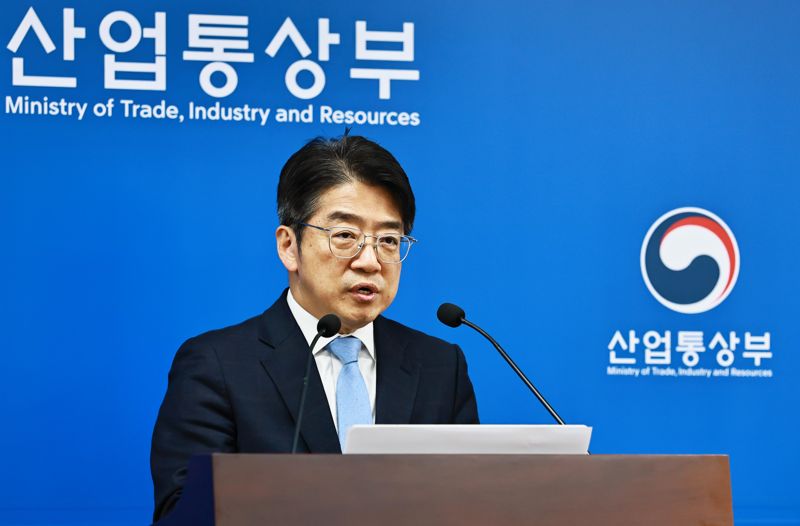
At the daily briefing of the Middle East Situation Response Headquarters on the 7th, Yang Ki-uk, Director-General for Industrial and Resource Security, said, "Crude oil is imported under long-term contracts, but in most cases, naphtha volumes for May are decided in April." He stressed, "It is crucial that we do our utmost in April to secure the necessary volumes."
Yang explained, "Naphtha imports in April are expected to reach about 770,000 tons, roughly 70% of the usual level." He added, "If we include 1.1 million tons of domestic production, we will secure around 80–90% of normal supply, but securing volumes for May remains the key issue."
The government plans to allocate a budget through an extra supplementary appropriation to compensate for naphtha price differentials and apply it retroactively from April 1. Yang stated, "Once the budget is allocated through the supplementary appropriation, we will move to secure naphtha together with companies by providing price-differential support and leveraging trade networks such as the Korea Trade-Investment Promotion Agency (KOTRA)."
Efforts to secure alternative crude oil supplies are proceeding as planned. Contracts have been secured for 50 million barrels in April and 60 million barrels in May, equivalent to about 60% and 70% of the usual levels, respectively. The crude is being sourced in a diversified manner from 17 countries, including Saudi Arabia, the United States of America (U.S.), United Arab Emirates (UAE), Brazil, Australia, Congo, Gabon, and Canada.
Use of strategic petroleum stock swaps is also expanding. Refiners have applied for more than 30 million barrels in swap volumes, an increase of 10 million barrels compared with the previous announcement. Two deals totaling 2.8 million barrels have already been contracted and delivered, and at least four additional contracts are scheduled for this week. As a result, total swap contract volumes are expected to reach about 8 million barrels by the end of the week.
Refinery operating rates are currently being maintained at around 90%. Yang noted, "Operating rates are closely tied to refiners' efficiency and profitability, so my understanding is that they are not being reduced." He added, "However, depending on spring maintenance schedules, there may be some variations in overall output."
Since the implementation of the second phase of the maximum price cap system on March 27, prices of petroleum products have risen by 7.8% for gasoline and 7.5% for diesel. In Seoul, prices at some gas stations have already exceeded 2,000 won per liter.
Regarding a possible third phase of the maximum price cap system, Yang said, "We will carefully balance factors such as the burden on the public, the need to send demand-management signals, consideration for vulnerable groups such as truck drivers and those in the agriculture and fisheries sectors, and the fiscal burden on the government." He drew a line, adding, "This is a matter to be decided jointly by multiple ministries, so it is difficult for me to go into specific details."
Meanwhile, a review of supply chains shows that supplies of medical products and key industrial materials are generally stable. Packaging materials for intravenous solutions are expected to face no supply disruptions through the end of June, and inventories of syringes and medical gloves remain at normal levels. However, for syrup and other liquid medicine bottles, stock assessments and discussions on raw material supply are still underway.
Alternative import sources have been secured for several items: semiconductor-grade helium is now being sourced from the United States, and aluminum wheels are being imported from Malaysia, India, and China. All nickel sulfate for batteries destined for the domestic market is being produced within the country, and ethylene gas for shipbuilding is being supplied normally through coordination with petrochemical companies.
The packaging industry is facing difficulties due to rising raw material prices and reduced supply. In response, a Joint Task Force of the Ministry of Trade, Industry and Energy, the Ministry of Food and Drug Safety, and the Ministry of SMEs and Startups has been formed to monitor supply and demand conditions and to draw up measures to ensure stable supplies of packaging materials for essential consumer goods such as instant noodles and infant formula.
[email protected] Park Ji-young Reporter