KDI: "High oil prices driven by the Middle East war are adding upward pressure on airfares and other prices"
- Input
- 2026-04-07 12:00:00
- Updated
- 2026-04-07 12:00:00
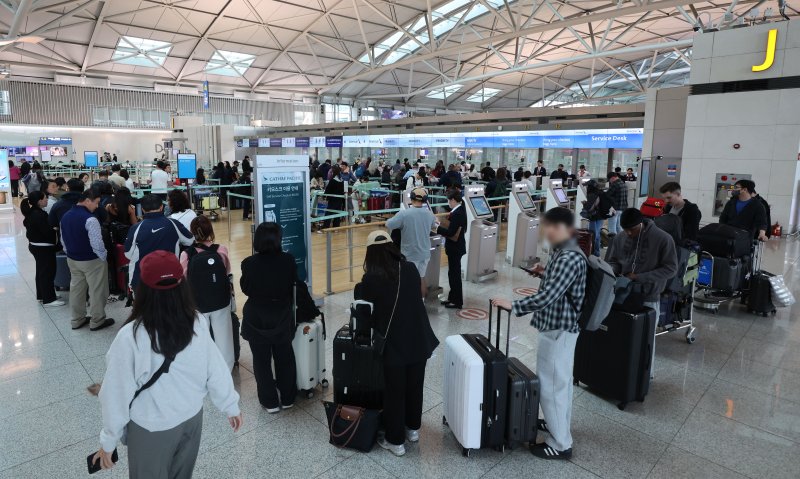
According to The Financial News, the shock from the Middle East war between the United States of America (U.S.) and the Islamic Republic of Iran is growing. Production and consumption, which had been on a modest recovery path, are weakening again, while high oil prices and disruptions in raw material supplies are adding to inflationary pressure. Even so, rising exports and investment led by semiconductors are helping to support the economy.
On the 7th, Korea Development Institute (KDI) released its April economic trends report containing this assessment.
KDI indicated that prices are very likely to rise significantly.
KDI assessed that the sharp increase in petroleum product prices will likely broaden inflationary pressures, especially in sectors closely linked to crude oil.
In March, consumer prices rose 2.2% year-on-year, higher than the 2.0% increase in the previous month, mainly due to a spike in petroleum prices. Prices for petroleum products alone jumped 9.9%.
Dubai crude oil averaged 128.5 dollars per barrel in March, nearly double the 68.4 dollars recorded in the previous month.
KDI expects that this surge in international oil prices and the resulting increase in raw material costs will significantly affect items beyond petroleum products. Upward price pressure is projected to intensify, particularly for airfares and related categories.
Kyucheol Jung, head of economic forecasting at KDI, explained, "Although the pace of price increases is still around the inflation target level in the low 2% range, there is a possibility that upward pressure on prices will strengthen going forward, depending on the impact of the Middle East war."
This inflationary pressure is also being reflected in inflation expectations in the government bond market. The expected inflation rate, based on the South Korean 10-year Treasury bond, rose to 2.7% in March, up 0.2 percentage points from 2.5% in the previous month.
Uncertainty has also increased on the production side. While output has been expanding, particularly in semiconductors, the war has heightened downside risks to the economy. The outlook for the Business Survey Index for Business Conditions (BSI) fell in both manufacturing (from 77 to 71) and non-manufacturing (from 74 to 70).
Consumption, which had been improving gradually, now appears to be weakening again.
The Composite Consumer Sentiment Index (CCSI) stood at 107.0 in March, still above the neutral level of 100, but down sharply from 112.1 a month earlier. If high oil prices persist, with gasoline and diesel exceeding 2,000 won per liter, they are highly likely to weigh negatively on consumption.
Facility investment, which had been recovering mainly in semiconductors, may also lose momentum. Average facility investment in January–February increased 9.3%, supported by strong semiconductor investment. However, uncertainty stemming from the Middle East war could act as a negative factor for future capital spending.
Construction investment is also expected to suffer, as higher construction material costs caused by the Middle East war lead to delays in project starts and extensions of construction periods, undermining the modest recovery trend.
Labor market conditions remain weak among younger workers.
The seasonally adjusted employment rate for people in their 20s was 59.0%, showing a sluggish pattern similar to February’s 58.9%.
In particular, the number of employed people has continued to decline sharply among those in their 20s and 30s in professional, scientific and technical services, as well as in information and communications.
[email protected] Jung Sang-geun Reporter