World’s Largest Oil Importer China Using the Iran War to Push ‘Post-Oil’ Strategy?
- Input
- 2026-04-07 12:17:46
- Updated
- 2026-04-07 12:17:46
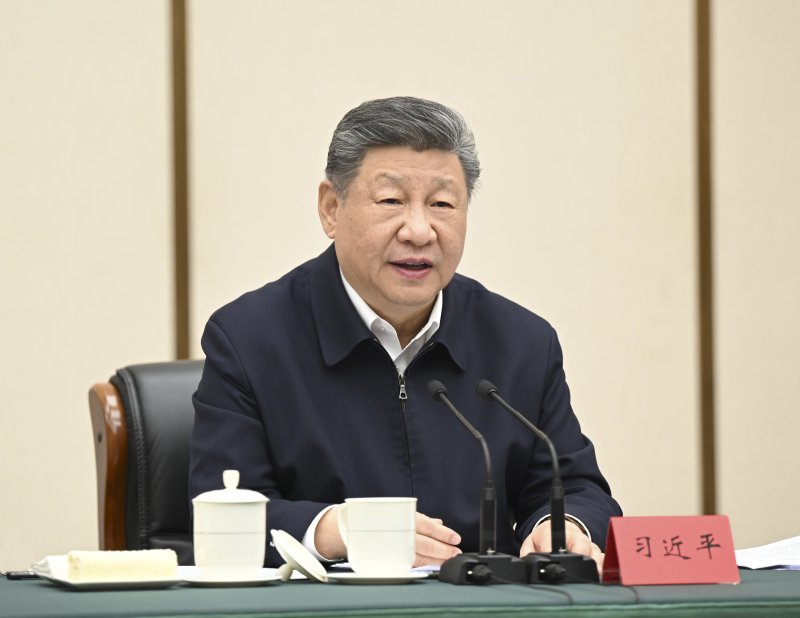
[The Financial News] Xi Jinping, President of China and leader of the world’s largest oil-importing nation, has recently argued in connection with the Iran war that China must swiftly build a "new energy system" to safeguard its energy security. In outlining this new system, he pointed to a wide range of non-oil energy sources, including environmentally friendly power generation, nuclear power, and coal-fired power.
According to Consumer News and Business Channel (CNBC) on the 6th (local time), Xi made these remarks in a speech broadcast the same day on state-run China Central Television (CCTV). He stressed the need to expand hydropower while addressing related environmental protection issues, and to increase nuclear power generation in a safe and orderly manner. Xi added, "The Central Committee of the Communist Party of China has gained an in-depth understanding of the current state of international energy development and has been pushing forward a new energy security strategy in a comprehensive way, making major decisions in the process." He did not explicitly mention the Iran war in his comments.
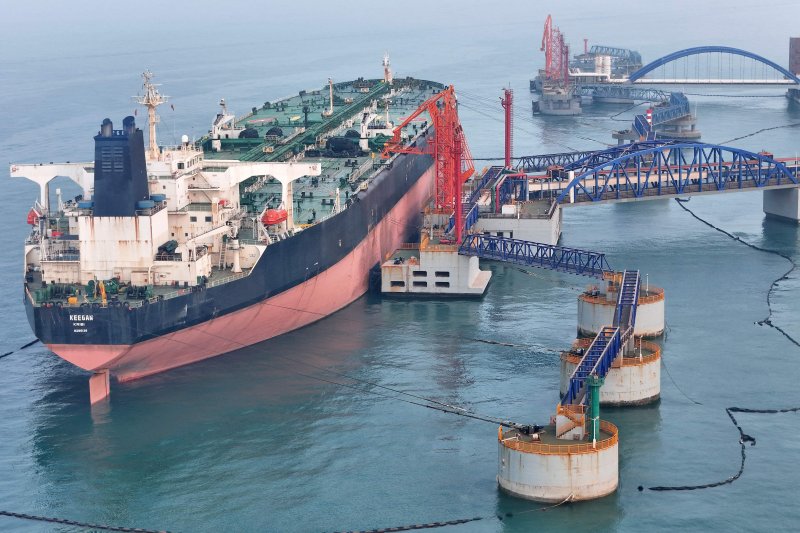
The Organization of the Petroleum Exporting Countries (OPEC) reports that China ranked first among countries in crude oil imports in 2024, accounting for 24% of global import volumes. Around 90% of Iran’s oil exports are taken by China due to international sanctions. However, CNBC noted that although China imports massive amounts of oil, the damage it faces from the current Iran war is relatively limited. According to the Korea Energy Economics Institute, as of 2024, dependence on crude oil imports passing through the Strait of Hormuz stood at 62% for South Korea, 69% for Japan, and 49% for China.
China has been expanding various green power plants such as solar and wind, yet it still operates more than half of the world’s coal-fired power capacity. CNBC pointed out that more than half of China’s energy mix is based on coal and that China is also the world’s largest emitter of carbon dioxide. The outlet emphasized that China continues to rely on coal to ensure a stable power supply.
In his remarks on the 6th, Xi argued, "Our early development of wind and solar power has proven to be a forward-looking move." At the same time, he said, "Coal-fired power remains the backbone of our energy system and must continue to play a supporting role going forward." While underscoring the importance of coal, Xi also stated that China, as the world’s largest coal consumer, must devote itself to expanding environmentally friendly power generation.
In July last year, a groundbreaking ceremony was held in Linzhi in the Tibet Autonomous Region for the "lower reaches of the Yarlung Tsangpo River (known in Chinese as the Yarlung Tsangpo River and in India as the Brahmaputra River) hydropower project." China plans to build five hydropower plants in the area, which together will form the world’s largest hydropower complex in terms of generation capacity once completed. In addition, China General Nuclear Power Group (CGN), a state-owned nuclear company, on the 6th began construction of a solar power plant on the Tibetan Plateau at an elevation of 4,550 meters.
Commenting on these efforts, CCTV said, "A greener, more diverse and more resilient new energy system will provide a strong guarantee for China’s energy security and economic development."
pjw@fnnews.com Jong-won Park Reporter