Qatar LNG Tankers Fail to Cross Strait of Hormuz, Fueling Fears of a Gas Crisis
- Input
- 2026-04-07 09:31:54
- Updated
- 2026-04-07 09:31:54
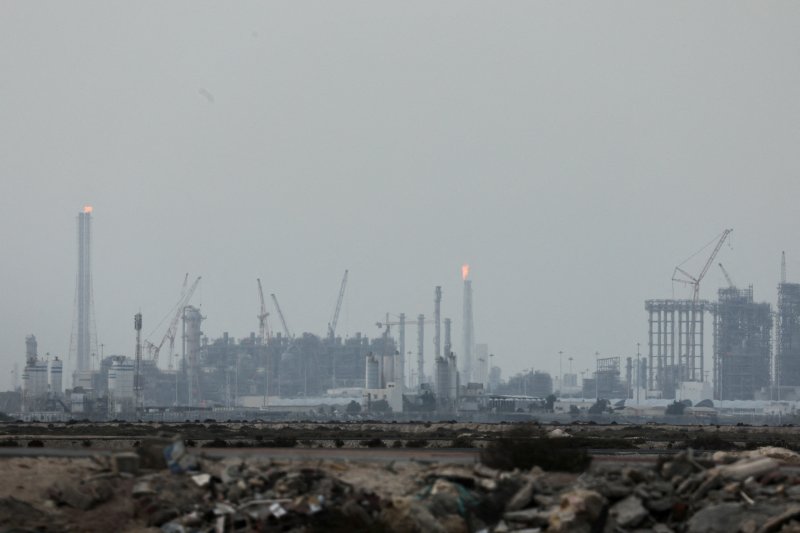
According to Financial News, hopes that gas shipments from the Middle East would resume after being halted when war broke out at the end of February have been dashed, as Qatar LNG carriers attempting to pass through the Strait of Hormuz were forced to turn back in the face of an effective blockade by the Islamic Republic of Iran.
On the 6th (local time), United Arab Emirates (UAE) daily The National reported that two Qatar LNG carriers—the Marshall Islands-flagged Rasheeda and the Bahamas-flagged AL DAAYEN—attempted to enter the Strait of Hormuz but abandoned the effort and reversed course.
This attempt had drawn attention as it was expected to be the first LNG shipment departing from the Gulf region since the conflict began on February 28. In the end, however, the effort failed.
The National noted that the incident is seen as a symbolic illustration of how severe the Islamic Republic of Iran’s blockade of the Strait of Hormuz has become.
At present, the Islamic Republic of Iran is allowing only limited passage for vessels from so-called "friendly" countries, including China, the Republic of India, Pakistan and Russia.
Unlike the Chinese ultra-large container ship that successfully passed through on the 30th of last month, the Qatar vessels were forced to turn back, a development interpreted as reflecting Tehran’s hostile stance toward Qatar.
With Qatar accounting for about one-fifth of global LNG supply, the effective closure of its export routes has put the international energy market on high alert. Around 17% of Qatar’s production facilities have already been damaged by attacks from the Islamic Republic of Iran and are expected to be out of operation for the next five years. If the strait remains blocked for an extended period, Qatar is projected to suffer annual losses of roughly 20 billion dollars (about 27 trillion won).
Fuel shortages are becoming particularly acute in Asian countries that are heavily dependent on Qatari gas.
Experts warn that the longer the Strait of Hormuz remains blocked, the closer the global LNG market will move toward a critical imbalance between supply and demand.
An energy market analyst said, "The Islamic Republic of Iran’s selective blockade—allowing Chinese ships to pass while turning back Qatar vessels—is maximizing uncertainty in the energy market," adding, "Unless there is a dramatic cease-fire agreement between the United States and the Islamic Republic of Iran, a global energy crisis this winter will be virtually unavoidable."
[email protected] Yoon Jae-joon Reporter