If U.S.–Iran ceasefire talks collapse, global oil prices could soar without limit
- Input
- 2026-04-07 07:50:17
- Updated
- 2026-04-07 07:50:17
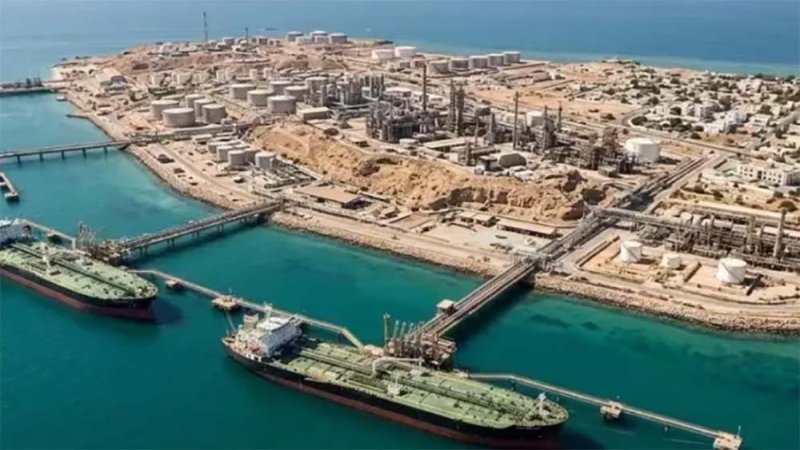
[The Financial News] As armed clashes between the United States of America (U.S.) and Israel on one side and the Islamic Republic of Iran on the other intensify, global oil prices are once again swinging sharply.
With ceasefire talks mired in uncertainty, fears of supply disruptions are spreading through the market, and traders are on edge over how high the upper bound for oil prices might rise.
On the 6th (local time), international oil prices climbed together amid heightened military tensions. Brent crude oil rose 2.01% from the previous session to settle at $111.23 per barrel, while West Texas Intermediate crude oil (WTI) jumped 3.53% to $115.48. Murban crude oil, the Middle East benchmark, also approached $117.
Given that WTI had already surged more than 11% over the weekend, market sentiment is extremely fragile. Since the conflict erupted five weeks ago, U.S. crude prices have soared about 60%, and Brent crude has jumped close to 50%.
Energy markets are now fixated on the Strait of Hormuz, the world’s most critical energy chokepoint. As U.S. President Donald Trump pressures the Islamic Republic of Iran to keep the strait open and threatens to "devastate" the country, Israel has continued airstrikes on targets including Iran’s South Pars gas field, and Iran has responded with missile attacks.
Experts estimate that the current conflict could disrupt 8–10% of global crude oil supply and 15–20% of natural gas supply.
Anindya Banerjee, an analyst at Kotak Securities, warned, "With every week that passes without a ceasefire, the potential upside range for oil prices is widening."
The gap is widening between spot prices and futures, with spot crude trading $20–30 per barrel above futures. This shows that the market is more alarmed about an immediate shortage of physical barrels than about longer-term risks.
Egypt, the Islamic Republic of Pakistan and the Republic of Türkiye have stepped in as mediators, proposing a 45-day ceasefire plan, but both Washington, D.C., and Tehran have yet to issue an official response.
OPEC Plus (OPEC+), a group of major oil-producing countries, has agreed to raise output by 206,000 barrels per day starting in May. However, most analysts judge that this is far from enough to fill the looming gap in supply.
The spike in oil prices is no longer just an energy issue; it is exerting severe downward pressure on the global economy as a whole.
Rising energy costs are feeding inflationary pressure, higher interest rates and greater market volatility. If this period of high oil prices drags on, there are growing concerns that consumption and manufacturing will contract and global growth will slow.
Jay Woods, Chief Market Strategist at Freedom Capital Markets, said in an interview with Associated Press (AP), "The dominant theme in markets now is no longer last year’s tariffs, but the uncertainty in the Middle East itself."
According to AP, market participants broadly believe that if a ceasefire is reached, oil prices could stabilize quickly. However, if negotiations collapse, prices could shoot far above the current trading range.
jjyoon@fnnews.com Yoon Jae-joon Reporter