"President Lee Is Frank and Bold"—Why Did Kim Jong Un Heap Praise at the Height of the Iran Crisis?
- Input
- 2026-04-07 06:30:00
- Updated
- 2026-04-07 06:30:00
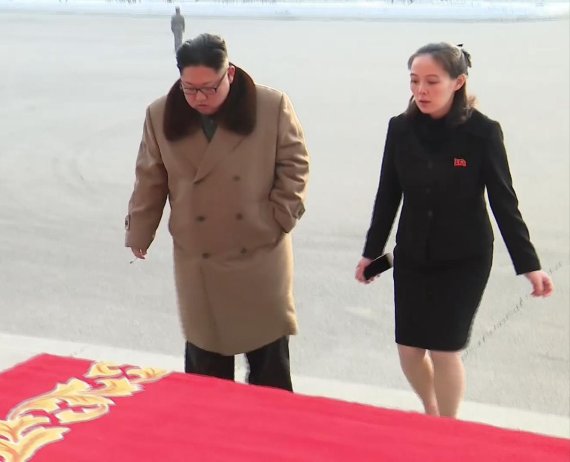
Kim Jong Un delivered his praise for President Lee through a statement issued by his younger sister, Kim Yo Jong, a senior official of the Workers' Party of Korea. Referring to President Lee's expression of regret over the drone incident, Kim Yo Jong said, "Our head of state (Chairman Kim Jong Un) assessed this as showing the attitude of a person who is frank and bold."
However, she added, "The South Korean side should not merely pay lip service to the idea that peace and stability are of paramount importance. For the sake of its own security as well, it must halt all reckless acts of provocation against the Democratic People's Republic of Korea (DPRK) and abandon any attempt at contact of any kind."
The statement is drawing particular notice because it came at a moment when the United States had issued a final ultimatum to the Islamic Republic of Iran and was poised to launch a large-scale attack. Donald John Trump, president of the United States, has repeatedly resorted to the use of force to remove or replace the leaders of so-called rogue states such as the Islamic Republic of Iran, the Bolivarian Republic of Venezuela, and the Republic of Cuba. Many observers had speculated that the next target could be the DPRK.
Yang Moo-jin, a distinguished professor at the University of North Korean Studies, assessed that the DPRK's latest response is aimed less at turning the situation around and more at managing it. Watching the war in the Middle East, Pyongyang appears to be trying to respond with a more flexible external posture rather than a hostile, isolationist one, while closely monitoring shifts in the international landscape.
Yang said, "What the DPRK is watching most closely is the burden that will fall on itself, as a nuclear-armed state, after the war in the Islamic Republic of Iran," adding, "Kim Jong Un is likely to respond to this uncertainty not by changing his overall strategy toward the South, but by adjusting tactics and using the South—our side—to his advantage."
He further argued that this shows the DPRK's hostile "two-state" theory does not mean it is indifferent to or dismissive of the South. "Outwardly, the DPRK insists that conservatives and progressives in the South are all the same, yet it is carefully watching every move our government makes," Yang said. At the same time, he noted that Pyongyang's message that it will still renounce any attempt at inter-Korean contact serves as a warning against overinterpreting the situation as a sign of imminent dialogue.
Professor Eul-Chul Lim of the Institute for Far Eastern Studies at Kyungnam University said, "The DPRK appears to believe that it has achieved a significant portion of its desired political and military objectives through this incident." By seizing on President Lee's remarks, Pyongyang has secured justification to lower military tensions and redirect troops and resources to construction sites, he explained. Lim also analyzed that between the lines of Kim Yo Jong's statement lies a calculated plan to steer the future order on the Korean Peninsula toward a "two-state relationship" defined on the DPRK's own terms.
Lim pointed to the phrase in which the DPRK said the South should "abandon any attempt at contact" as the most crucial passage. He interpreted it as a firm attempt to draw a line: while Pyongyang appreciates President Lee's expression of regret, it does not want Seoul to approach again under the banners of "one nation" or "reunification." According to Lim, this signals an intention to allow only cool-headed border management within a hostile two-state framework.
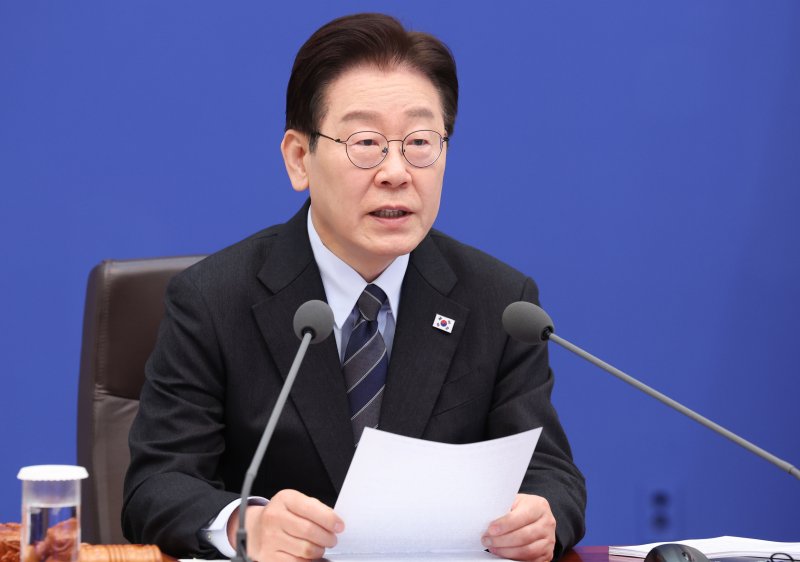
For his part, President Lee said the previous day, in connection with the incident involving a civilian drone that entered DPRK airspace, "Under this administration, an incident involving a civilian drone should never have occurred," and added, "Although it was not the intention of our government, I express regret to the North that irresponsible and reckless actions by some individuals have caused unnecessary military tension." He went on to stress, "At a time like this, peace and stability on the Korean Peninsula are more important than anything else." This was the first time President Lee had expressed regret over a DPRK-related drone incident.