[Editorial] Shock of Middle East War Reaches Even Syringes; A Domino-Style Crisis Must Be Averted
- Input
- 2026-04-06 18:31:30
- Updated
- 2026-04-06 18:31:30
The bill for soaring raw material prices is now landing on construction companies as well. Suppliers of materials such as paint, insulation, and pipes are demanding price hikes of at least 20% from construction subcontractors. Those subcontractors, in turn, are moving to pass on the higher costs by asking builders to raise their supply prices. This raw material shock could ultimately push up pre-sale housing prices and burden end consumers.
The Korean economy is sliding into a vicious cycle triggered by the prolonged Middle East conflict: higher energy prices, rising logistics and transport costs, and surging prices for manufactured goods and food. With import prices for grains such as wheat and soybeans jumping, the processed food industry is now in an emergency situation akin to the calm before a storm. Last month, the industrial products price index hit its highest level in 41 years, since related statistics began in 1985.
Against this backdrop, emerging shortages of medical supplies and rising material costs are increasingly likely to hit sectors directly tied to people’s lives and basic living standards. It is true that we are not yet facing a crisis severe enough to halt medical services or construction sites. However, warning lights are clearly flashing across the supply system. If the situation drags on, essential medical care may not function properly and construction projects could be delayed.
If shortages of crude oil and Naphtha, the basic feedstocks of industry, persist, production disruptions could spread simultaneously across sectors and push the entire economy into a domino-style crisis. A decline in petrochemical product supply would raise production costs in virtually all manufacturing industries, including medical plastics, packaging, construction materials, fertilizers, and everyday consumer goods. Companies would have little choice but to lower factory utilization rates or cut output. If inflation and supply shortages occur at the same time, and are compounded by a weak currency and high logistics costs, the shock to the real economy will only intensify.
What is more worrying is that a prolonged situation could erode the country’s industrial competitiveness itself. When raw material procurement is unstable, companies delay new investments and capacity expansions, and are forced to consider relocating production or scaling back operations. The current supply instability is not just a price issue; it is a critical variable that could shape the long-term industrial structure and the path of economic growth.
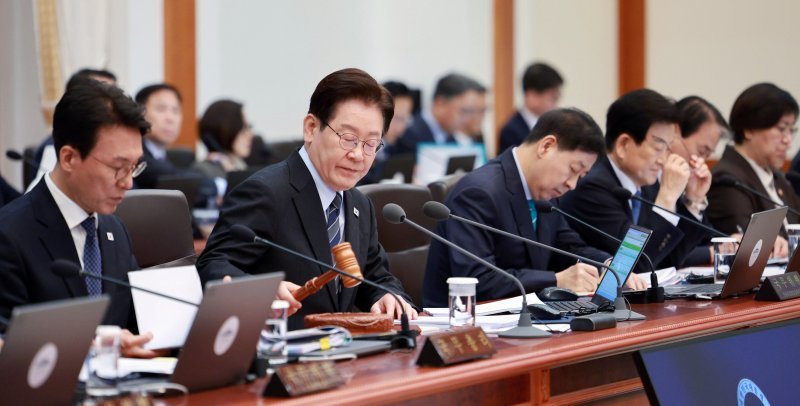
In response to this crisis, the government has begun drawing up countermeasures. At the Emergency Economic Review Meeting on the 6th, President Lee Jae-myung proposed several responses to the hardships facing people’s livelihoods due to the Middle East war, including efficient execution of a supplementary budget, support for vulnerable groups, a transition away from a fossil fuel-centered industrial system, and work-from-home arrangements in the public sector. He also called for a strong response to fake news that could sow confusion in state affairs.
These measures must be implemented without delay. At the same time, the government needs a more sophisticated strategy that both minimizes the shock from the Middle East conflict and turns the crisis into an opportunity for a new leap forward. It should stabilize supply chains by diversifying import sources and expanding stockpiles, while pairing financial and tax support so that the burden of soaring raw material prices is not shifted onto small and medium-sized enterprises or low-income households. Strengthening the economic structure so it does not sway with external shocks is another key task. National competitiveness is built on the ability to manage crises.