Food packaging shifts to eco-friendly containers... Government cracks down on hoarding of syringes and IV solutions
- Input
- 2026-04-06 18:26:38
- Updated
- 2026-04-06 18:26:38
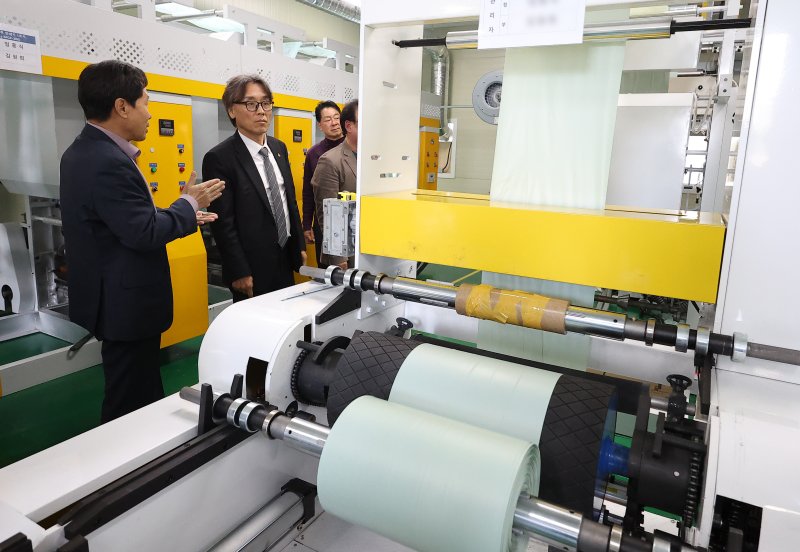
■ Food industry speeds up 'de-plastic' drive
According to industry sources on the 6th, disruptions in Naphtha supplies from the Middle East have left major domestic food companies with only about one to two months of packaging materials such as instant noodle cups and PET bottles.
Naphtha, the basic feedstock of the petrochemical industry, is the starting point for plastic packaging. Petrochemical companies use Naphtha cracking centers (NCCs) to produce polyethylene (PE), polypropylene (PP), and polystyrene (PS), which are core raw materials for food packaging.
If Naphtha supplies are disrupted, the problem can quickly escalate beyond higher packaging prices to an outright shortage of raw materials, potentially forcing a halt in production of finished goods. A food company official said, "Due to difficulties in securing Naphtha, we are concerned that our packaging inventory could be exhausted as early as May," adding, "We cannot rule out the possibility that production of non-core products will be suspended first."
Against this backdrop, the 'de-plastic' initiatives that domestic food companies have pursued for several years to meet environmental regulations and cut carbon emissions are drawing renewed attention.
Dongwon F&B has recently succeeded in developing liquid product containers that dramatically reduce plastic use. The eco-friendly container incorporates a discontinuous ring-shaped PET preform, a semi-finished product used before making PET bottles. The company plans to apply this container first to products such as tuna extract and cooking oil, and then expand it to other categories.
Lotte Chilsung Beverage has been proactively expanding its product lineup that uses 100% recycled plastic materials. Under its '2030 Plastic Reduction Roadmap,' the company plans to increase the share of recycled materials to 30% by 2030.
CJ CheilJedang launched its biodegradable materials brand 'PHACT' in 2022 and has since expanded the use of Polyhydroxyalkanoate (PHA) biodegradable bio-materials to cosmetic containers, disposable packaging, toothbrushes, and artificial turf infill. A CJ CheilJedang official noted, "As supplies of petroleum-based materials such as Naphtha become unstable, PHA is emerging as a promising alternative material," adding, "We are also seeing a growing number of inquiries about PHA from global vinyl packaging and packaging companies."
■ Government begins 'emergency control' of medical consumables
Frontline medical institutions, including hospitals and clinics, are also increasingly anxious about securing essential medical consumables such as syringes and IV-related products. In response, the government has moved to stabilize supplies by designating key medical consumables as emergency control items.
A gastroenterology specialist, identified as Dr. A, said, "Recently, our supplier informed us that certain specifications of syringes are out of stock or subject to restricted supply," adding, "If the supply instability persists, it could cause disruptions in test preparation and treatment procedures." A nurse, identified as Ms. B, who works at a hospital in Guro District, Seoul, said, "When we tried to order syringes and IV solutions, most items were marked as out of stock," and added, "Beyond what we currently have on hand, it is difficult to place additional orders."
In the case of syringes, manufacturers are said to hold up to two months of inventory, but some have reportedly already run out.
The government is ramping up its response. The Ministry of Health and Welfare held the '2nd Meeting of Health and Medical Organizations on the Middle East Situation' on the same day, chaired by Minister Jeong Eun-kyeong, to discuss joint public-private response measures. At the meeting, participants reaffirmed the principle of activating an intensive management system and responding swiftly, focusing on items that are in high demand in medical settings and essential for patient care.
To prevent market disruptions such as preemptive stockpiling or hoarding, the government plans to operate a reporting center through the Health Insurance Review & Assessment Service (HIRA). For treatment materials, it is also reviewing measures to adjust the medical service fee schedule under the National Health Insurance to reflect factors such as the rise in exchange rates.
ssuccu@fnnews.com Kim Seoyeon, Jeong Sanghee, Kang Jungmo Reporter