Road paving halted amid asphalt concrete shortage, delaying expressway openings
- Input
- 2026-04-06 18:26:11
- Updated
- 2026-04-06 18:26:11
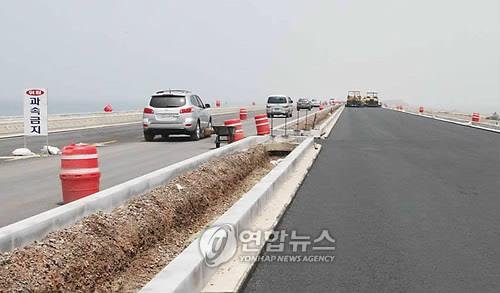
According to the construction industry on the 6th, the Public Procurement Service (PPS) sent an official notice on March 22 titled "Request for cooperation on project execution and contract management due to unstable asphalt concrete supply related to the Middle East situation" to public agencies nationwide. In the notice, the PPS asked agencies to actively consider adjusting the timing of non-urgent project tenders, extending delivery deadlines, and waiving liquidated damages.
As a result, cases of construction being suspended are rapidly spreading, especially among public institutions and local governments. In North Gyeongsang Province, 26 projects had been halted as of the 3rd. These included works to resurface roads and village access roads, as well as repairs to farm roads and dams. In North Chungcheong Province, a public sewer installation project was suspended on the 1st. All of these projects have decided to stop work "until the asphalt concrete supply stabilizes," making it difficult to predict when construction will resume.
The concern is that this supply instability is unlikely to be just a short-term issue. The Korea Expressway Corporation has secured enough asphalt concrete to last through the end of April, but expects supply disruptions after that. If asphalt concrete is not supplied on time, major projects such as the Gangjin–Gwangju Expressway and the Hamyang–Changnyeong Expressway, both aiming to open by year-end, could face delays. The corporation is preparing contingency plans, including prioritizing alternative types of work if the war drags on beyond May.
The core reason for the asphalt concrete shortage is the unstable supply of asphalt, the key raw material, specifically AP asphalt binder. AP asphalt binder is an essential material that acts as an adhesive binding aggregates, and its price has surged as international oil prices climbed following the Middle East war. In fact, the domestic price of AP asphalt binder for asphalt concrete in April was about 40% higher than in February, before the war.
The burden on the industry is also mounting. Asphalt concrete is a typical government-procured material, so suppliers must deliver at predetermined unit prices. However, because the sharp rise in raw material costs is not immediately reflected in supply prices, concerns are growing that profitability will deteriorate.
An official at the Korea Asphalt Concrete Cooperative Federation said, "The volume we are required to deliver keeps piling up, even as raw material prices rise and supplies become harder to secure, which is a heavy burden," adding, "Because government-set unit prices cannot keep up with the rapid increase in raw material costs, difficulties are mounting across the entire industry."
[email protected] Choi Ga-young Reporter