Japanese vessel passes through Strait of Hormuz for third time... Foreign Ministry says, "Conditions differ by ship and by country" [US–Iran War]
- Input
- 2026-04-06 18:25:24
- Updated
- 2026-04-06 18:25:24
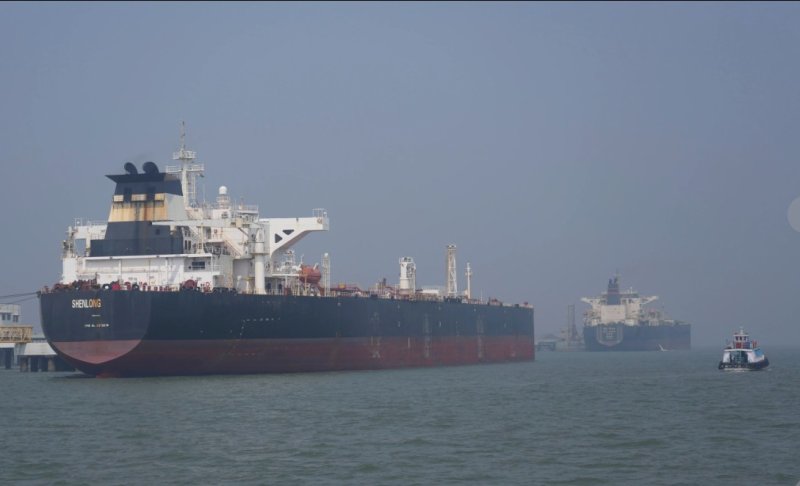
As three vessels linked to Japan and France that had been stranded in the Strait of Hormuz have successively managed to "escape," South Korea’s diplomatic authorities have moved to get a clearer picture of the situation. Many of the ships that exited the Strait of Hormuz are reportedly connected to countries viewed favorably by the Islamic Republic of Iran.
According to the Ministry of Foreign Affairs of the Republic of Korea on the 6th, the Japanese vessel that left the Strait of Hormuz is registered under the flag of Panama, while the French ship sails under the flag of Malta. The Japanese liquefied natural gas (LNG) carrier that passed through the Strait of Hormuz on the 1st is a Panama-flagged vessel jointly owned by Japan’s Mitsui and the Sultanate of Oman, and it was not carrying any cargo. The Islamic Republic of Iran and the Sultanate of Oman are currently discussing navigation rules and related issues for the Strait of Hormuz. A second Japanese liquefied petroleum gas (LPG) carrier that transited the strait on the 4th is now heading to the Republic of India. There are no Japanese crew members on board; most of the crew are Indian nationals.
The Republic of India is receiving exceptional treatment based on its close ties with the Islamic Republic of Iran. Iran has made an exception to allow the passage of India-flagged vessels. The Japanese government, however, has drawn a clear line, stating that it had no involvement in these particular voyages.
Another container ship operated by a French shipping company that exited the Strait of Hormuz is a Malta-flagged vessel. Its captain independently kept the Automatic Identification System (AIS) switched on while navigating through the strait.
An official from the Ministry of Foreign Affairs of the Republic of Korea stated, "The Japanese and French vessels that left the Strait of Hormuz differ widely in flag state, ownership, destination, and crew nationality. Simple comparisons between countries do not adequately reflect the current situation." Some critics in South Korea argue that, unlike the Japanese vessels, South Korean ships have not been able to leave, pointing to a lack of diplomatic leverage.
In addition, some ships have reportedly attempted to reroute along the coast of the Sultanate of Oman, away from the Strait of Hormuz under Iranian control. Earlier this month, two Oman-flagged oil tankers and one LNG carrier tried to enter the strait by sailing along the Gulf of Oman instead of using the Iranian-designated route. As South Korea is the largest buyer of LNG produced by the Sultanate of Oman, accounting for about 44.2% of its total LNG exports, there had been expectations that South Korean vessels might also use this alternative route. However, the waters off the Gulf of Oman are relatively shallow and the routes are complex, making it difficult for South Korea’s very large crude carriers to operate there.
The Ministry of Foreign Affairs of the Republic of Korea has said that Official Development Assistance (ODA) projects for the Islamic Republic of Iran, which is currently at war with the United States of America (US), will continue. At the same time, it drew a line, clarifying that these humanitarian aid projects will not be linked to the navigation of the 26 South Korean vessels that have been stranded in the Strait of Hormuz for five weeks. A ministry official explained, "The government is carrying out various humanitarian assistance projects in Iran. We are continuing ODA projects through multilateral organizations, and this support will continue going forward." Humanitarian aid accounts for more than 80% of South Korea’s ODA projects in Iran, a relatively high proportion.
The number of South Korean crew members stranded in the Strait of Hormuz was around 180 at the outset of the blockade, but has recently fallen slightly to 170 after a total of 10 crew members, including trainees from Korea Maritime & Ocean University (KMOU) and Mokpo National Maritime University, disembarked. About 130 people are currently on board the 26 South Korea-flagged vessels, while the remaining personnel are staying on foreign-flagged ships.
[email protected] Reporter Kim Kyung-soo Reporter