Foreign investors, who bought semiconductors for the first time in 12 sessions, turn back to selling... Has the supply-demand bottom been reached?
- Input
- 2026-04-06 16:11:12
- Updated
- 2026-04-06 16:11:12
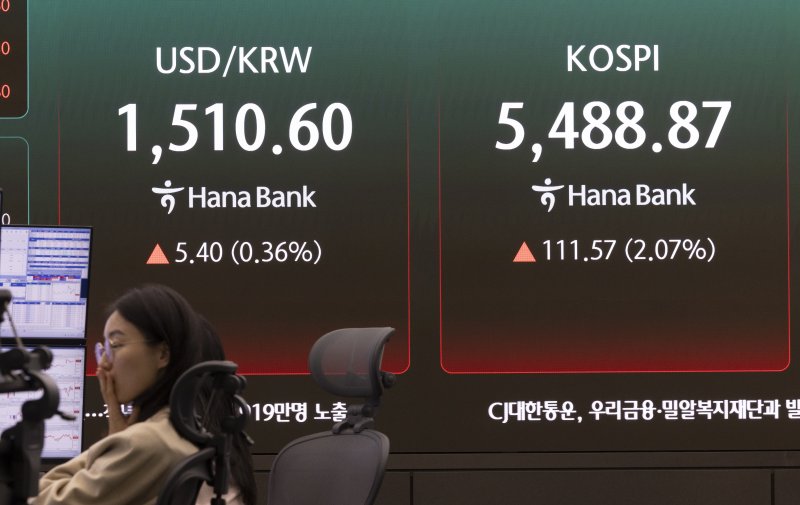
According to the Korea Exchange on the 6th, foreign investors recorded net sales of 219.1 billion won in the domestic stock market that day. On the 3rd, they had turned to net buying for the first time in 12 sessions, purchasing 606.7 billion won and raising expectations for an improvement in flows, but reverted to selling after just one trading day.
Looking at the March trend, the net selling stance of foreign investors becomes even clearer. Except for just three trading days last month, foreigners consistently posted net sales, effectively selling throughout the entire period. Their last net buying in the domestic market was 644.6 billion won in January; since then, they have continued large-scale net selling, starting with 1.98641 trillion won in February.
The selling has been concentrated particularly in semiconductor stocks. More than 90% of foreigners’ net selling on the main board came from semiconductor names such as Samsung Electronics and SK hynix. In fact, during February and March, foreign investors led the selling by offloading a net 32.8291 trillion won of Samsung Electronics and 15.7736 trillion won of SK hynix.
This is seen less as an exit from the Korean market and more as a process of adjusting overweight positions in specific sectors such as semiconductors. After last year’s sustained semiconductor rally pushed portfolio weights heavily toward the sector, foreign investors have been taking profits and rebalancing to correct that concentration, analysts say.
Eun Taek Lee, research analyst at KB Securities, explained, "The key point is that foreign investors were heavily concentrated in semiconductors and autos from the start," adding, "Share prices in these sectors surged, and they had little choice but to rebalance to prevent excessive portfolio concentration."
By type of capital, there are also cases where semiconductor exposure has actually increased. Passive funds such as exchange-traded funds (ETFs) have raised their semiconductor weights, while active funds, including those focused on emerging markets (EM) and value funds, have reduced exposure. In other words, global investors have been adjusting positions differently depending on their strategies.
Against this backdrop, foreign investors turned to net buying on the 3rd for the first time in 12 sessions, concentrating purchases on semiconductor names. SK hynix (365.5 billion won), Samsung Electro-Mechanics (142.5 billion won), and Samsung Electronics (98 billion won) ranked among the top net buys. The securities industry interprets this as foreign capital flowing in on the back of bargain hunting after an excessive correction in semiconductor shares, combined with rising earnings expectations and improving fundamentals.
Lee Jae-won, research analyst at Yuanta Securities, noted, "Ahead of the preliminary first-quarter results announcement on the 7th, some domestic and foreign brokerages are projecting an operating profit consensus for Samsung Electronics that exceeds 50 trillion won, which is fueling optimism," and added, "As of the closing price on the 2nd, the KOSPI 12-month forward price-to-earnings ratio (PER) had fallen to 7.65 times, entering deep value territory, creating an environment similar to past periods when the intensity of foreign selling eased."
However, some analysts argue it remains uncertain whether this buying pattern will develop into a sustained trend reversal. Given that semiconductor exposure is still high, there is room for additional rebalancing-driven selling, and the recent buying is also seen as reflecting bargain hunting after steep declines and some short-covering activity.
Eun Taek Lee of KB Securities said, "Despite this year’s selling by foreign investors, the value of their holdings has actually increased because share prices have risen even faster," and continued, "Their positions are still overweight, so it is reasonable to expect further selling for additional rebalancing."
[email protected] Bae Han-geul Reporter