"If you don't bake the bread yourself, you won't get any inheritance tax deduction"... Business Succession Deduction system to be completely overhauled
- Input
- 2026-04-06 13:16:15
- Updated
- 2026-04-06 13:16:15
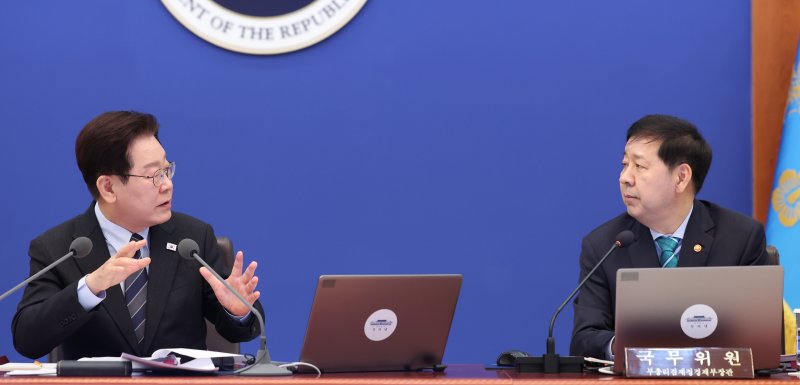
[The Financial News] Going forward, restaurant businesses such as bakery cafés that do not bake their own bread will be excluded from the scope of the Business Succession Deduction.
The Ministry of Economy and Finance (MOEF) announced on the 6th, during the 14th meeting of the State Council of South Korea held together with the 4th Emergency Economic Review Meeting, a reform plan for the Business Succession Deduction system that includes these changes.
Since the system was introduced in 1997, the deduction limit has been gradually expanded and the eligibility requirements eased. As a result, it has increasingly been abused as a tool to avoid inheritance tax, leading the government to conclude that a full redesign of the system is necessary.
Accordingly, the range of eligible industries will be extensively revised. Real estate leasing and professional services such as law and accounting will be removed from the list of businesses that can receive the deduction. Even within the restaurant sector, bakery cafés and similar establishments that do not manufacture bread themselves will no longer qualify.
The government will also tighten the process for selecting eligible industries. Koo Yun-cheol, Deputy Prime Minister and MOEF Minister, stated, "We will carefully select only the necessary industries and operate the review procedures strictly so that taxpayers must prove their eligibility."
The deduction for land, which has been highly controversial, will be significantly reduced as well. Currently, land up to three to seven times the building's floor area can be recognized as eligible for the deduction. Going forward, that scope will be narrowed, and a per-area deduction limit will be introduced. In substance, this is intended to block the practice of passing on land while claiming the Business Succession Deduction as a loophole.
The deduction rules for companies engaged in multiple lines of business will also be revised. If a company operates both eligible and ineligible businesses, a proportional method will be introduced so that the deduction is split based on the share of sales or assets attributable to each type of business.
The required management period to qualify for the Business Succession Deduction, as well as the post-succession monitoring period, will be extended. At present, the decedent must have managed the business for at least 10 years, and post-succession monitoring is required for five years. These periods will be lengthened, and requirements to submit documentation proving actual management and to undergo regular inspections will be strengthened.
The government plans to incorporate this reform plan into the 2026 tax law amendment bill after consultations with relevant ministries and collecting public input.
Koo Yun-cheol said, "We are essentially revisiting the question of what truly constitutes a family business," adding, "We will focus support on industries with technology and know-how, and boldly exclude sectors where the justification for support is weak."
[email protected] Seo Young-jun Reporter