Ministry of Trade, Industry and Energy of the Republic of Korea: "Limited tariff impact expected on washing machines with high U.S. local production share; effects differ by product"
- Input
- 2026-04-06 13:45:10
- Updated
- 2026-04-06 13:45:10
The Ministry of Trade, Industry and Resources stated on the 6th that, in connection with the U.S. revision of its Section 232 Tariffs regime for steel, aluminum, and copper derivatives, companies’ administrative burdens will be partially eased overall, while the actual impact will differ by product category.
Starting on the 6th local time, the United States is changing its tariff calculation method for steel, aluminum, and copper from a "value-added basis" to a "finished product customs value basis." Previously, separate tariffs were imposed on the value of steel, aluminum, or copper contained in a given product. Going forward, finished products in which these metals account for 15% or more of the value will instead be subject to tariffs of 15%, 25%, or 50%, depending on their weight. Section 232 Tariffs are applied in addition to existing tariffs.
As a result of this change, the number of derivative products subject to tariffs is expected to fall by about 17%, equivalent to roughly $2.3 billion in trade. The Ministry of Trade, Industry and Resources assessed that this will lower the overall tariff burden. Products such as cosmetics and food, which have been removed from the list of derivative products, will not be subject to any additional tariffs.
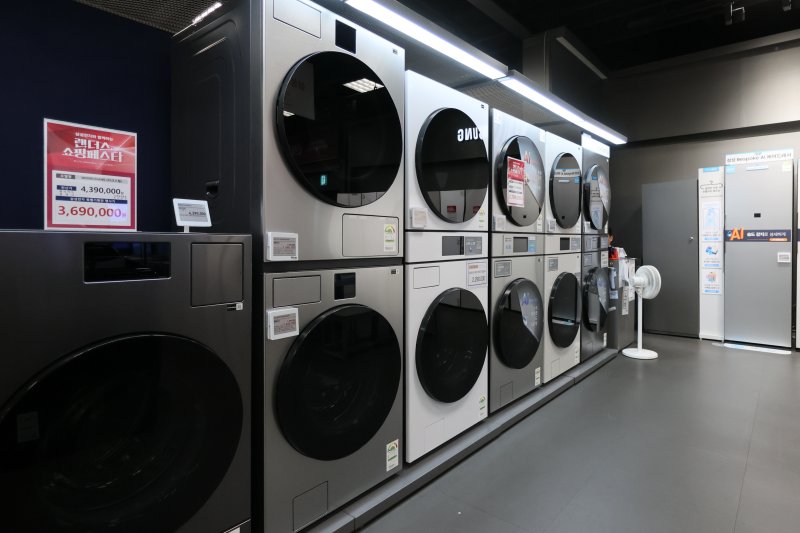
The impact, however, is expected to vary by product. For washing machines, the effect is projected to be limited because a high proportion of units for the U.S. market are manufactured locally. In contrast, some machinery and home appliance products may face higher tariff burdens.
Extra-high voltage transformers and certain machine tools will benefit from a reduced tariff rate, falling from 25% to 15% until December 31, 2027, which is expected to ease cost pressures during that period. In addition, derivative products in which steel, aluminum, or copper account for less than 15% of the value will be excluded from Section 232 Tariffs.
The government also expects the revised system to ease administrative burdens on companies. Under the previous regime, firms had to prove the metal content for each product, but the shift to a unified ad valorem tariff based on customs value simplifies the procedures.
Moreover, unlike the previous structure where tariff rates could differ by company even for the same product, the move to a uniform ad valorem tariff based on customs value could improve the price competitiveness of Korean products compared with those from countries without a Free Trade Agreement (FTA) with the United States. The tariff rate under the United States–Korea Free Trade Agreement (KORUS FTA) for steel, aluminum, and copper derivative products is 0%.
Kwon Hye-jin, Director-General for Trade Negotiations at the Ministry of Trade, Industry and Resources, stated, "Some products are disadvantaged by this reform, while others benefit, so it is difficult to make a uniform assessment of the impact." She added, "There are also positive aspects, such as reduced administrative burdens and greater policy certainty." She went on to say, "We will closely analyze the impact by sector and continue working with the U.S. side to alleviate the burden on Korean companies."
[email protected] Kim Jun-hyuk Reporter