"We Will Bring You Hell": United States and Iran Clash as 48-Hour Deadline Nears
- Input
- 2026-04-05 18:55:15
- Updated
- 2026-04-05 18:55:15
On the 4th (local time), Trump wrote on the social media platform Truth Social, "There is not much time left. They have 48 hours until the gates of hell open for them." He added, "Remember when I gave Iran ten days either to accept our terms or to open the Strait of Hormuz."
Trump, who has been attacking Iran alongside Israel since February 28, warned via Truth Social on the 21st of last month that if Iran did not fully reopen the Strait of Hormuz within 48 hours, he would strike Iran's power grid. On the 23rd of last month, he abruptly claimed that he was in negotiations with Iran and said he would postpone the attack by five days, and on the 26th he announced that the suspension of strikes would be extended until the 6th of this month. On the 4th, Trump posted bombing footage of Iran on Truth Social and stated, "This large-scale air raid on Tehran has eliminated many of the military leaders who have led Iran's forces poorly and unwisely."
That same day, media in the United Kingdom reported that Israel is preparing to attack Iranian energy facilities and is waiting for approval from the United States. One official predicted that the strike would likely take place in the second week of April.
Also on the 4th, General Ali Abdollahi Aliabadi, commander of the Khatam al-Anbiya Central Headquarters, warned Trump that if Iran's critical infrastructure were attacked, "the gates of hell will open for you." A spokesperson for Khatam al-Anbiya Central Headquarters likewise targeted the United States and Israel, stressing, "If hostile acts escalate, the entire region will turn into hell for you." The spokesperson went on to say, "The illusion that you can defeat Iran will soon become the quagmire you fall into." On the morning of the 5th, Iran continued missile and drone attacks toward Israel and Kuwait, damaging the Ministry of Finance (Kuwait) building and oil facilities. In the western part of the United Arab Emirates (UAE), an Iranian attack on the 5th caused a fire at a petrochemical plant.
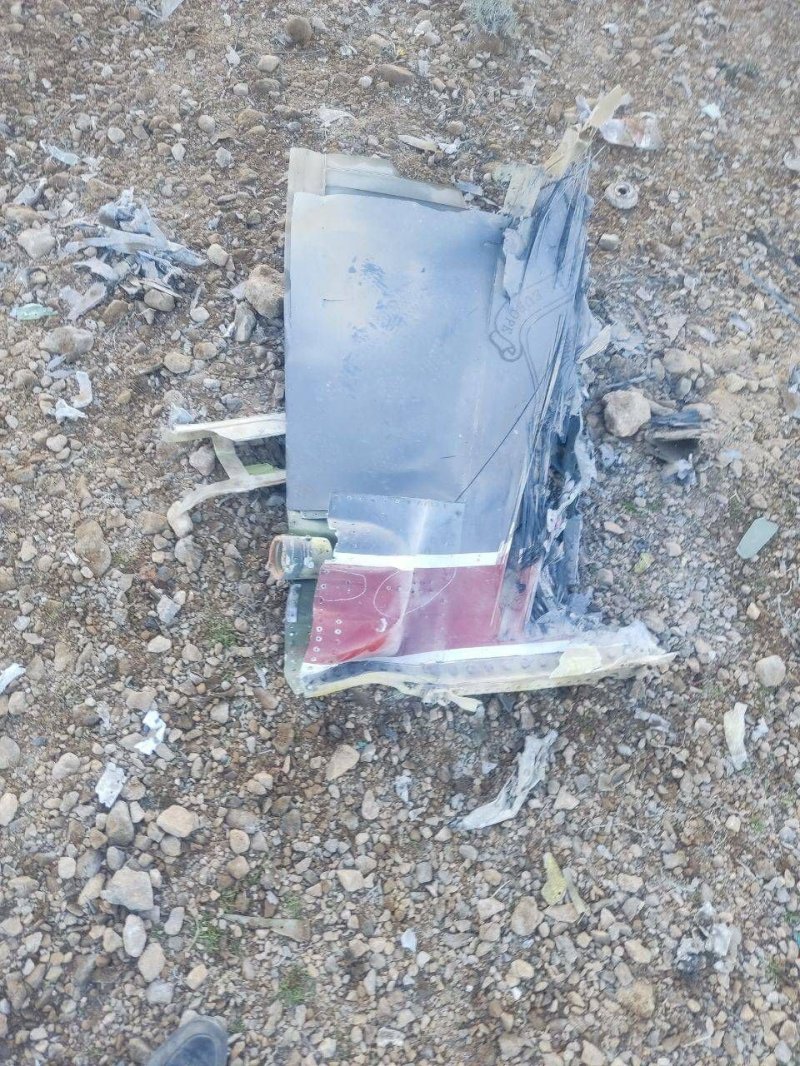
Trump, who had been plunged into political crisis after a U.S. McDonnell Douglas F-15E Strike Eagle was shot down on the 3rd, was able to breathe a sigh of relief when the missing pilot was rescued the following day. According to The New York Times (NYT) and other outlets, the U.S. military deployed hundreds of special forces troops to southern Iran to rescue the one missing pilot. Iran's military claimed that in the same engagement it destroyed one U.S. tanker aircraft and two helicopters. In his Truth Social post, Trump declared, "The U.S. military has completed one of the most daring search and rescue operations in American history," adding, "He (the missing pilot) was injured, but he is going to be fine."
Although Iran failed to capture the U.S. pilot, it still holds other cards. On the 3rd, Iranian parliament speaker Mohammad Bagher Ghalibaf wrote on X (formerly Twitter), "What share of global shipments of oil, liquefied natural gas, wheat, rice and fertilizer passes through the Bab el-Mandeb Strait? Which countries and companies have the largest volume of cargo moving through this strait?"
The Bab el-Mandeb Strait, which links the Red Sea and the Indian Ocean, is a key chokepoint through which about 10% of the world's seaborne oil trade passes. Iran is already locked in a standoff with the United States by exerting control over the Strait of Hormuz, through which about 25% of global seaborne oil shipments once flowed.
Meanwhile, the Houthis, an Iran-aligned armed faction in the Republic of Yemen, declared on the 28th of last month that they were entering the war by firing missiles at Israel. The Houthis warned that if Middle Eastern countries joined the war on Iran's side by helping the United States and Israel, they could move to close the Bab el-Mandeb Strait.
[email protected] Park Jong-won Reporter