Will Feed Prices Rise Further Due to the Middle East War Fallout? Concerns Over a Series of Livestock Price Hikes
- Input
- 2026-04-05 09:52:43
- Updated
- 2026-04-05 09:52:43
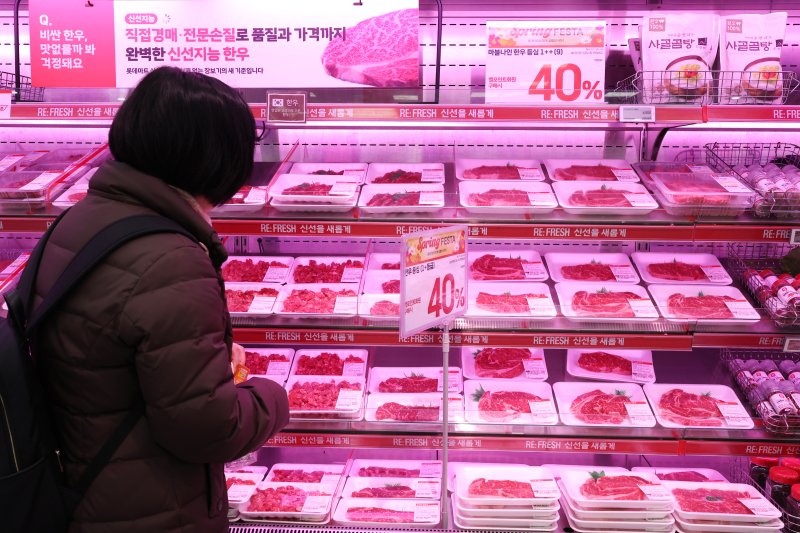
According to Financial News, volatility in global grain prices, oil prices, and exchange rates triggered by the Middle East war is now feeding into domestic feed prices. There are growing projections that rising feed costs could soon push up livestock product prices as well.
Data from the Ministry of Agriculture, Food and Rural Affairs (MAFRA) on the 5th show that the average price of feed by livestock type, including for poultry and pigs, climbed 3.0%, from 597 won per kilogram in November last year to 615 won in February. This is largely attributed to higher import costs caused by the weaker currency.
The problem is that additional upward pressures are building. A MAFRA official stated, "Volumes to be used through July have already been contracted, but for shipments from August onward, higher oil prices, exchange rates, and ocean freight rates will be reflected, making price increases unavoidable."
First, the Middle East war has driven up oil prices sharply, increasing transportation costs. For example, the freight rate for shipping corn from the United States to Japan has reportedly almost doubled, from 25 dollars per ton before the war to 47 dollars.
Prices of feed ingredients are also on the rise. According to the Korea Agro-Fisheries & Food Trade Corporation (aT), the price of soybean meal, a key feed ingredient, stood at 315.2 dollars per ton as of the 2nd, up 8.3% from the beginning of the year. Corn prices also increased 3.4% to 4.52 dollars per bushel (27.2 kilograms).
Concerns over corn supply are adding further upward pressure. Last year, reduced planting area in the U.S. led to lower export volumes, while higher oil prices boosted demand for corn-based bioethanol, increasing consumption.
With oil prices, exchange rates, and raw material costs all rising at the same time, the likelihood of feed price hikes is growing. Industry insiders warn that prices could spike as they did during the Russian Federation–Ukraine war. Before that war, the average price of compound feed for livestock was in the mid-570 won range per kilogram, but after the conflict began it surged into the 700 won range.
Higher feed prices can directly affect livestock product prices. Because feed accounts for 40–60% of livestock production costs, increased feed expenses can easily translate into upward price pressure. Livestock prices are already running above last year’s levels, as reduced slaughter volumes and delayed shipments caused by winter livestock epidemics have overlapped.
According to the "Consumer Price Trends for March" released by the Ministry of Data and Statistics, livestock product prices last month were 6.2% higher than a year earlier. Data from the Korea Institute for Animal Products Quality Evaluation (KAPE) also show that the price of Hanwoo (Korean native beef cattle) tenderloin reached 14,352 won per 100 grams as of the 2nd, up 21.8% from a year ago. In addition, front-leg pork prices rose 4.3%, chicken 15.4%, and a tray of eggs 4.0% over the same period.
[email protected] Reporter Park Seong-hyun Reporter