"Countries Seek Ways Around Trump to Resolve Strait of Hormuz Crisis"
- Input
- 2026-04-05 04:46:28
- Updated
- 2026-04-05 04:46:28
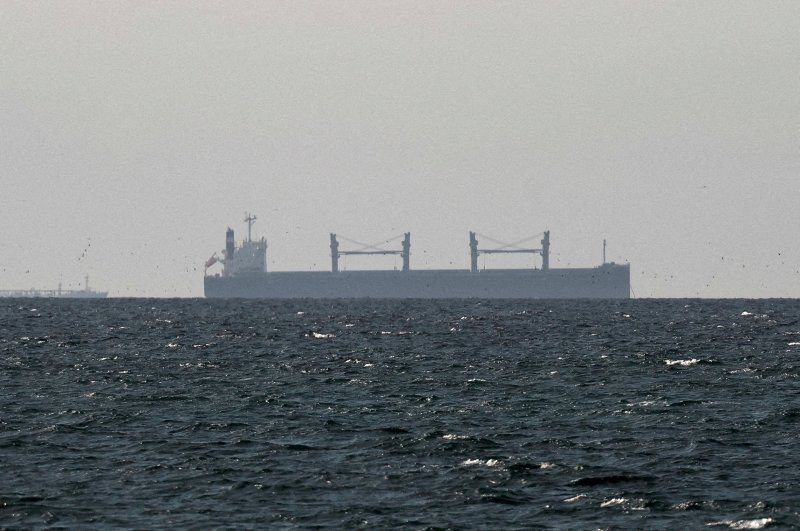
With Iran tightening its grip on the Strait of Hormuz, a vital chokepoint for global maritime energy transport, world leaders are seeking ways to reopen the waterway by working around United States President Donald Trump.
President Donald Trump launched a war against Iran together with Israel without any prior consultation with allies and without preparing contingency plans for a blockade of the strait. After the waterway was shut, he tried to evade responsibility, prompting other countries to look for alternative solutions.
The United States is expected to see its international standing change significantly in the aftermath of the war.
Seeking solutions around Trump
The Hill, a congressional news outlet, reported on the 4th (local time) that countries heavily dependent on supplies moving through the Strait of Hormuz are scrambling to draw up emergency measures to reopen the shipping lanes.
On the 2nd, the United Kingdom met with representatives from 41 countries to discuss plans for reopening the strait. London also sharply condemned Iran, accusing it of holding the global economy "hostage."
Although not stated openly, these countries are said to be deeply frustrated with President Donald Trump and the United States.
On February 28, Trump launched the war against Iran with Israel, without any prior consultation with allies and without preparing any measures in case the Strait of Hormuz was blocked.
As Iran has refused to yield easily, he is now demanding that allies join the war and share the burden of sacrifice.
French President Emmanuel Macron, who visited South Korea, expressed strong dissatisfaction with this approach and made it clear that France could not cooperate.
Speaking to reporters on the 2nd, Macron said, "You cannot complain about not getting support for an operation that you decided on unilaterally," adding, "This is not our operation."
Trump is pressuring countries that rely on the strait to join offensive operations aimed at reopening the waterway.
At the United Nations Security Council (UNSC), Bahrain is leading efforts to pass a resolution to protect commercial navigation in the Strait of Hormuz and surrounding waters. A vote is expected this week, although China, which holds veto power, is reportedly opposed.
Last month, the United Nations (UN) also launched a task force to address humanitarian needs, including energy and fertilizer feedstocks.
Trump flounders without clear direction
According to The Hill, Trump has been making highly contradictory remarks about how to resolve the Strait of Hormuz crisis, effectively acknowledging that the war was decided impulsively rather than through careful advance planning.
His national address on the 1st was riddled with inconsistencies. He first argued that countries most dependent on Gulf energy supplies should take the lead in reopening the strait, then went on to say that the waterway would naturally reopen once the war ended.
Two days later, on the 3rd, he wrote on his social media platform Truth Social that, given a bit more time, the United States could open the strait, seize the oil, and make a great deal of money.
His comments have made it nearly impossible to discern what the United States is actually aiming to achieve.
Iran begins charging transit fees
Despite attacks by the United States and Israel, Iran continues to hold the strait. Blocking the passage is far easier than breaking a blockade: the destruction of even a single merchant vessel would be enough to deter other ships from attempting the route.
Iran has also begun charging transit fees for passage through the Strait of Hormuz in the wake of the war.
According to Bloomberg News, once a ship proves it has no ties to the United States or Israel, the Islamic Revolutionary Guard Corps (IRGC) begins negotiating transit fees, and Iran offers favorable terms to countries it considers friendly.
For oil tankers, fees start at 1 dollar per barrel. Some tankers carry up to 2 million barrels, and payments are made in Chinese yuan (renminbi) or cryptocurrency. That means a single transit can cost as much as 2 million dollars, or roughly 3 billion won.
The summit hosted by the United Kingdom with 41 invited countries declared that they would refuse to pay these transit fees. However, if the blockade drags on, such resolutions may prove meaningless.
[email protected] Song Kyung-jae Reporter