Trump warns Iran of "hell" – "Strait of Hormuz must be opened within 48 hours"
- Input
- 2026-04-05 04:07:59
- Updated
- 2026-04-05 04:07:59
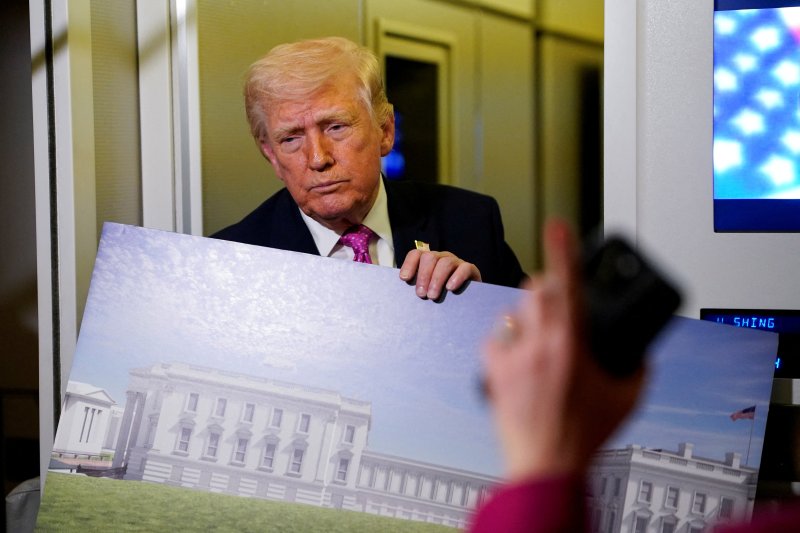
On the 4th (local time), Donald Trump demanded that the Islamic Republic of Iran open the Strait of Hormuz within 48 hours. He warned that if the strait remains closed, "all hell will rain down on them," signaling that Iran would face a massive US military assault.
According to Axios, the 48-hour deadline Trump mentioned refers back to the 10-day deadline he had previously set. He had given Iran ten days, saying that if there was no agreement to reopen the Strait of Hormuz, he would order strikes on its energy, water, and oil infrastructure.
Trump’s "48-hour ultimatum" came as Islamic Republic News Agency (IRNA) and other Iranian state media reported that the US and the State of Israel had attacked Iran’s petrochemical complexes and nuclear power plants earlier that morning.
The Islamic Republic of Pakistan, Arab Republic of Egypt, and Republic of Türkiye have been trying to mediate, but indirect cease-fire talks tied to reopening the strait have made little progress.
Amid the stalemate, Trump turned to his own social media platform, Truth Social, and used his trademark hard-line tone to ratchet up pressure on Iran.
He wrote, "Remember when I gave Iran ten days to make a deal or open the Strait of Hormuz," adding, "Time is running out. They have 48 hours before all hell comes down on them."
Lindsey Graham, a Republican Party (GOP) senator from South Carolina, also posted on X (formerly Twitter) that he had spoken with the president on the 4th about the ultimatum.
Graham said, "After my conversation with President Trump, I am convinced he is prepared to use overwhelming military force." He warned, "If they (Iran) continue to obstruct passage through the Strait of Hormuz and reject a diplomatic solution that would allow us to achieve our military objectives, that is what will happen."
He went on to say, "If Iran and others still do not clearly understand what President Trump means, I do not know when they ever will," underscoring that the latest remarks amount to a de facto final ultimatum.
The indirect talks between the two sides are being led by US Vice President James David Vance and Iranian parliament speaker Mohammad Bagher Ghalibaf, with mediation by Asim Munir, Pakistan’s chief of army staff. Special Envoy of the White House Steven Charles Witkoff and the foreign ministers of the Islamic Republic of Iran, Islamic Republic of Pakistan, Republic of Türkiye, and Arab Republic of Egypt are also taking part in the negotiations.
According to sources, the mediators have tried to arrange direct talks as negotiations stalled, but these efforts have produced almost no tangible results.
One source said Iran has rejected any proposal for a temporary cease-fire and is instead demanding a permanent end to hostilities that includes a clear guarantee that the US will never attack again. Given the imbalance in national power, Iran fears that repeated US strikes would steadily weaken the country and ultimately lead it down a path to collapse.
Axios reported that, with talks deadlocked and Trump’s deadline looming, there is a pervasive sense of pessimism that a deal is unlikely to be reached by the 6th.
[email protected] Song Kyung-jae Reporter