Price controls, export curbs, and demand suppression: refiners hit by a triple blow
- Input
- 2026-04-06 07:59:00
- Updated
- 2026-04-06 07:59:00
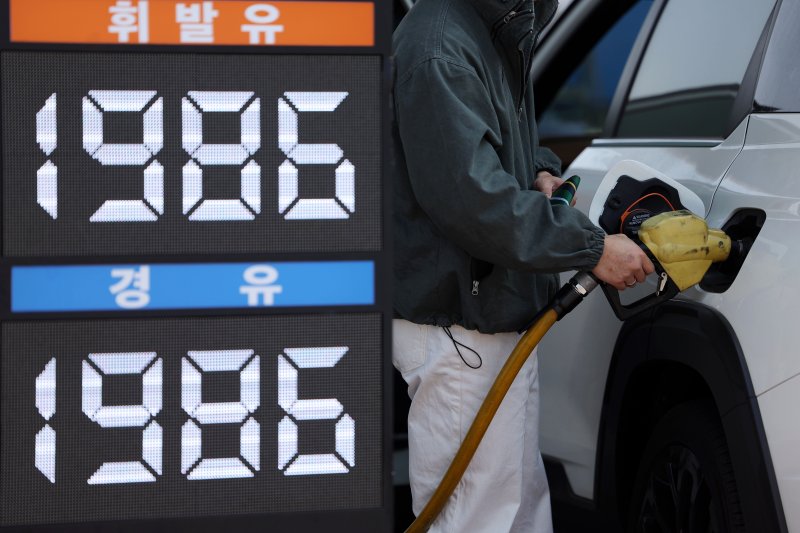
According to The Financial News, international diesel and kerosene prices have nearly doubled in just one month, but domestic prices are constrained by a maximum price scheme, dealing a direct blow to the profitability of the refining industry. On top of this, export restrictions and demand-suppression measures are piling up, creating a full-fledged "triple burden" for refiners.
Industry data on the 6th show that international petroleum product prices have been climbing steeply. On the 2nd of last month, gasoline was at $90.30 per barrel, kerosene at $116.44, and diesel at $115.13. By the 2nd of this month, they had surged to $144.48, $231.64, and $292.80, respectively. Kerosene and diesel in particular have almost doubled in a month, marking especially sharp increases.
However, domestic retail prices are subject to policy-imposed caps, limiting how far they can rise. Since the 27th of last month, the government has implemented a second-stage maximum price system, setting ceilings of 1,934 won per liter for regular gasoline, 1,923 won for automotive and marine diesel, and 1,530 won for indoor kerosene. At the same time, it expanded fuel tax cuts, from 7% to 15% for gasoline and from 10% to 25% for diesel, in an effort to curb price increases.
As a result, the gap between international benchmarks and domestic prices is widening rapidly. While input costs are soaring, retail prices are locked under the cap, making it structurally difficult to pass higher costs on to consumers. For refiners, compressed margins are becoming unavoidable, increasing the strain on profitability.
Export conditions are also deteriorating. To stabilize Naphtha supplies, the government is enforcing export restrictions and is considering additional limits on petroleum product export volumes. This inevitably constrains refiners’ strategy of expanding exports to defend profitability.
On top of that, demand-suppression policies are adding further pressure. The government has raised the crude oil resource security crisis alert from "Caution" to "Warning" and decided to introduce an alternate-day driving system for passenger cars at public institutions starting on the 8th. Public parking facilities operated by public institutions will also be subject to a five-day rotation system. These measures are intended to reduce fuel consumption, but for refiners they translate directly into lower sales volumes.
This triple squeeze of price controls, export restrictions, and weakening demand is also heightening uncertainty around earnings forecasts. The securities industry expects first-quarter results for the refining industry to improve significantly, driven by higher inventory valuation gains as the value of crude oil holdings rises with surging prices. However, refiners stress that these are accounting gains and do not reflect actual operating conditions. With freight costs rising and transport delays adding to expenses, while product prices remain capped under the maximum price scheme, there is growing concern that real margins will shrink.
To ease the burden on refiners, the government has earmarked 5 trillion won in loss-compensation funds, the largest amount ever allocated for a single program. However, because the method and scale of compensation have yet to be finalized, there is a strong possibility that refiners will have to shoulder first-quarter costs in full.
A refining industry official said, "The idea is that oil refining companies will calculate and submit their losses, and then the Maximum Price Settlement Committee, made up of experts, will verify them and determine the compensation amount. But as far as we know, no concrete criteria have been established yet, and the committee itself has not been formed," adding, "There are so many variables affecting the market that it is difficult to see even a day ahead."
[email protected] Reporter Koo Ja-yoon Reporter