US to Impose at Least 25% Tariffs on Steel, Aluminum and Copper Derivatives; Home Appliances Hit Hard, Cosmetics and Food Exempt
- Input
- 2026-04-03 15:22:24
- Updated
- 2026-04-03 15:22:24
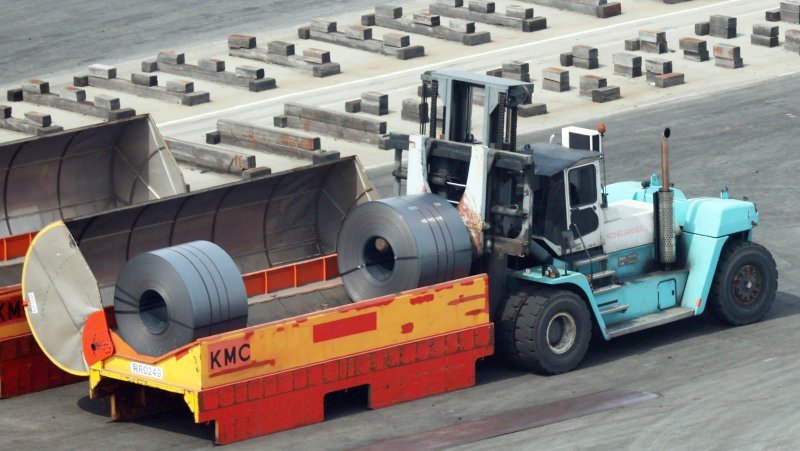
Items in which steel, aluminum or copper account for a substantial portion of the product will face an additional 25–50% tariff, depending on that share. Home appliances such as washing machines and refrigerators, which have a high steel and aluminum content, are expected to be hit the hardest.
However, products with a low share of steel, aluminum or copper (less than 15%), including cosmetics, chemical products and foodstuffs, are expected to be excluded from these tariffs.
According to the Ministry of Trade, Industry and Resources on the 3rd, the US announced on the 2nd (local time) that it will overhaul the tariff regime under Section 232 of the Trade Expansion Act of 1962 (Section 232) in this way.
Until now, the US has imposed a 50% tariff under Section 232 on the portion of a product’s price attributable to its steel, aluminum or copper content, while applying general global tariffs to the remaining value.
Under the new announcement, starting on the 6th (local time), tariffs will be calculated based on the total price of the finished product, instead of requiring a separate calculation of metal content value.
The previous procedure that allowed companies to apply three times a year for additional derivative product exemptions will be abolished.
However, the administration will retain its authority to add items on its own initiative, and the U.S. Department of Commerce will review the new measures after 90 days.
Depending on the product, an additional 50% or 25% tariff will be levied on top of the basic tariff.
Items made entirely of steel, aluminum or copper will face a 50% tariff, while derivative products in which these metals account for a significant share will be subject to a 25% rate. For certain products such as industrial machinery and power grid equipment, a reduced 15% rate will temporarily apply instead of 25% until 2027. As a result of these measures, products with a low share of steel, aluminum or copper—such as cosmetics, chemical products, foodstuffs, furniture and lighting—will be excluded from the derivative product category and therefore will not be subject to Section 232 tariffs going forward. Even among items nominally subject to the 25% or 15% rates, no tariff will be imposed if the combined weight of steel, aluminum and copper is less than 15% of the total product weight. The Ministry of Trade, Industry and Energy of the Republic of Korea expects that, for items such as industrial machinery and power grid equipment that are effectively composed almost entirely of steel, aluminum or copper and temporarily face a 15% tariff, the overall tariff burden will be similar to the current level. However, for some products that will now be subject to a 25% tariff, the tariff burden could increase. To share information on the overhaul and assess its impact by industry, the Ministry of Trade, Industry and Energy of the Republic of Korea will hold an emergency videoconference on the same day with industry associations and related organizations. In addition, Yeo Han-koo, Minister for Trade at the Ministry of Trade, Industry and Energy of the Republic of Korea, is scheduled to host a meeting with industry representatives on the 8th. An official at the Ministry of Trade, Industry and Energy of the Republic of Korea stated, "We will continue to closely monitor the situation and provide the necessary support so that the burden on our companies is kept to a minimum."
[email protected] Kim Jun-hyuk Reporter