Trump to Impose 100% Tariffs on Imported Drugs, Capping Rates for Allies Like South Korea at 15%
- Input
- 2026-04-03 10:28:15
- Updated
- 2026-04-03 10:28:15
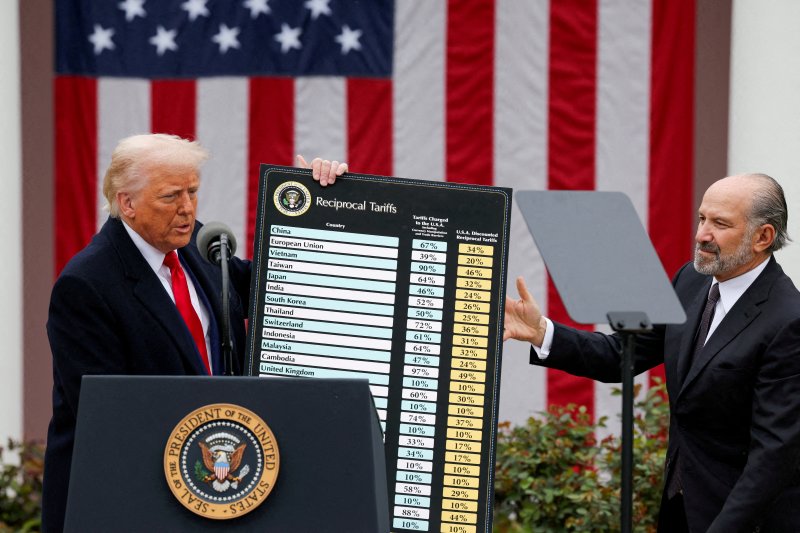
Financial News reported that U.S. President Donald Trump announced by executive order that he would impose retaliatory tariffs of up to 100% on foreign pharmaceutical companies that refuse to enter into price negotiations with the U.S. government.
For allies such as South Korea, the tariff rate is reportedly capped at 15%.
According to foreign media including Associated Press (AP) on the 2nd (local time), the announcement coincided with the first anniversary of what Trump had proclaimed to the world as the Day of Liberation, when he unveiled sweeping import taxes.
The administration framed the move as a matter of "economic security" and a push for onshoring, but concerns are mounting over disruptions to global supply chains and rising drug prices.
The core of the executive order is the acceptance of most-favored-nation treatment (MFN) pricing terms and the expansion of manufacturing facilities inside the United States.
Companies that sign price agreements with the United States and are building production facilities in the country will face no tariffs.
Firms that are constructing facilities but have not agreed on prices will initially be hit with a 20% tariff, which will be gradually raised to 100% within four years.
Large pharmaceutical companies will be given 120 days to negotiate, while small and mid-sized drugmakers will have 180 days.
However, the Trump administration decided to apply a preferential tariff rate of 15% to key allies, including South Korea, the European Union (EU), Japan, and Switzerland.
The United Kingdom of Great Britain and Northern Ireland (UK) will face a 10% rate, on the condition that it can later be reduced to 0%.
Trump stressed that the measure is intended "to respond to threats to national security arising from imports of pharmaceuticals and active ingredients."
In effect, the policy is aimed at reducing dependence on foreign supplies and forcibly creating manufacturing jobs in the United States.
The pharmaceutical industry, however, is pushing back strongly.
Stephen J. Ubl, president of the Pharmaceutical Research and Manufacturers of America (PhRMA), warned, "Taxing advanced medicines will ultimately drive up costs and chill investments worth tens of billions of dollars."
Industry experts note that the tariff burden is likely to be passed on to consumers, potentially causing patients' drug costs to soar.
On the same day, Trump also tightened the enforcement of 50% tariffs on steel, aluminum, and copper, in addition to pharmaceuticals.
[email protected] Yoon Jae-joon Reporter