Pakistan steps up diplomatic mediation to end conflict with Iran
- Input
- 2026-04-03 09:32:11
- Updated
- 2026-04-03 09:32:11
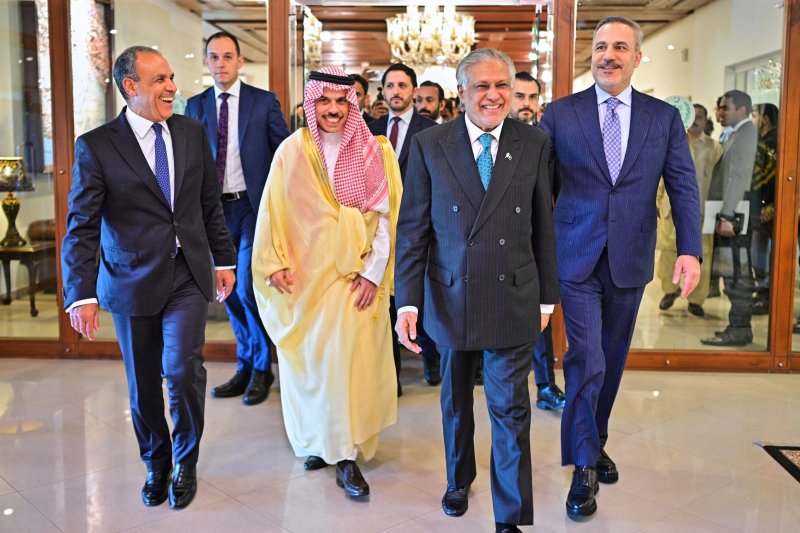
The Financial News reported on the 2nd (local time), citing Gulf News, that the Islamic Republic of Pakistan is emerging as a key mediator in efforts to resolve the Middle East conflict, which has shaken global energy markets and heightened geopolitical uncertainty, by intensifying high-level diplomatic contacts with the United States and regional stakeholders.
At a weekly briefing held in the capital, Islamabad, Ministry of Foreign Affairs of Pakistan spokesperson Tahir Hussain Andrabi stated, "Pakistan is maintaining continuous diplomatic consultations with the United States leadership and is moving proactively, in particular to help create conditions for negotiations between Washington, D.C. and Tehran."
Andrabi added, "Pakistan is working to create a conducive environment for de-escalation and dialogue," stressing that the focus of future diplomatic engagement will be on "meaningful negotiations" aimed at a sustainable resolution of the conflict.
These diplomatic efforts come as tensions that began on February 28 and have persisted for more than a month between the United States, Israel and the Islamic Republic of Iran are spreading across the wider Middle East. In particular, the Islamic Republic of Iran has effectively blocked the transport of oil and gas through the Strait of Hormuz, sending shockwaves through global energy markets and placing additional strain on the world economy.
The Islamic Republic of Pakistan is engaging closely not only with the United States and the Islamic Republic of Iran, but also with European partners and major multilateral bodies such as the Organisation of Islamic Cooperation (OIC) and the Gulf Cooperation Council (GCC). Andrabi noted, "Both Washington, D.C. and Tehran have expressed confidence in Pakistan's role and have conveyed their appreciation for the ongoing mediation efforts."
At the core of Pakistan's diplomacy is the joint Five-Point Initiative for Restoring Peace and Stability in the Gulf and Middle East Region, developed together with China. The plan is built around five pillars: an immediate ceasefire, humanitarian assistance, protection of civilians, sustained dialogue, and adherence to international law, including the Charter of the United Nations (UN Charter).
According to the Ministry of Foreign Affairs of Pakistan, this framework is in line with the outcomes of recent multilateral consultations held in Islamabad and is being viewed as a practical roadmap for de-escalation and long-term stability. Leaders from Europe and Southeast Asia, including the President of the European Council, have voiced support for Pakistan's constructive engagement.
Some tangible results from the mediation efforts are already visible. The Islamic Republic of Iran recently allowed 20 Pakistan-flagged vessels to secure passage through the Strait of Hormuz, easing some concerns over disruptions to maritime logistics.
Meanwhile, beyond the Middle East issue, the Islamic Republic of Pakistan is also pursuing diplomatic efforts to ease tensions with Afghanistan. A Pakistani delegation is currently holding working-level talks with Afghan officials in Ürümqi, China, under Beijing's mediation.
However, Andrabi made it clear that responsibility for improving relations lies with Kabul. He urged, "Afghanistan must take visible and verifiable measures against terrorist groups that use its territory to carry out attacks on Pakistan."
In parallel with diplomatic dialogue, the Islamic Republic of Pakistan is maintaining military pressure on armed groups by continuing its security operation "Ghazab-ul-Haq" in areas along the border with Afghanistan.
[email protected] Yoon Jae-joon Reporter