China Holds Series of Calls With EU and Four Middle Eastern Countries, Urges Ceasefire With Iran
- Input
- 2026-04-03 08:37:14
- Updated
- 2026-04-03 08:37:14
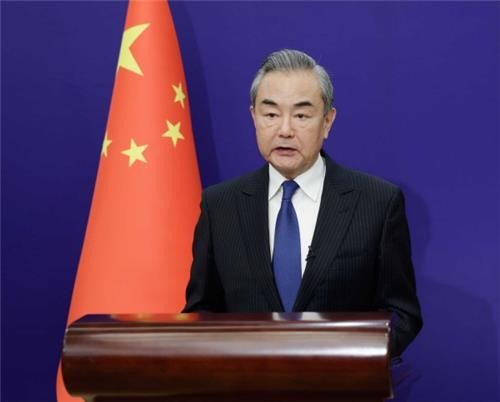
As tensions escalate in the Middle East, China is moving quickly to raise its profile by mediating in the war involving the Islamic Republic of Iran, targeting the European Union (EU) and key Middle Eastern countries. Through a series of phone calls, Beijing has urged a ceasefire and peace talks, while actively promoting a peace initiative led by China and the Islamic Republic of Pakistan to the international community.
According to the Ministry of Foreign Affairs of the People's Republic of China on the 3rd, Foreign Minister Wang Yi held successive phone calls on the 30th of last month (local time) with Kaja Kallas, High Representative of the Union for Foreign Affairs and Security Policy (High Representative), Johann Wadephul, Germany’s foreign minister, Faisal bin Farhan Al Saud, foreign minister of Saudi Arabia, and Abdullatif bin Rashid Al Zayani, foreign minister of the Kingdom of Bahrain.
China emphasized that all of these contacts were made at the request of the other side. This is seen as an attempt to underscore that the international community is calling on China to play a mediating role.
In the calls, Wang presented the "Five-Point Initiative of China and Pakistan for Restoring Peace and Stability in the Middle East," unveiled on the 31st of last month, as the core solution. The initiative includes: an immediate halt to hostilities, the swift launch of peace talks, protection of non-military targets, safeguarding the security of shipping lanes, and giving priority to the Charter of the United Nations (UN Charter).
Wang stated, "A ceasefire and an end to the war are the strong demands of the international community and the fundamental way to ensure the safe passage of the Strait of Hormuz," stressing the need for a prompt agreement. He also argued, "The United Nations Security Council (UNSC) should focus on de-escalating tensions and must not legitimize unauthorized military actions."
His remarks also highlighted multilateralism centered on the United Nations (UN). Since the launch of the Trump administration, China has repeatedly criticized U.S. unilateralism and consistently called for strengthening the UN’s role in the international order.
Wang in particular pressed the EU by stressing the shared responsibilities of China and Europe. He said, "At a time when the international situation is in turmoil, it is the joint responsibility of both sides to uphold a UN-centered international order."
The European side expressed general agreement with these principles. Kaja Kallas, the EU’s High Representative, said, "We support the protection of civilians and non-military targets and will work to ensure freedom of navigation in the Strait of Hormuz," while also noting the need to ease tensions quickly and resume negotiations.
Germany and the Gulf states likewise voiced support for a stronger UN role. Germany emphasized the need for the UN to play a more active role, while the Kingdom of Bahrain said it expects the UNSC to help resolve issues related to passage through the strait.
[email protected] Reporter Kim Kyung-min Reporter