Paid to dump filth and scrawl abuse at others’ homes: revenge-for-hire crimes on the rise
- Input
- 2026-04-02 18:30:55
- Updated
- 2026-04-02 18:30:55
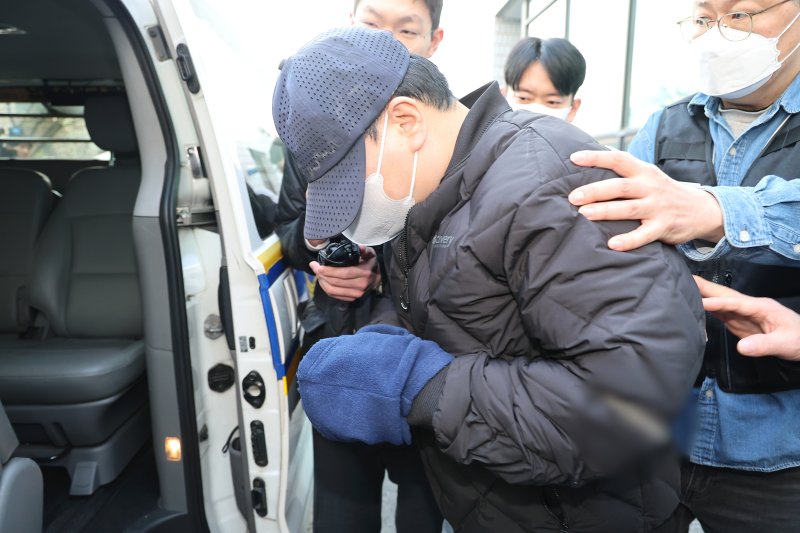
According to police on the 2nd, Seoul Yangcheon Police Station referred to the prosecution a man in his 40s, identified only as A, and his supervisor B, in his 30s, on charges including violating the Information and Communications Network Act, unlawful entry into a residence, property damage and intimidation. They are accused of throwing human excrement at the entrance of an apartment building in Siheung, Gyeonggi Province, in January, spraying lacquer and writing abusive graffiti there, and carrying out similar attacks multiple times in different parts of the country.
The group’s ringleader, a man in his 30s surnamed Jeong, allegedly received requests for retaliation via Telegram and then had A get a job under false pretenses at an outsourced contractor for a delivery company, so he could continuously steal personal information such as the targets’ home addresses. While investigating an operative identified as C, police detected indications that delivery platform data had been used to confirm victims’ addresses, and then raided the office, arresting all four members of the organization.
A full review revealed that the revenge-for-hire crimes were more organized than initially believed. The Gyeonggi Nambu Provincial Police Agency found that a total of 15 such cases had occurred in its jurisdiction alone from last year through the 2nd. That is three times the five cases previously known through media reports. Similar offenses were repeatedly committed across southern Gyeonggi Province, including Pyeongtaek, Suwon, Ansan and Hwaseong.
Most of the 13 suspects who were arrested have been taken into custody. They told police, “We were looking for high-paying part-time jobs and got involved after ringleaders promised to pay 600,000 to 800,000 won in cryptocurrency or cash.” Police added that the ringleaders contacted them only via Telegram and in some cases disappeared when it was time to actually pay the money.
In Busan, another vicious revenge-for-hire group was also caught. Busanjin Police Station plans to seek arrest warrants for four men, including one in his 30s. They are suspected of splashing paint on the front doors of victims’ homes and offices and distributing defamatory leaflets between the 19th and 24th of last month. In Gijang County, a man in his 20s who allegedly agreed to receive 500,000 won to spray abusive words with lacquer was also arrested. It is reported that the victims did not even know why they were being targeted, and were exposed to indiscriminate attacks.
A police official said at a regular briefing at the Korean National Police Agency (KNPA) the same day, “From last year to the present, a total of 53 reports have been filed with 13 metropolitan and provincial police agencies nationwide, and we have arrested 40 perpetrators.”
Police are tracking the ringleaders through the investigation team at Yangcheon Police Station and Metropolitan Investigation Units at city and provincial governments, focusing on whether voice phishing organizations are involved and on identifying those who commissioned the attacks. Based on the Gyeonggi Nambu Provincial Police Agency’s investigation, police believe that, in addition to the group that used platform information, several other revenge-for-hire organizations are also active.
Meanwhile, confusion continues as 38 frontline investigators have been hit with a wave of complaints and accusations under the so-called “law distortion” offense, which took effect on the 12th of last month. According to the KNPA, as of the 25th of last month, a total of 44 law distortion cases had been filed, and complaints against judges and members of the prosecution service were also tallied at around 30 individuals.
Police added that they are also investigating, in accordance with the law and due process, the first case filed under the law distortion offense, in which Cho Hee-dae, Chief Justice of the Supreme Court of Korea, was accused of intentionally distorting legal principles when the Supreme Court overturned and remanded President Lee Jae-myung’s case with a view toward conviction.
[email protected] Park Seong-hyun Reporter