LG Uplus and LG Electronics Move to Secure Core 6G Technologies
- Input
- 2026-04-02 18:22:17
- Updated
- 2026-04-02 18:22:17
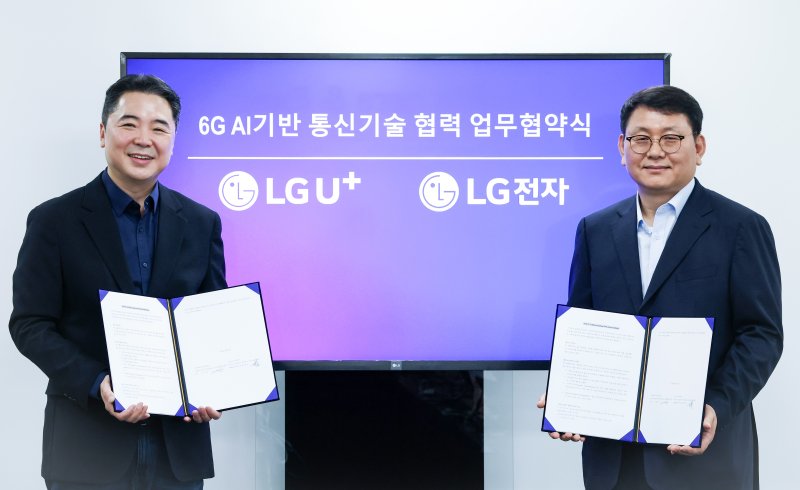
The agreement goes beyond simply securing technologies for the commercialization of 6G. It aims to proactively identify key elements that will shape the structure of future communication environments and to jointly prepare for standardization discussions. Next-generation mobile networks are expected to evolve not just through faster speeds, but by using AI to improve network efficiency and significantly enhance security systems. To respond to these changes, the two companies agreed to combine LG Uplus’s experience in operating communication networks with LG Electronics’ device and platform capabilities to establish a foundation for technological leadership.
Semantic communication is a technology that uses AI to focus on the meaning and context of information rather than the sheer volume of data, thereby improving transmission efficiency. It can reduce the amount of data sent while still delivering the necessary information accurately, making it a key underlying technology for realizing ultra-low-latency and ultra-high-efficiency communications in the 6G era.
As a telecommunications operator and network provider, LG Uplus plans to define the requirements for semantic communication and examine how it can be applied to real networks, as well as explore potential use cases.