Trump lashes out at South Korea, Japan and NATO while urging participation in keeping Hormuz open
- Input
- 2026-04-02 14:45:25
- Updated
- 2026-04-02 14:45:25
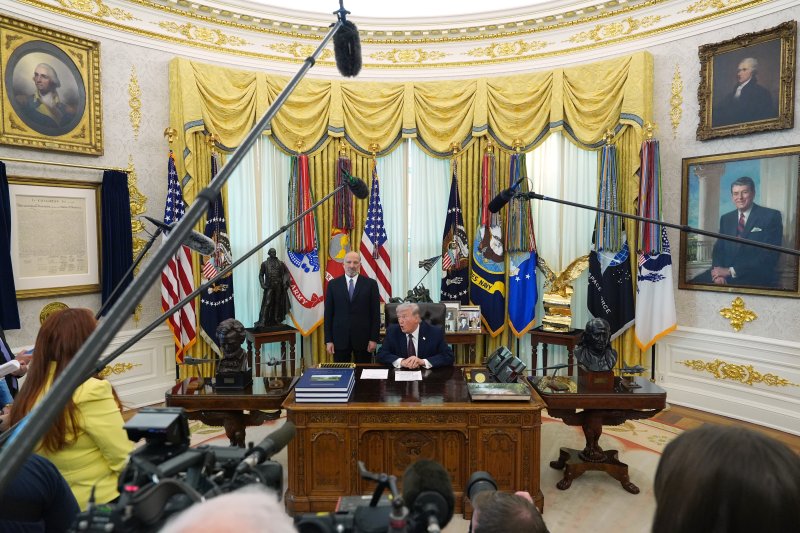
On the 1st (local time), during an Easter luncheon at the White House in Washington, D.C., Trump told reporters that responsibility for security in the Strait of Hormuz, where tensions have risen due to threats from the Islamic Republic of Iran, should fall directly on beneficiary countries such as the Republic of Korea (South Korea) and Japan.
He specifically mentioned the presence of United States Forces Korea (USFK) for the defense against the Democratic People's Republic of Korea (DPRK), openly voicing dissatisfaction with what he described as South Korea's uncooperative stance.
Regarding South Korea, he said, "They have not helped us," and continued, "We have 45,000 troops stationed in a tough place, right next to nuclear power (the DPRK)," suggesting that South Korea enjoys security benefits while refusing to respond to Washington's strategic requests.
His remarks are being interpreted as an attempt to use the USFK presence as leverage to simultaneously pressure Seoul to increase its defense cost-sharing and to dispatch forces, after South Korea failed to give a clear answer to Washington's repeated requests to send warships to the Strait of Hormuz.
Aiming at other countries that use the strait, Trump also said, "Let Japan do it. They get 90% of their oil from the strait."
He added, "Let the People's Republic of China do it. Let them, the beneficiaries, handle it themselves."
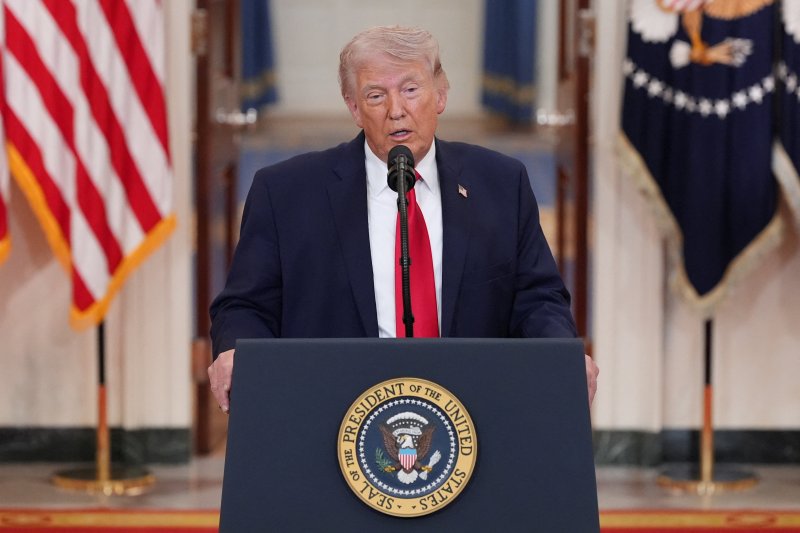
In his address to the nation the same day, he again stressed that countries receiving crude oil supplies through the Strait of Hormuz should take the lead themselves.
Although Trump did not explicitly mention the North Atlantic Treaty Organization (NATO) in this speech, a clear rift has recently emerged between the United States of America and Europe over security in the Strait of Hormuz.
In an interview with United Kingdom of Great Britain and Northern Ireland (UK) daily The Guardian before the speech, Trump said that NATO had become a "paper tiger" after European NATO members refused to join maritime security operations in the Strait of Hormuz, even hinting that the United States of America might withdraw from the alliance.
He repeatedly underscored that the United States of America has supported Ukraine throughout the four-year Russia–Ukraine war, and he characterized NATO's refusal to help in the current crisis involving the Islamic Republic of Iran as a "betrayal."
Financial Times (FT), citing sources, reported that Trump threatened to halt arms supplies to Ukraine if European countries do not join the United States of America's military efforts to keep the Strait of Hormuz open.
NATO members have been supporting a program called the Prioritised Ukraine Requirements List (PURL), under which they purchase United States of America-made weapons for Ukraine, but Trump has suggested this support could be cut off.
As the situation grew more urgent, Finland President Alexander Stubb said on his X (social network) account that he had held in-depth discussions with Trump on key issues including the crisis involving the Islamic Republic of Iran and Ukraine, as well as NATO.
He said there had been "constructive discussions and an exchange of ideas" with Trump, emphasizing that the many pressing international challenges now facing the world must be addressed "in a practical way."
Recently, Stubb has reportedly been in frequent contact with Trump via text messages and phone calls, building a close relationship. In particular, he has positioned himself as a bridge, conveying European countries' positions and perspectives directly to Trump.
[email protected] Yoon Jae-joon Reporter