Life Sentence Finalized for Myoung Jae-wan in 'Daejeon Elementary School Student Murder' Case
- Input
- 2026-04-02 11:21:25
- Updated
- 2026-04-02 11:21:25
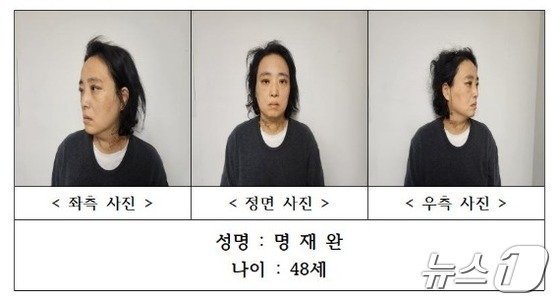
[The Financial News] Teacher Myoung Jae-wan, who murdered a first-grade student at an elementary school in Daejeon where he worked, has received a finalized sentence of life imprisonment.
The First Petty Bench of the Supreme Court of Korea, with Supreme Court Justice Suh Kyeong-hwan presiding, on the 2nd upheld the lower court’s sentence of life imprisonment for Myoung Jae-wan, who had been indicted on charges including violation of the Act on the Aggravated Punishment of Specific Crimes (abduction or enticement for profit), damage to public property, and assault.
Myoung Jae-wan was arrested and indicted on charges of fatally stabbing first-grader Kim Ha-neul on February 10 last year at an elementary school in Daejeon. On the day of the crime, he bought a weapon in advance at a supermarket near the school, lured Kim by saying he would give her a book as she was the last to leave after finishing an after-school care class, and then committed the murder in the audiovisual room.
He was also indicted for another incident four to five days before the murder, in which he allegedly wrapped his arm around the neck of fellow teacher A, who had said, "Let’s go home together," pushed A down, and then grabbed A’s wrists tightly with both hands to prevent any movement. He additionally faced a charge for kicking and damaging a school work computer.
Before the murder, Myoung searched terms such as "how to kill a person" and "medical student murder case," and bought a weapon and hid it in advance, indicating that he had prepared for the crime beforehand.
During the trial, he argued that he had been in a state of diminished mental capacity due to delusional disorder at the time of the crime. Prosecutors countered that he was not mentally impaired and was fully able to foresee the nature and consequences of his actions, and therefore requested the death penalty.
The court of first instance sentenced him to life imprisonment. While it acknowledged that he had been in a somewhat abnormal psychological state, it found no circumstances that would justify mitigating the severity of the crime.
The appellate court also imposed a life sentence. It stated, "Myoung selected his victim, prepared tools and other items in a planned manner, and took steps after the crime to avoid detection. Taken together, it is difficult to conclude that he lacked the ability to distinguish right from wrong or to control his actions at the time," adding, "Even if he were in a state of diminished mental capacity, the gravity of this case does not provide grounds for reducing the sentence."
The Supreme Court likewise found that he was not in a state of diminished mental capacity. It noted, "The defendant excluded people he felt psychologically close to from his potential targets and committed the crime according to a plan made in advance," and continued, "Considering that he took steps after the crime to conceal it and later gave detailed statements about how it was carried out, he cannot be regarded as having been in a state of diminished mental capacity."
[email protected] Lee Hwan-joo Reporter