Trump pushes Hormuz crisis onto South Korea and others: Who will pay the transit fees?
- Input
- 2026-04-02 12:47:49
- Updated
- 2026-04-02 12:47:49
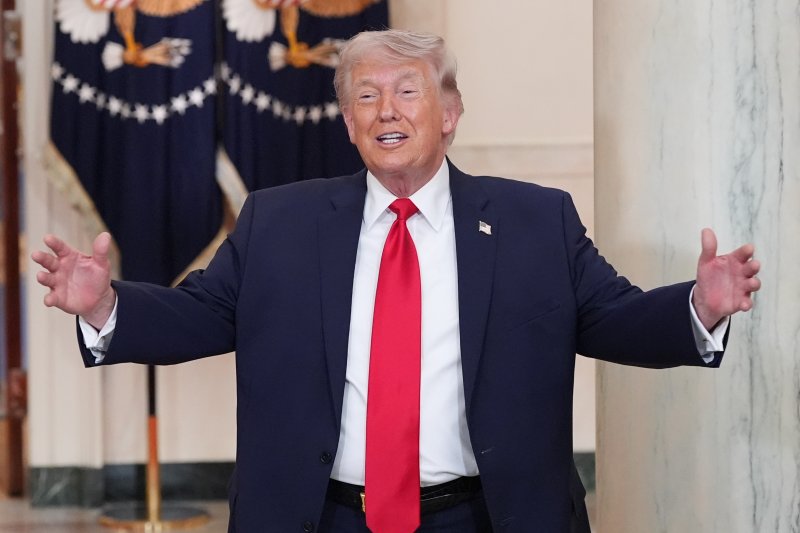
According to The Financial News, as the Islamic Republic of Iran, which controls the Strait of Hormuz, has begun in earnest to levy transit fees, Donald Trump has finally spoken out about the blockade that his actions helped trigger. He said that countries such as the Republic of Korea (South Korea) and Japan, which import oil through the strait, would receive U.S. assistance but must ultimately resolve the issue themselves. He singled out South Korea in particular, criticizing that it "has not been helpful."
Trump shifts transit-fee issue to South Korea, saying it "has not been helpful"
In a video posted by the White House on YouTube on April 1 (local time), Donald Trump stressed during an Easter luncheon that the blockade of the Strait of Hormuz is not America’s problem. Speaking about reopening the strait, he said, "Let the European countries do it. Let South Korea do it." Trump added, "South Korea has not been helpful to us," noting, "We have 45,000 troops stationed in a harsh environment, right next to nuclear-armed North Korea." In a press appearance on March 16, he had already exaggerated the number of United States Forces Korea (USFK) personnel, which is actually about 28,500. Trump went on, "Let Japan do it. They get 90% of their oil from the Strait of Hormuz. Let China do it. Let them handle it." The White House deleted the video shortly after posting it.In his national address the same day, Trump again targeted countries that purchase Middle Eastern oil via the Strait of Hormuz. "We will help," he said, "but they must take the lead in protecting the oil on which they so desperately depend." He urged countries reliant on Middle Eastern crude, "First, buy your oil from the United States. Second, find the courage, even if belatedly. Go to the strait, take the oil yourselves, protect it, and use it. The Islamic Republic of Iran has been virtually obliterated." Regarding the blockade, Trump argued, "Once this conflict ends, the strait will naturally reopen," predicting that "when oil supplies resume, prices will plummet and stock markets will soar."
On the same day, the Islamic Revolutionary Guard Corps (IRGC) declared through the Islamic Republic News Agency (IRNA), "We are firmly and powerfully controlling the situation in the Strait of Hormuz." It continued, "Despite the ridiculous show put on by the U.S. president, this strait will never be opened to the enemies of the Islamic Republic of Iran." Also that day, U.S. political outlet Axios reported, citing three American officials, that the United States, which has been attacking the Islamic Republic of Iran for more than a month, is discussing a cease-fire with Tehran on the condition that the strait be reopened.
Transit fee set per barrel, payable in Chinese yuan or virtual assets
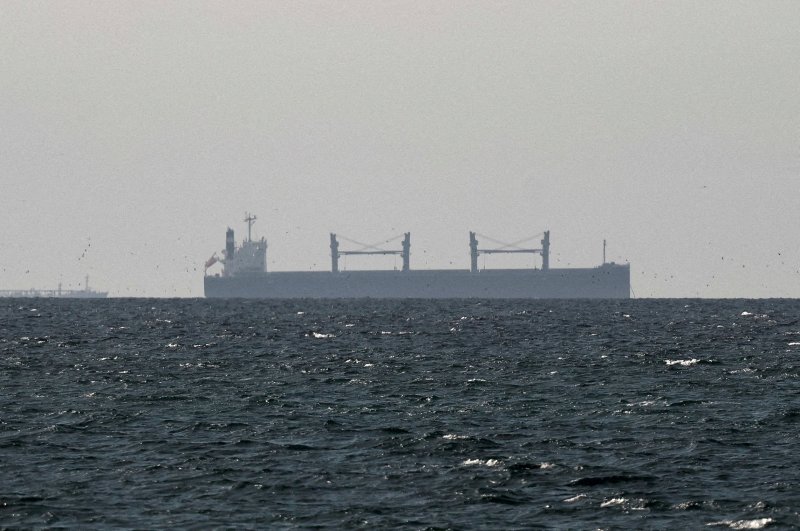
On March 30, the National Security Committee of the Iranian Parliament approved a new management plan to strengthen control over the Strait of Hormuz, through which about 25% of the world’s seaborne oil shipments pass. The plan includes provisions to charge transit fees to vessels passing through the strait. It also explicitly bans ships from the United States and Israel from transiting the waterway and restricts access for vessels from countries that impose unilateral economic sanctions on the Islamic Republic of Iran. At the time, Iranian media reported that the government would collect the fees in the local currency, the Iranian rial, but did not specify the exact amount.On April 1 (local time), virtual-asset outlets such as Watcher Guru reported, citing sources, that the Islamic Republic of Iran plans to accept transit fees in Chinese yuan or in virtual assets. According to one source, ship operators wishing to pass through the strait will be required to submit detailed information to an intermediary company linked to the IRGC, including the vessel’s ownership structure, cargo manifest, bill of lading, destination, crew list, and Automatic Identification System (AIS) data. The intermediary will forward these materials to the IRGC Navy command in Hormozgan Province, where the strait is located. The command will then review whether the vessel has any ties to Israel, the United States, or other countries that Tehran regards as hostile.
If a ship passes this screening, negotiations over the transit fee begin. The Islamic Republic of Iran is said to classify the vessel’s flag state into five tiers based on its level of friendship with Tehran, offering more favorable terms to countries deemed more friendly.
Transit fees for oil tankers are generally set according to loading capacity. The rate is about 1 dollar per barrel, payable in Chinese yuan or in stablecoins. A stablecoin is a type of virtual asset whose value is pegged to another asset, such as the U.S. dollar, and is therefore usually less volatile than cryptocurrencies like Bitcoin. A Very Large Crude Carrier (VLCC) typically has a capacity of around 2 million barrels, so the fee per vessel is expected to be about 2 million dollars, or roughly 3 billion won. In a report on March 26, Associated Press (AP) said that at least two ships have already paid transit fees to the Islamic Republic of Iran in yuan since the strait was blocked on February 28. Their payments were also reported to be as high as 2 million dollars each.
[email protected] Reporter Park Jong-won Reporter