Humanity heads for the Moon for the first time in 54 years as U.S. Artemis II launches successfully
- Input
- 2026-04-02 08:56:00
- Updated
- 2026-04-02 08:56:00
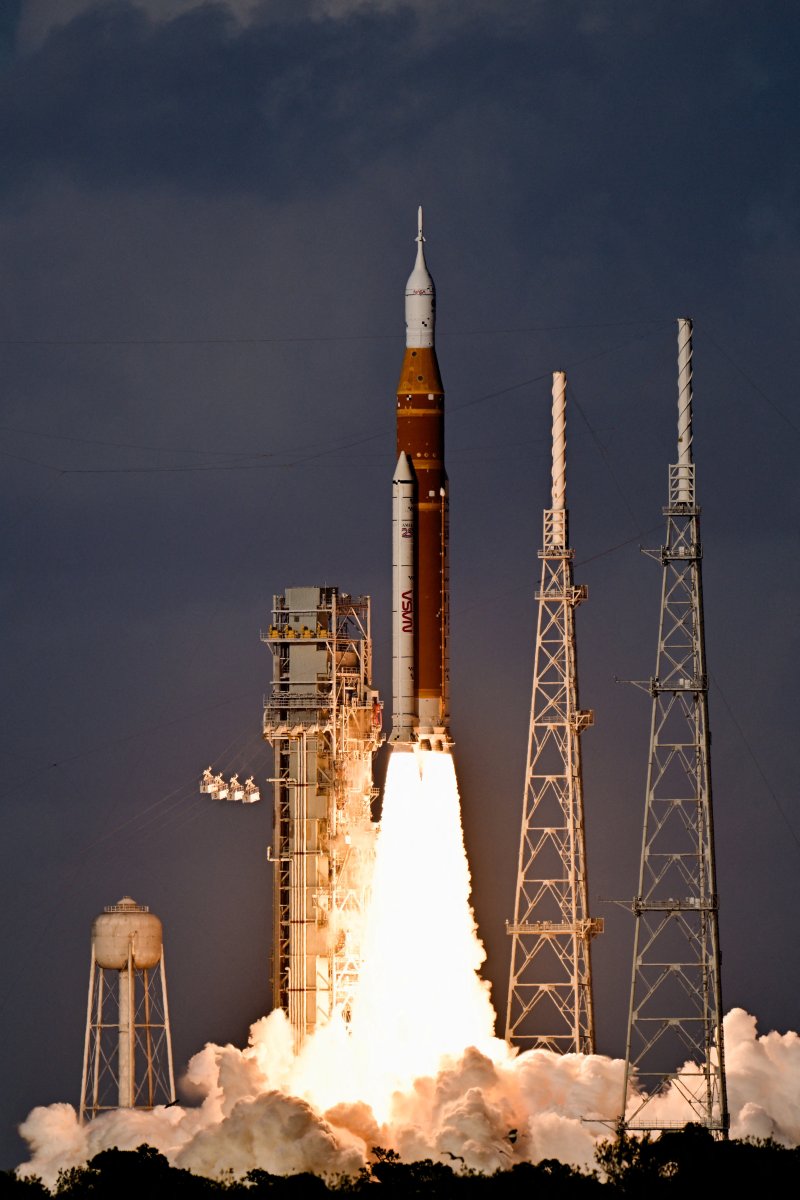
According to The Financial News, a crewed spacecraft has set out for the Moon for the first time in about 54 years. The spacecraft will first orbit the Moon and then return to Earth, and the National Aeronautics and Space Administration (NASA) plans to conduct additional tests after this launch before building a base on the lunar surface.
First crewed lunar mission in 54 years, headed for lunar orbital flight
According to the Associated Press (AP) and other foreign media, NASA's Artemis II rocket lifted off from Kennedy Space Center in the State of Florida at 6:35 p.m. on the 1st (local time). About nine minutes after launch, NASA announced that "the four crew members have entered Earth orbit, where their journey to the Moon begins."Artemis II consists of the 98-meter-tall Space Launch System (SLS) and the Orion crew capsule spacecraft. The crew of four includes three Americans—Commander Reid Wiseman, Victor Glover, and Christina Koch—and Canadian astronaut Jeremy Hansen. Cable News Network (CNN) stressed that this mission differs from the Apollo program, which was crewed only by American men with military backgrounds. If the mission succeeds, Koch will become the first woman in human history to leave Earth orbit and travel toward the Moon.
A crewed spacecraft for lunar exploration has not been launched since Apollo 17 in December 1972, making this the first such mission in about 54 years. The total planned duration of the flight is ten days, covering a distance of 1,102,400 kilometers.
The main objectives are to test Orion's life-support systems and to assess how humans are affected by the radiation environment in space. On the first day after launch, the spacecraft will orbit Earth, gradually raising its altitude from low Earth orbit, and on the second day it will fire Orion’s engines to set course for the Moon.
The spacecraft will then complete a loop around the Moon at an altitude of roughly 6,437 to 9,656 kilometers, allowing the crew to visually observe parts of the lunar surface that have not been seen in this way before. Orion is scheduled to splash down in the Pacific Ocean near San Diego in the State of California on the 10th.
Artemis I, launched in November 2022, carried mannequins instead of people to the vicinity of the Moon and successfully orbited it before returning to Earth. A mission in which astronauts actually land on the lunar surface is planned to be carried out by Artemis IV in 2028.

Korean-built ultra-small satellite 'K-Rad Cube' on board
Named after the Moon goddess in Greek mythology, the Artemis Program was unveiled in the spring of 2019 as a plan to send humans back to the Moon. The original schedule called for launching a crewed spacecraft into lunar orbit in 2022 and achieving a lunar landing in 2024, but repeated technical issues have caused ongoing delays.Artemis II was also originally scheduled to launch in February this year, but a hydrogen leak forced a postponement. Last month, a problem with helium flow caused another delay, and the mission finally succeeded in lifting off on this third attempt.
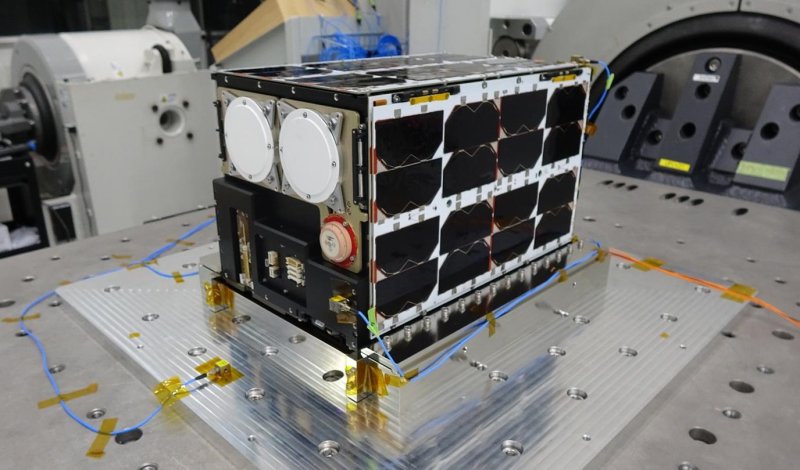
South Korea is also taking part in this mission. Artemis II was launched carrying the ultra-small artificial satellite K-Rad Cube, developed by South Korea. K-Rad Cube will not travel all the way to the Moon; instead, it will be released from Orion about five hours after launch and placed into high Earth orbit, where it will observe radiation in the radiation belts around Earth (the Van Allen radiation belt). The satellite itself and its radiation-measuring instruments were developed by Korean startup Nara Space Technology and the Korea Astronomy and Space Science Institute (KASI), respectively. Radiation test semiconductors were produced by Samsung Electronics and SK hynix. KT SAT, the satellite communications subsidiary of South Korea’s KT Corporation (KT), will operate the ground station and handle data reception.
Previously, the administration of U.S. President Donald Trump strongly pushed lunar landing plans in an effort to check China’s advance into space and secure lunar resources first. China began its lunar exploration with the Chang'e Project in 2004 and plans to send humans to the Moon before 2030.
On the same day, Donald Trump wrote on the social media platform Truth Social, "For the first time in nearly 50 years, the United States is returning to the Moon." He asserted, "The United States is winning in space, on Earth, and everywhere in between. The United States is not just competing; it is dominating."
[email protected] Park Jong-won Reporter