IEA: April’s energy shortages will be twice as painful as March
- Input
- 2026-04-02 07:04:26
- Updated
- 2026-04-02 07:04:26
Financial News reported that the International Energy Agency (IEA) has labeled the current energy crisis, triggered by the war between the United States of America (US) and Iran, as "the worst in history" and issued a stark warning that supply shortages will intensify further next month.
On April 1 (local time), business news channel Consumer News and Business Channel (CNBC) reported that Fatih Birol, Executive Director of the IEA, appeared on the podcast "In Good Company with Nicolai Tangen," hosted by Nicolai Tangen, head of Norway’s Government Pension Fund Global and Chief Executive Officer of Norges Bank Investment Management (NBIM). Birol explained that in March, countries managed to cope as tankers that had passed through the Strait of Hormuz before the war were still arriving at ports, but from April even that flow of supply will be completely cut off.
Birol warned, "The volume of oil lost in April will be twice that of March," adding that, with disruptions to liquefied natural gas (LNG) and other gas supplies on top of this, slower economic growth and higher inflation will be unavoidable, especially in emerging economies. He cautioned that many countries may soon have to introduce energy rationing.
He assessed, "The current crisis is more severe than the three major energy crises of the past combined, and we are heading toward the largest supply chain collapse in history."
According to IEA analysis, during the oil shocks of 1973 and 1979, daily supply losses were about 5 million barrels. Today, however, around 12 million barrels per day have disappeared from the market, a volume greater than the two earlier crises combined.
Not only oil and gas, but also key raw materials in global supply chains such as fertilizers, petrochemical products, and sulfur have been cut off.
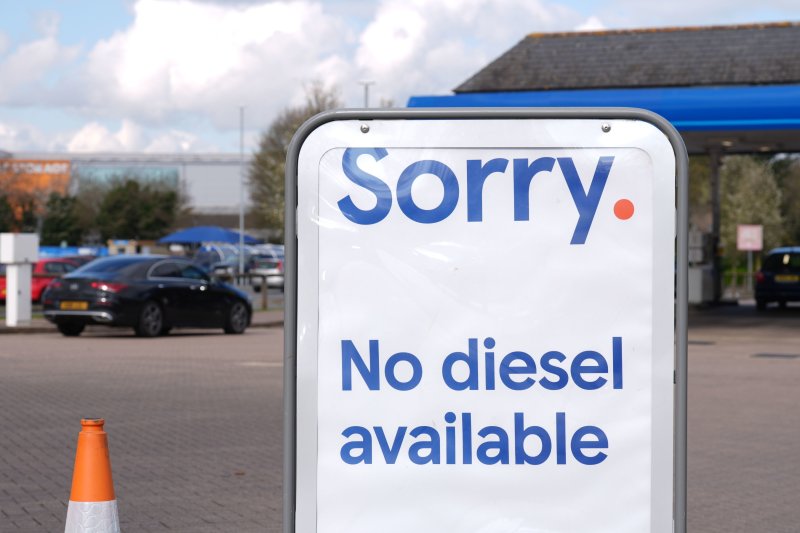
The most critical shortages are currently in jet fuel and diesel. Supply disruptions are already visible in Asia and are expected to spread across Europe by late April or early May.
As the situation worsens, the IEA is considering an additional release of strategic oil reserves.
Birol, however, stressed, "Releasing reserves is only a painkiller that eases the symptoms; it is not a fundamental cure," and added, "The only real solution is the reopening of the Strait of Hormuz."
[email protected] Yoon Jae-joon Reporter