"Give Us the Netflix Profits": Extraordinary Attorney Woo Writer Loses Again on Appeal
- Input
- 2026-04-02 06:48:29
- Updated
- 2026-04-02 06:48:29
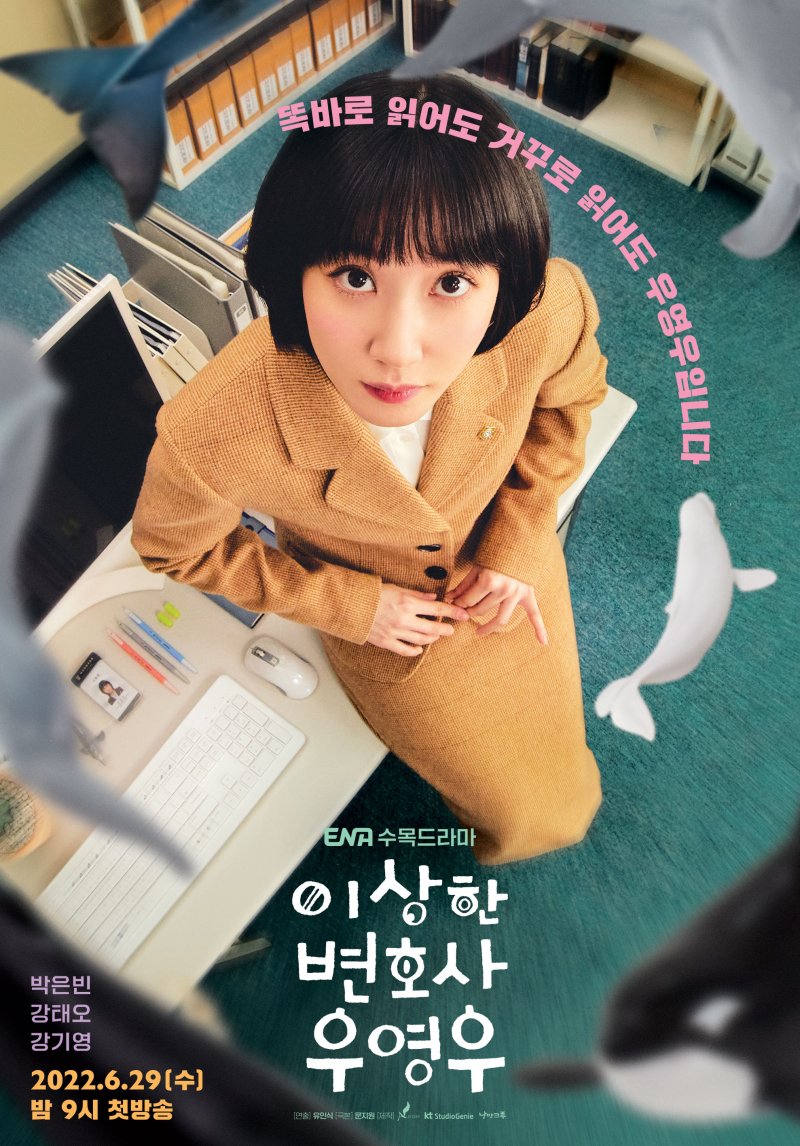
[Financial News] The writer of the hit 2022 drama "Extraordinary Attorney Woo" sued the production company, demanding secondary-use fees for streaming on Netflix, Inc. However, the writer’s side lost the case not only at first instance but also on appeal.
According to the legal community on the 1st, Civil Division 4 of the Seoul High Court, presided over by Presiding Judge Kim Woo-jin of the Seoul High Court’s Civil Division 4, in January dismissed the appeal filed by the Korea Television and Radio Writers Association (KTRWA) in a monetary claim case against production company AStory and, as in the first instance, ruled against the plaintiff.
From the origin of the lawsuit to its development: "Netflix streaming is a secondary use of the work"
The lawsuit stems from a drama script writing contract signed in October 2019 between writer A and AStory. Writer A argued that the contract was concluded on the premise of "broadcast through a TV station," so AStory’s 2021 sale of broadcasting rights to Netflix, Inc., an over-the-top media service (OTT) provider, constituted a "secondary use" of the work. On that basis, the writer sought payment of usage fees and delay damages.
The Korea Television and Radio Writers Association (KTRWA) held the property rights to the drama script in trust from writer A and joined the lawsuit. However, in April last year, the Seoul Western District Court in the first instance rejected the claims of the writer and KTRWA. The court found that the contract did not specify through which medium the drama would be distributed and that it could not be viewed as intended to be limited solely to television broadcasting.
The court further stated, "By late 2019, when the writing contract was signed, it can be seen that distributing dramas not only through broadcasters but also via OTT service providers had become a common practice," and added, "It is natural to view that the contracting parties intended to publicly transmit the work by means of both broadcast and OTT distribution." The court also noted that, because the drama was aired on ENA (South Korean TV channel) and released on Netflix, Inc. on the same day, it was difficult to regard this as a "secondary use" of the work.
Why the appeal was dismissed: the purpose of the writing contract was not limited to "broadcast"
The appellate court held that the first-instance judgment was sound and dismissed KTRWA’s appeal. The plaintiffs argued that the writing contract was intended solely for broadcast, but the bench found, "Even if some clauses in the contract refer only to 'broadcast' or are drafted with 'broadcast' as the reference point, it is difficult to conclude from the overall structure and framework of the contract that it excludes 'transmission' or is incompatible with 'transmission.'"
The court also viewed the use of a standard-form contract as stemming from the fact that, although transmission via OTT service providers had already become common by the time of contracting, there was no separate standard contract specifically tailored to writing agreements for such transmission. In addition, the court pointed out that, unlike the standard contract, which broadly defines secondary use, this particular writing contract limits secondary use to cases where a series or a remake is produced.
On this basis, the bench observed, "There is room to view the defendant production company as having regarded transmission via OTT service providers as a form of use under the writing contract itself, and as having intended not to treat it as a secondary use." Taking these factors together, the court concluded that, based solely on the circumstances asserted by the plaintiffs, it is difficult to find that the purpose of the writing contract was confined only to "broadcast."
[email protected] Kim Hee-sun Reporter