"SpaceX secretly files IPO documents with SEC"...launches process for record-breaking listing
- Input
- 2026-04-02 03:20:50
- Updated
- 2026-04-02 03:20:50
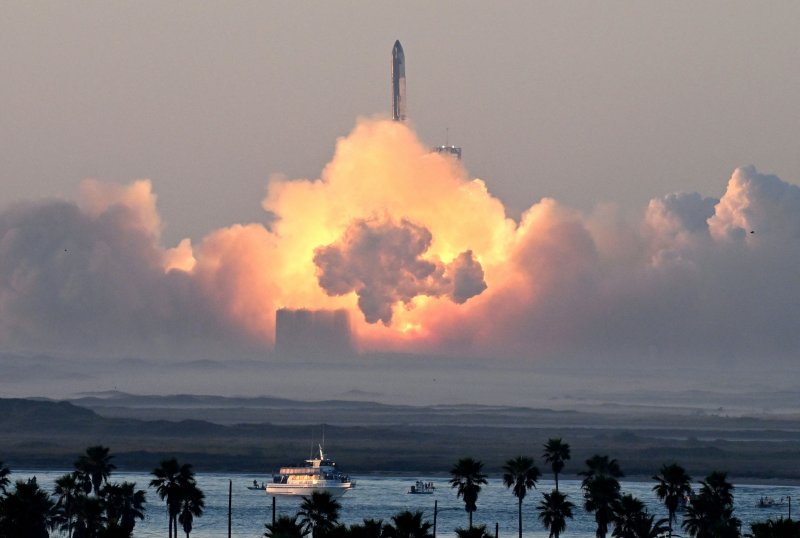
Financial Times (FT) reported on the 1st, local time, that the listing process for Elon Musk’s space company SpaceX has begun.
According to the report, procedures for what could become the largest initial public offering (IPO) in history have quietly started.
Citing sources, FT reported that SpaceX submitted a "confidential draft registration statement" to the U.S. Securities and Exchange Commission (SEC) this week. This allows the company to move forward with the listing process without publicly disclosing its full financials at the outset.
SpaceX expanded its scale last month by acquiring Musk’s artificial intelligence startup xAI for 250 billion dollars.
According to the sources, SpaceX plans to set its valuation at 1.75 trillion dollars (about 2,648 trillion won) and raise 75 billion dollars through the IPO.
A market capitalization of 1.75 trillion dollars would make SpaceX the sixth-largest company in the United States, behind Nvidia, Apple, Alphabet, Microsoft (MS), and Amazon.
Back in 2022, SpaceX was valued at around 90 billion dollars.
The planned 75 billion dollar share sale would dwarf the previous record for an IPO, the 29 billion dollars raised by Saudi Arabian Oil Company (Saudi Aramco) in 2019.
The IPO is expected to take place in June.
Musk had earlier hinted that he would pursue the IPO in June, when his 55th birthday coincides with a rare planetary alignment.
SpaceX’s submission of confidential listing documents comes just days after the Nasdaq Stock Market (Nasdaq) overhauled its rules for inclusion in its key indices.
Under the revised rules, tens of billions of dollars in passive investment money can flow immediately into large newly listed companies.
Nasdaq removed one of the criteria for inclusion in the NASDAQ-100 Index, which tracks the 100 largest U.S. technology companies by market capitalization. Previously, at least 10% of a company’s total shares had to be freely floated through the IPO to qualify, but that requirement has now been scrapped.
Some observers say the rule change appears almost tailor-made for SpaceX’s listing.
To be added to the NASDAQ-100 Index, which can trigger massive buying by passive funds, companies typically had to float 10–20% or more of their total shares. SpaceX plans to list less than 5% of its equity, which previously posed the risk that index-tracking funds would not buy the stock.
Funds that track the index collectively manage about 520 billion dollars.
With the restriction lifted, Musk can now absorb huge amounts of market liquidity while still maintaining overwhelming voting control and fully defending his management rights.
Nasdaq has also sharply reduced the waiting period for index inclusion from three months to 15 trading days. This means SpaceX could be added to the NASDAQ-100 Index roughly two weeks after its shares begin trading.
Critics argue that such a short inclusion period could distort the process of finding a fair market price after the IPO and increase price volatility. Nonetheless, the rules have already been changed.
According to the sources, SpaceX is also considering allowing some existing shareholders to sell part of their stakes on the first day of trading after the listing. This would break with the usual practice of prohibiting insider share sales for 180 days after an IPO, a measure typically used to stabilize the share price in the early period.
Meanwhile, in June, seven planets in the solar system—Mercury, Venus, Mars, Jupiter, Saturn, Uranus, and Neptune—will cluster in a narrow region of the sky in a rare alignment. Although their orbital periods around the Sun differ greatly, from 88 days for Mercury to about 29 years for Saturn, these planets will line up in a straight formation for the first time in decades between early and mid-June.
[email protected] Song Kyung-jae Reporter