"Politics that only looks for scapegoats must give way to everyday politics that reaches people" [Editorial News Analysis]
- Input
- 2026-04-01 18:15:51
- Updated
- 2026-04-01 18:15:51
Ideological and regional conflicts are just the beginning. Labor–management, generational, and gender conflicts, as well as tensions between Koreans and foreigners, erupt constantly. They are sometimes patched over for a while, but the underlying problems have never been resolved.
When an incident occurs, scientific investigation into the causes is pushed aside. The process often ends with finding a scapegoat and punishing them. Lim asks how this is any different from a shamanistic exorcism ritual.
For several years, he has been pointing out in media interviews and lectures that Korean politics is regressing toward a premodern state. Yet nothing has changed.
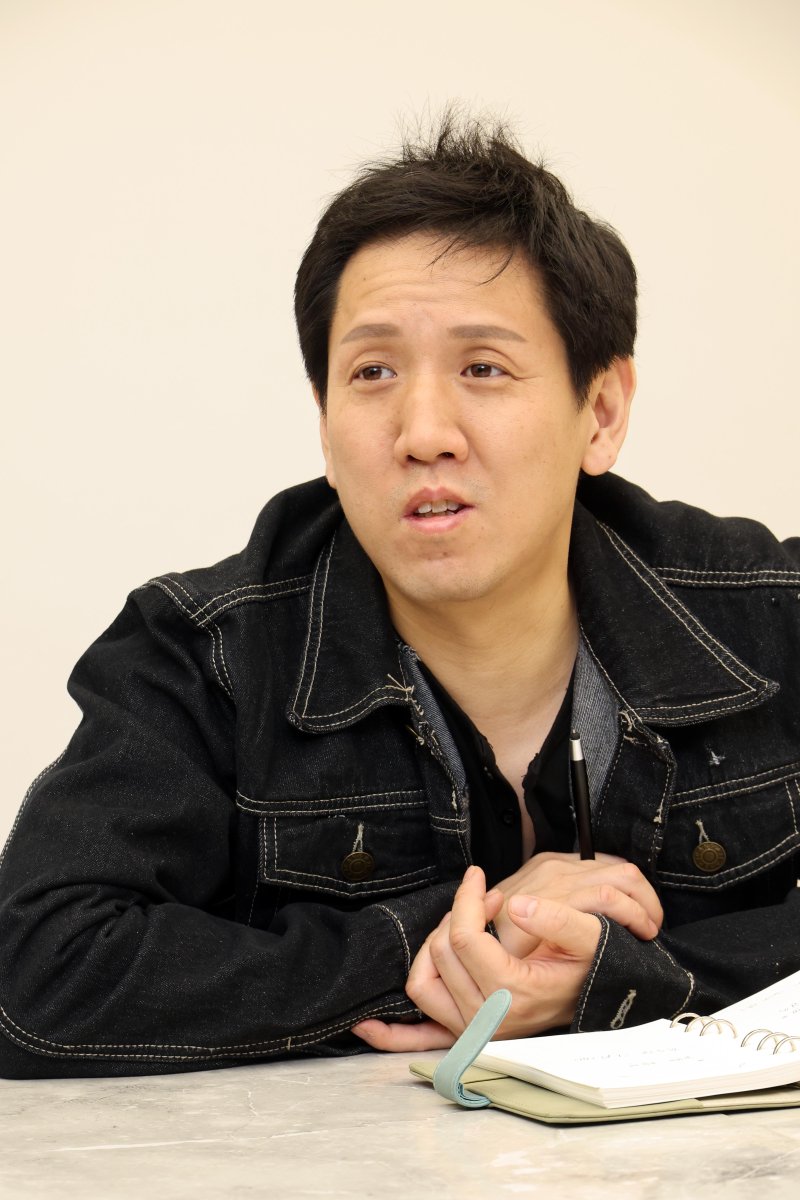
Is there any hope for Korean politics, which continues its cycle of conflict and repetition? On the 25th of last month, at the offices of The Financial News in Seocho District, Seoul, we heard the views of this young conservative philosopher.
―What do conservatism and progressivism mean in Korea?
▲The academic distinction that conservatives respect tradition and order while progressives emphasize equality and reform does not seem very meaningful in Korea. I think the Korean conservative right has a particular characteristic: it succeeded in building the material hardware of industrialization and in learning from the West, but it failed in spiritual modernization. By contrast, the progressive left appears to have a tendency not toward scientific rationalism and Western civilization, but toward returning to the continental Sinosphere.
―In your book "Korean-Style Shamanistic Politics," you wrote that shamanism dominates the Korean mindset.
▲You have probably seen politicians hugging memorial stones, shedding tears, and even wailing when a tragedy strikes the community. They are trying to secure political authority by aligning themselves with the public’s shamanistic code. In reality, some political forces have identified themselves with the dead in order to change the political atmosphere and draw support.
―It is not wrong to express sympathy for those who died in national disasters.
▲Of course not. To grieve from the standpoint of the deceased and the bereaved families is an act of empathy. However, when one collapses the boundary between self and others and immerses oneself in excessive emotional identification, I would not call that empathy. The priority should be to identify the causes and change the structures so that similar accidents do not recur. Yet we tend to focus on a kind of exorcism, hunting down perpetrators and punishing them. I felt ashamed when I saw a program explaining that no one went to prison after the Space Shuttle Challenger disaster. Those involved in the accident acknowledged their mistakes, identified the causes, and worked out measures to prevent a recurrence. (In Korean society, recurring structural ills are often called the "Korean disease." Lim identifies four main causes of this disease: an intellectual tradition trapped in lofty pretexts and moral justifications; an isolationist worldview; an attitude that seeks recognition as victims who have been wronged; and a tendency to obsess over venting resentment rather than solving problems. He argues that Korean politics is aggravating this Korean disease.)
―Conservatism is said to be in crisis. What is the root cause of this crisis?
▲As I mentioned, conservatism in Korea emerged during the process of material industrialization. The "giants" who played a role in that process were mostly people educated abroad, in places like Japan. After they exited the stage, we failed to cultivate conservative talent with our own hands. Above all, today’s conservatives have long been pushed into a non-mainstream position, yet they refuse to face that reality. They do not even make the effort, as challengers, to steel themselves and regain the public’s trust. For the future, they must at least plant the "apple tree"—they need to arm themselves with a distinct conservative color, language, and narrative.
―As an Oriental philosopher, do you think the ideas of the Hundred Schools of Thought can help conservatives rearm themselves intellectually?
▲Within the Hundred Schools of Thought, I believe the Legalism (Chinese philosophy) doctrine of enriching the country and strengthening the military can become a core value for the conservative right. It places the survival and competitiveness of the state above all else and emphasizes a strong economy, robust military power, and efficient governance. Han Feizi discussed incentive structures to draw out the capabilities of state elites in an efficient way. Conservatives also need to think seriously about such structures.
―What is wrong with Korea’s incentive structure?
▲The incentive structure has collapsed across the board. There is no longer a strong motivation for career soldiers to devote themselves to national defense, for talented people to stay and work in Korea, or for doctors to serve in essential medical fields. Politics has failed to remove excessive regulations and ease legal risks, which is a key reason. In other words, politics should be creating an environment where those who raise the "cattle" can work with peace of mind, but instead it is brandishing a club and glaring at them.
―How can we restore the incentive structure?
▲Take, for example, those who die in the line of duty as firefighters, police officers, or soldiers, and those who die in social disasters. Every death is tragic and deserves mourning. But from the state’s standpoint, it should provide greater tangible compensation to the former, thereby properly thanking and remembering the dedication of people in uniform. If the compensation structure is reversed, who will devote themselves to the public good? Civic spirit could collapse.
―There are growing calls for a major overhaul of conservatism.
▲The biggest problem for conservatives is that they see no reason for, and have no will to undertake, major surgery. Quite a few conservative figures seem to think, "As long as things hold together while I or my children are around, that’s enough." From their perspective, what matters is whether they get to wear a ministerial hat one more time, or whether they can run one more time in their constituency. What is needed is the courage to sacrifice themselves for the future of the country. (Lim says the key word conservatives should focus on, if they want to reach the public, is "ordinary working people." He suggests that a starting point could be to empathize with and support the stories of women returning to the workforce after a career break due to marriage, or young people who scrape together meager salaries to send 100,000 or 200,000 won a month to their parents. Simply saying they will protect the weak is just copying the progressive frame, he argues. What is needed is a message—and concrete action—that conservatives will stand with honest, hard-working ordinary people. "Conservatives must not stop at protecting ordinary working people; they need to regain the ability to soothe the emotions those people feel in their daily work," he said.)
―There are not that few young politicians in the conservative camp. Yet their voices do not seem persuasive. Why is that?
▲Compared with the progressive side, it is hard to say that outstanding talent is concentrated on the conservative side. Among young people with conservative leanings, those who are truly capable tend to be more interested in making a lot of money in the economic sphere. Many seem to ask, "Why should I do a job where I am poorly rewarded and spend my time cleaning up after those above me?" This, too, ultimately comes back to incentives. We need to build an ecosystem that nurtures young politicians who commit themselves to developing conservative values and expanding their reach.
―How would you assess the current state of progressive politics?
▲The so-called 86 generation, the 497 generation, and the upper-tier organized labor unions are, in a sense, the "major shareholders of the 1987 system." Too many people have been sacrificed for these major shareholders, and the hopes of future generations are being crushed. Progressives should be reducing the unfair gaps experienced by ordinary people living outside the establishment—non-regular workers and small business owners—but they are failing to play that role.
―The current government emphasizes pragmatism. Isn’t it different in nature from the 86 generation?
▲I do think the president and the Democratic Party of Korea (DPK) may have somewhat different positions. The question is whether they can actually touch the vested interests of the "major shareholders of the 1987 system." Only by doing that can they differentiate themselves from the left, which is centered on entrenched labor unions. Watching the process of prosecution reform, I came to feel it would be hard to expect much.
―Do you think the media has fulfilled its role as Korean society has evolved?
▲There is much to be desired. For example, malicious YouTubers known as "Cyber Wreckers" sometimes post videos that baselessly disparage public figures, turning them into targets of a kind of exorcistic ritual. I am not sure whether the established media has properly played its role of questioning, doubting, and cross-checking such content. In politics, I believe we need to purge journalists who stir up the public sphere with conspiracy theories that shake the entire country.
―What would you like to say to progressive politicians?
▲They need to develop a sense of ownership. I do not mean they should act like owners, but that they should have a sense of responsibility. For a long time, Korean progressives have been part of the mainstream, yet they keep talking as if they were the relative underdogs. It is not desirable for those who are in fact the real owners to do politics under borrowed or assumed names. Only if they become a "healthy mainstream" can Korean society advance.
―What should conservatives do?
▲First of all, I want to say that conservatives must cherish their own people. This is different from being trapped in factional logic. Only by nurturing young talent can they have any promise for tomorrow. (Lim lives in a neighborhood far removed from what is commonly called an affluent district. He says that in his neighborhood, many residents raise the Taegeukgi, the national flag of South Korea, from early morning on March 1st Independence Movement Day, Constitution Day (South Korea), and National Liberation Day of Korea. The patriotism of ordinary people is in no way inferior to that of the privileged. Lim suggests that conservative politicians should rent a modest home in such a neighborhood and live there for a year, rubbing shoulders with the residents. The current conservative crisis cannot be overcome by merely paying lip service to being "pro-ordinary people.")
■ Profile of writer Lim Geon-sun: Born in 1981; Bachelor’s degree from the University of Seoul, Department of Public Administration; completed coursework at the Sogang University Graduate School, Department of Philosophy; author of "Mozi: A Commoner Thinker Who Rose Beyond Confucius," "The Art of War: The First Eastern Philosophy," "Speaking of a Wealthy Nation and Strong Military Community," "Wu Zi: The Unbeaten Strategist Surpassing Sun Tzu," "Xunzi: A Lame Softshell Turtle Travels a Thousand Li," "Se, Almost Everything in East Asian Thought," and "Korean-Style Shamanistic Politics."
[email protected] Reporter