Next-Generation Battery Technology Enables Full Charge in 12 Minutes
- Input
- 2026-04-02 06:00:00
- Updated
- 2026-04-02 06:00:00
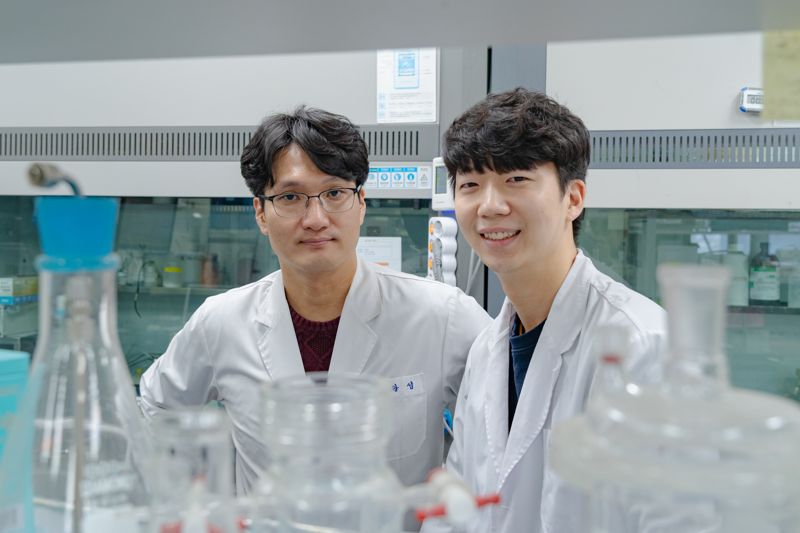
[Financial News] A next-generation battery technology that can be fully charged in 12 minutes has been developed.
Gwangju Institute of Science and Technology (GIST) announced on the 1st that a research team led by Eom Gwang-seop, head of the Next-Generation Energy Research Institute and professor in the Department of Materials Science and Engineering, has developed a technology that improves the charging speed and stability of lithium metal secondary batteries. The team achieved this by using a three-dimensional structure coated on its surface with an electrically conductive polymer.
According to the research team, for an electric vehicle (EV) it is crucial to store electricity and then use it reliably when needed. The lithium-ion battery, which is widely used in current EVs and other devices, has the advantage of storing a large amount of energy relative to its size and weight. The lithium metal secondary battery, which is drawing attention as a next-generation battery, can theoretically achieve about twice the energy density of conventional lithium-ion batteries. However, during charging and discharging, there is a problem in that lithium does not deposit evenly on the anode surface but grows in sharp, tree-like forms known as lithium dendrite.
Focusing on the fact that the location and manner in which lithium is deposited determine battery performance, the research team designed a three-dimensional structure (SP-PPy@pPVDF) that guides lithium to accumulate uniformly from inside the structure. They created a structure with many internal voids using Polyvinylidene fluoride (PVDF), a lightweight and highly durable polymer material, and then coated it with Polypyrrole, a polymer that is only partially conductive.
In particular, the surface of the structure was engineered to be electrically insulating so that lithium would stack up neatly from the interior rather than depositing on the surface.
Polypyrrole is a polymer material that conducts electricity only partially, helping lithium to deposit evenly during charging and discharging instead of concentrating in one area. As a result, electrochemical reactions inside the battery remain stable, improving both safety and lifespan. The material also creates an environment in which lithium adheres well, effectively suppressing the growth of lithium dendrite even under ultra-fast charging conditions.
This structure controls the flow of current so that lithium deposits layer by layer from the bottom up, thereby suppressing both dendrite formation and volume expansion at the same time. As a result, it more than doubles the energy storage density compared with conventional lithium-ion batteries and significantly mitigates the problem of volume expansion. The technology also greatly shortens charging time, enabling ultra-fast charging that can fully charge the battery in about 12 minutes. Stable performance was secured even under fast-charging conditions that had been difficult to achieve with previous structures.
Whereas lithium anodes based on a copper current collector or typical porous structures show a sharp drop in performance after about 80 charge–discharge cycles, the structure designed by the research team retained 94.7% of its initial capacity even after more than 200 cycles. No volume expansion was observed during charging and discharging, demonstrating stability even under fast-charging conditions.
The technology can also implement polymer coating and surface insulation simultaneously through a simple solution process, making it advantageous for large-area production. It is expected to be applicable in a wide range of fields, including EV batteries, Energy Storage Systems (ESS), and batteries for air mobility.
The research findings were published online on March 29, 2026, in Energy & Environmental Materials, a leading international journal in the field of materials science and energy.
jiany@fnnews.com Yeon Ji-an Reporter