Will the Iran war end soon? Trump says, "We’ll leave in 2–3 weeks"
- Input
- 2026-04-01 09:46:29
- Updated
- 2026-04-01 09:46:29
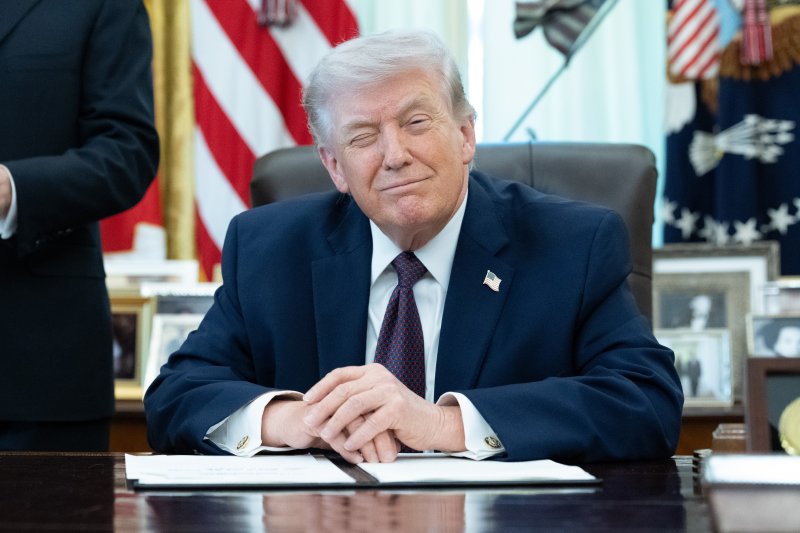
Financial News — Donald Trump, who had earlier predicted that the Iran war would end within "4–6 weeks," has now said in the fifth week of the conflict that the United States will leave Iran within "2–3 weeks." He also stated that the Strait of Hormuz, which Iran has blockaded since the US attacks, "has nothing to do with the United States of America (US)."
Strikes could stop in 2–3 weeks; markets and oil prices swing
According to The Wall Street Journal (WSJ) and other local media, Trump brought up the Iran war while speaking with reporters during an executive order signing ceremony at the White House on the 31st of last month (local time). He said, "We are going to leave because we have no reason to be there any longer," adding, "We are leaving very soon." He then specified the timing as "two weeks or three weeks."Since February 28, Trump has been carrying out airstrikes on Iran together with Israel. Last month, he deployed about 7,000 US troops from Japan and the US mainland to the Middle East, but they have not yet been used in ground operations. Local media interpreted his remark about "leaving" as a signal that the attacks may stop. The White House announced on the 31st that Trump will deliver a nationwide address on Iran on the 2nd.
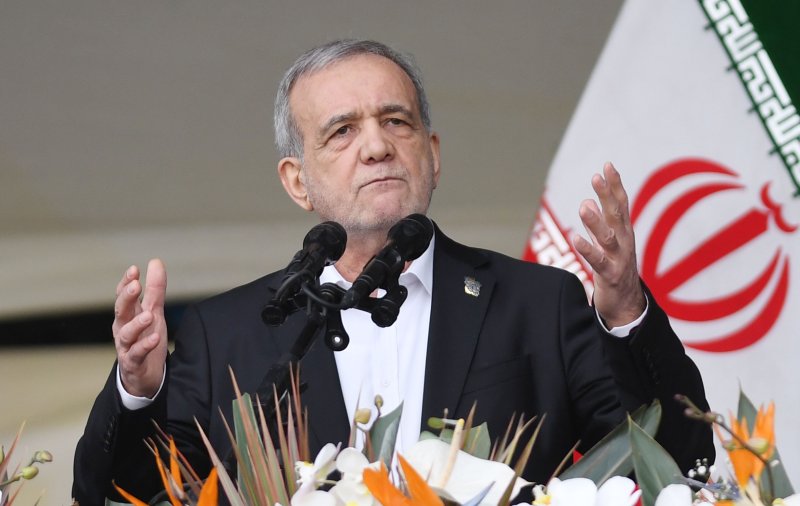
On the same day, Iranian President Masoud Pezeshkian also raised the possibility of ending the war in a phone call with António Costa, president of the European Council. "We have the will to end this conflict if the necessary conditions are met, especially if there is a guarantee that aggression will not be repeated," he said. Iranian Foreign Minister Abbas Araghchi told Al Jazeera in Qatar that he had received a message from US envoy Steve Witkoff through a third party. The previous day, Iran’s Foreign Ministry had denied reports of talks with Washington, saying Tehran had not taken part in peace negotiations held in Pakistan. Araghchi stressed that the contact with Witkoff "does not mean there are official negotiations."
Iran’s response came shortly after a WSJ report on the 30th of last month that Trump believed he could end the war without insisting on resolving the Strait of Hormuz issue. Iran closed the Strait of Hormuz, through which about 20% of the world’s seaborne oil trade passes, immediately after the US attacks. Until the 30th, Trump had been threatening to destroy Iran’s power grid and key oil export hubs, including Kharg Island, if Tehran did not reopen the strait.
The three main indices of the U.S. stock market jumped by the largest daily margin since May last year after news of a possible early end to the war, including the Iranian president’s remarks. On the 31st of last month, the Dow Jones Industrial Average (DJIA), the Standard & Poor's 500 Index (S&P 500 Index), and the NASDAQ Composite Index surged 2.49%, 2.91%, and 3.83%, respectively. On the same day, May-delivery West Texas Intermediate crude oil (WTI) traded in the US market closed at $101.38 per barrel, down $1.50, or 1.46%, from the previous session, marking its first decline in four days.
Hormuz tensions persist; the next few days are critical
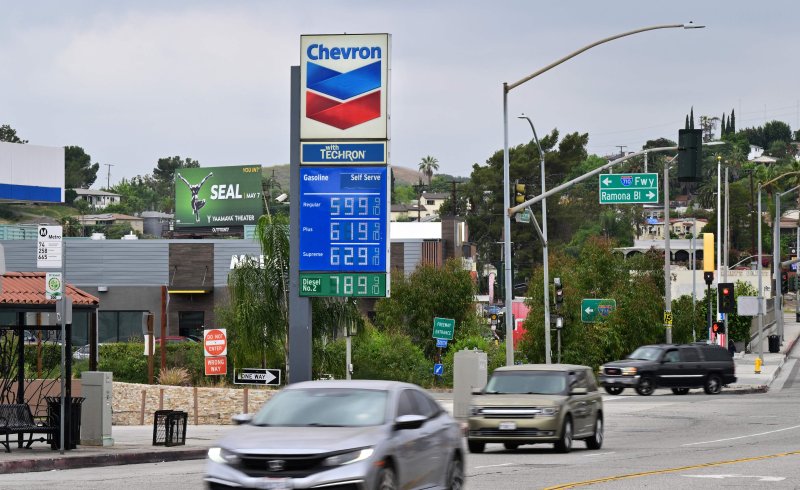
Trump’s latest comments came in response to a question about oil prices related to the Strait of Hormuz blockade. On the 31st of last month, the average US gasoline price exceeded $4 per gallon (3.78 liters), the highest level since August 2022, when the Russo-Ukrainian War roiled energy markets. Asked how he planned to lower prices, Trump replied, "All I have to do is leave Iran. We are leaving very soon," adding, "Then oil prices will collapse."Regarding the Strait of Hormuz, which has driven up global oil prices, Trump said, "We have nothing to do with that." On the 30th of last month, he wrote on social media that if Iran did not immediately reopen the Strait of Hormuz, "we will end our lovely 'stay' in Iran by blowing up and completely obliterating all of their power plants, oil fields, and Kharg Island." According to WSJ the same day, Trump recently told close aides that, in order to meet the 4–6 week timeline he had set for the Iran operation, he could end the war without the strait being reopened.
Trump also discussed the reopening of the Strait of Hormuz in a phone interview with the New York Post on the 31st of last month. "I think it will open automatically," he said. "They don’t have any strength left. The countries that use the strait can go and open it themselves." He added, "Whoever controls the oil will be happy to open the strait." Claiming that the United States has already achieved its operational goals, Trump said, "We are eliminating their nuclear capability, and we have achieved regime change." He continued, "We are now dealing with completely different people, and they are far more reasonable than before. This is real regime change."
Meanwhile, on the same day, former Secretary of Defense Peter Brian Hegseth said at a press briefing that "Iran knows the next few days will be decisive." He warned, "If Iran is not willing to reach an agreement, the United States Department of Defense (DoD) will continue its attacks on Iran with even greater intensity." That day, Trump also said of Iran, "I don’t care whether they come to the negotiating table or not, because we have pushed them back so far."
[email protected] Jong-won Park Reporter