[Editorial] 26 Trillion Won Supplementary Budget Must Prioritize Support for Vulnerable Groups Hit Hardest by High Oil Prices
- Input
- 2026-03-31 18:47:29
- Updated
- 2026-03-31 18:47:29
With its high external dependence, the Korean economy is walking on thin ice day by day amid the shock of war in the Middle East. Oil prices continue to soar and are now testing 120 dollars per barrel. The won–dollar exchange rate climbed as high as 1,536 won during trading on the same day, marking the highest level since the global financial crisis. On the industrial front, production had grown sharply as recently as February, buoyed by a semiconductor boom, but companies are now struggling so much that they can barely keep their factories running.
Refining and petrochemical companies, which have taken a direct hit to their energy supply and demand, are suffering severely, and production across manufacturing sectors such as semiconductors and automobiles has also been disrupted. The Overseas Economic Research Institute of the Export-Import Bank of Korea warned in a report that soaring raw material prices could push second- and third-tier automotive suppliers to the brink of bankruptcy. It added that operations across Korea’s key manufacturing industries could be hampered. The semiconductor industry is also expected to face unavoidable setbacks because it is struggling to secure advanced materials needed for production processes.
With fuel prices nearing 2,000 won per liter, the pain felt by truck drivers, small business owners, and low-income households is severe. High inflation, driven up further by a weak won and high interest rates, is bending the backs of vulnerable groups even more. The government’s supplementary budget can be seen as a desperate measure to prevent the Middle East shock from spreading and to rekindle the fading embers of the economy. It is essential to execute it quickly so that it can ease the hardships of low-income households and serve as a support for industry.
In this emergency situation, a supplementary budget rushed through should be tightly focused on devastated industrial sites and vulnerable groups, providing targeted and substantial support. It must concentrate on sectors directly hit by high oil prices, small self-employed business owners groaning under surging costs, and low-income households driven to the brink by rising living expenses. From this perspective, there are many aspects of the government’s plan that invite skepticism. The 4.8 trillion won earmarked as compensation for high oil prices is to be distributed to 35.8 million people, or the bottom 70% of income earners. Although the government says it will apply selective and differentiated payments based on income and region, in practice the beneficiaries will encompass a broad swath of the population.
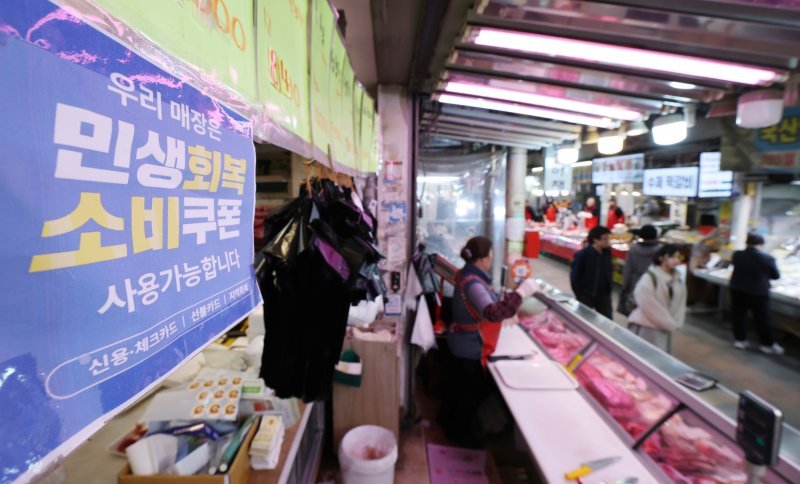
The 4.8 trillion won amounts to 40% of the 12 trillion won in livelihood recovery consumption coupons included in last year’s supplementary budget. If you add the 5 trillion won allocated for measures to reduce fuel and transportation costs, the 10 trillion won budgeted to ease the burden of high oil prices effectively becomes cash-like support. There is considerable concern that this could further stoke already volatile inflation. All the more reason why strict criteria must be re-established in the detailed execution stage, so that fiscal resources are directed to the most urgent needs.
The government stresses that it can fund the package with excess tax revenue instead of issuing deficit-financing bonds, but surplus tax receipts should not be treated lightly. Korea’s public finances have been flashing red for some time. Total national debt reached 6,500 trillion won last year, an increase of 280 trillion won in just one year. This year’s tax revenue rose thanks to higher corporate tax payments from companies that managed to turn a profit despite an extreme crisis. Excess tax revenue should first be used to reduce the country’s astronomical debt and slow the pace of new borrowing. In an unprecedented emergency, support must be directed at those in truly desperate need. Otherwise, the government will not escape criticism that this is a populist supplementary budget designed as a pre-election handout. Careful effort is required to ensure the extra budget does not degenerate into a mere political event.