"Kim Jong Il Was a Copperfield Fan"...Secret Files from 30 Years Ago on the China–North Korea Crisis Released
- Input
- 2026-03-31 15:32:37
- Updated
- 2026-03-31 15:32:37
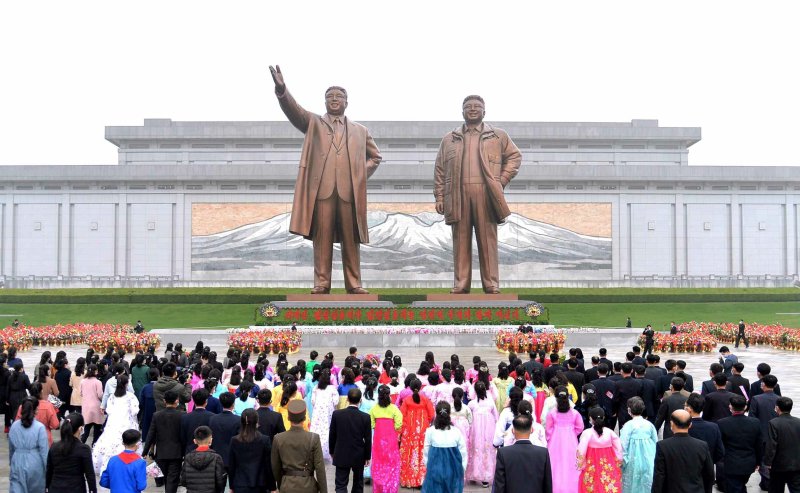
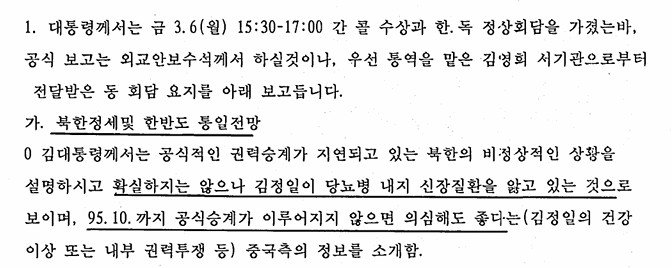
These details were found in diplomatic records that the Ministry of Foreign Affairs of the Republic of Korea released on the 31st, 30 years after they were sealed. After President Kim Il Sung died on July 8, 1994, his son Kim Jong Il did not take on any formal post as supreme leader for more than three years, instead ruling in the name of carrying out his father's "last instructions."
In March 1995, Deng Nan, second daughter of Deng Xiaoping and then vice chair of the State Science and Technology Commission of China, met with the Ambassador of the Republic of Korea to China. She said, "As far as I know, Kim Jong Il is in very poor health at present (due to a car accident and chronic illness), which is why he has not yet succeeded to the presidency."
Another inquiry report from April 1995 by the Embassy of the Republic of Korea in China, based on conversations with the head of the Korea desk at the International Liaison Department of the Chinese Communist Party, stated, "Kim Jong Il is saying that the people are still mourning Kim Il Sung, so how can the son take office now, and for that reason he is refusing to do so...."
The sudden death of Kim Il Sung, which led to the collapse of plans for an inter-Korean summit, was also cited. The head of the Korea desk at the Asian Affairs Department of the Chinese Foreign Ministry told an official from the Korean Embassy that, "If he were to formally succeed to the state presidency, he would immediately face the burden of holding an inter-Korean summit. I believe there is an element of trying to avoid that burden."
The documents further include recollections by the Chargé d’Affaires of Bulgaria to the Republic of Korea, who said he had studied together with Kim Jong Il at Kim Il Sung University and had been on close terms with him. They also record that Kim Jong Il, a fan of American magician David Copperfield, asked Tony Namkung, former deputy director of the Center for Korean Studies (CKS) at UC Berkeley, to help arrange a visit by Copperfield to North Korea.
The newly released files also confirm that in 1995, ahead of President of China Jiang Zemin’s visit to South Korea, North Korea reacted so strongly that it even raised the possibility of establishing diplomatic relations with Taiwan. China was preparing the first visit to South Korea by a Chinese head of state, three years after establishing diplomatic ties with Seoul, and Pyongyang made clear its displeasure.
According to a June 1995 report by the Ministry of Foreign Affairs that summarized views heard from Chinese experts on the Korean Peninsula, a delegation from the China Institute of International Studies (CIIS), under the Chinese Foreign Ministry, visited North Korea that May. There, it held talks with the Institute for Disarmament and Peace of the Foreign Ministry of the DPRK.
At the meeting, the Chinese side said it was closely watching relations between North Korea and Taiwan and asked Pyongyang to handle its ties with Taiwan in light of the special relationship between China and North Korea.
In response, the North Korean side went through the list of Chinese officials scheduled to visit South Korea one by one and reacted sharply, saying, "If China and South Korea can exchange high-level visits, why can’t North Korea develop its relations with Taiwan?" It went on to warn, "If President Jiang does indeed visit South Korea this November as reported, we will be forced to take some kind of action in our relations with Taiwan, and we cannot rule out even the establishment of diplomatic relations with Taiwan."
rainman@fnnews.com Kim Kyung-soo Reporter